
Showing posts with label contrast. Show all posts

Monday, January 10, 2022

Peter and the Rooster: A Call to Watch and Pray

We are all familiar with the passage in the gospels where Peter denies Christ despite his emphatic declaration of loyalty and fidelity to Jesus.

"Peter declared, 'Even if all fall away, I will not.' 'Truly I tell you,' Jesus answered, 'today—yes, tonight—before the rooster crows twice you yourself will disown me three times.' But Peter insisted emphatically, 'Even if I have to die with you, I will never disown you.' And all the others said the same." (Mar 14:30 -31).

Peter and the Rooster
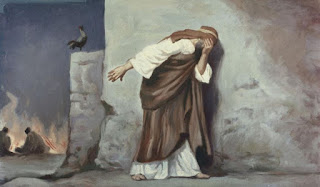
Let's compare and contrast the rooster with Peter, because in doing so we can learn a valuable spiritual lesson. In h
is article called Why Do Roosters Crow on the website Chicken Scratch, Joseph Hudson writes: 

“As with a vast majority of seemingly-strange animal behavior, one of the primary motivations for roosters to crow is to attract a mate. While our human ears struggle to detect any nuances between calls, scientists have analyzed the crows of distinct roosters and found that each rooster has a slightly different crow.

Thus, many researchers have concluded that the slight changes between each rooster are used as a method of impressing potential mates and out-gunning competing roosters.

The number of changes is extensive. Many roosters like to introduce a warbling effect into the calls as a sign of complexity and health. Further, the length of the song itself will vary between animals. While a rooster’s crow may seem arbitrary to many listeners, they are playing a distinct and repeatable song.

Depending on the rooster, this repetition may occur as often as every two minutes, or as infrequently as every ten. While the studies have not been wholly conclusive, it appears that hens tend to be more quickly attracted to roosters that exhibit longer and more complex songs.

Beyond the complexity of the call, there is also a much simpler variable: volume. One of the key differences in the crows of different roosters is how long they can become. While not always true, a larger rooster can typically produce a higher maximum volume compared to a smaller specimen. Thus, exhibiting a higher volume is a means by which roosters can brag about their size, strength, and health.

This effect is amplified when multiple roosters are within the hearing range of each other. When placed in the vicinity of another rooster, roosters tend to increase the volume of their crowing. This often results in a kind of competition between the males, resulting in a back-and-forth battle with increasing volume each round.

In extreme instances, agitated roosters have been known to damage their lungs or vocal cords in an attempt to out-shine another rooster. They are liable to become so engrossed in outperforming the other, and winning the affection of a mate, that they forget any self-preservation instincts and overwork themselves. While they typically recover from these episodes, the damage can sometimes be permanent.”

Hudson also states in his article:

“Unlike hens, which are primarily communal and docile animals, roosters are fiercely territorial. Thus, marking their territory is one of the primary reasons why a rooster may crow. In any given community, there will be much fewer roosters than hens. Hens often outnumber their male equivalents by over a hundred to one.

Therefore, roosters are allowed to rule a fairly large range of territory. A typical rooster will lay claim to an area of roughly an acre. It considers this range to be its property and will become disturbed if its land is intruded on by another male bird.

Crowing for territorial reasons takes on two forms. A rooster will often seek to remind other birds in the area that a certain portion of land is its territory. This is generally the function of the ‘alarm clock’ morning crowing that roosters are so well known for. When crowing for this reason, a rooster will attempt to find the highest perch possible.

Normally, this will be a tree or fence post. Then, the rooster will project out into its territory. This call normally resembles its mating song, but with even more embellishments added. In fact, territorial marking will often have the secondary effect of attracting a mate.” 

Now consider Peter in the courtyard warming himself among the soldiers with servant girls around. Peter and the soldiers are likened to the roosters and the females are likened to the hens. His protests and denials of being associated with Christ are like the rooster’s crows to mark out its territory. It’s as if Peter is saying, “This is my territory. I do not know Him. I’m not from Galilee.” Just as there is “a kind of competition between the male (roosters), resulting in a back-and-forth battle with increasing volume each round,” likewise, each one of Peter’s denials seemed to increase in intensity like a crescendo. 

Consider how “agitated roosters have been known to damage their lungs or vocal cords in an attempt to out-shine another rooster. They are liable to become so engrossed in outperforming the other, and winning the affection of a mate, that they forget any self-preservation instincts and overwork themselves. While they typically recover from these episodes, the damage can sometimes be permanent.” And consider how Peter became so agitated that he hurt himself spiritually in his attempts to prove he was not Christ’s disciple. 

In Mark's gospel it states:

"While Peter was below in the courtyard, one of the servant girls of the high priest came by. When she saw Peter warming himself, she looked closely at him. 

'You also were with that Nazarene, Jesus,' she said. 

But he denied it. 'I don't know or understand what you're talking about,' he said, and went out into the entryway. 

When the servant girl saw him there, she said again to those standing around, 

'This fellow is one of them.' Again he denied it. After a little while, those standing near said to Peter, 

'Surely you are one of them, for you are a Galilean.' 

He began to call down curses, and he swore to them, 'I don't know this man you're talking about.'

Immediately the rooster crowed the second time. Then Peter remembered the word Jesus had spoken to him: 'Before the rooster crows twice you will disown me three times.' And he broke down and wept."(Mar 14:66-72)

You can clearly see the crescendo of denial that reaches its climax when Peter even called down curses on himself and swore to them that he didn't know the Lord. Like a rooster, who becomes engrossed in outperforming the others, Peter was so caught up in not wanting to be seen before them as a follower of Christ, that he forgot any self-preservation instincts and overworked himself to the point of doing permanent damage to his spirit that could only be healed by the Lord.

Consider how the rooster that night had only crowed once by the time Peter had already denied the Lord three times. Roosters typically crow once every two minutes or as infrequently as every ten minutes. Therefore, the time between the rooster’s two crows that night would have been between two and ten minutes. During that short space of time, Peter had already denied the Lord three times, just as the Lord said he would do. As if Peter was in some sort of competition, he outgunned the crow and got out three vehement denials of Christ in that short space of time before the rooster even had a chance to get out a second crow.

In Matthew, Luke, and John’s gospels, they record the Lord saying, “Before the rooster crows today, you will disown Me three times.” That would have a different meaning than if He had said, "Before the rooster crows twice you will disown me three times." Roosters start to crow two hours before the onset of light. This is called anticipatory predawn crowing. Therefore if the Lord had said that Peter would disown him three times before the rooster crows today, that would indicate the imminence of Peter's denial of the Lord, which would even occur a couple of hours before dawn; whereas the statement that he would deny the Lord three times before the rooster crowed twice connotes the quickness with which he would deny the Lord three times in such a very short time span. 

But whether the Lord said the rooster would crow today or the rooster would crow twice, the analogy between Peter’s denials and the rooster’s crow is still valid. And besides, since Peter likely influenced the writing of Mark’s gospel, it is likely that Mark’s record of what Jesus said about the rooster crowing twice is more accurate than the others, since this was spoken directly by Jesus to Peter. He would probably have a better recollection of it than anyone else, since it involved him personally and had such a big impact on his life.

Either way you look at it, essentially the rooster’s crow is coming from its animal nature and not from anything spiritual. In the same way, Peter’s denials came from the baser instincts of his sinful human nature. It shows that no matter how emphatically Peter boasted about his loyalty and faithfulness to Christ, he was still capable of committing such a damnable sin as disowning the Lord whom he loved. If Peter, who loved the Lord so much and was such a passionate follower of Christ, could do this, how much more the rest of us who follow Jesus!

This was no small thing to disown the Lord. For Jesus had warned, “But whoever disowns me before others, I will disown before my Father in heaven.” (Mat 10:33). This indicates that one who disowns Christ after having known the Lord cannot be saved unless he repents and asks forgiveness before he dies. Peter certainly repented and was reinstated by Jesus after his resurrection from the dead.

Watch and Pray!
The one thing that could have kept Peter from denying Christ in the first place was prayer. The Lord had told him to watch and pray in the Garden of Gethsemane lest he fall into temptation. He said, "Watch and pray so that you will not fall into temptation. The spirit is willing, but the flesh is weak." (Mat 26:41). Peter’s spirit was willing to follow the Lord to prison and even to death, but his flesh was weak. Since he didn’t take the time to pray, his spirit remained weak, and when presented with a strong temptation, he fell into it.

The same goes for all of us who follow the Lord as His disciples. The spirit is willing but the flesh is weak. Because of the sinful nature, we are capable of committing damnable sins that can keep us from heaven. That’s why we must be careful to watch and pray so that we do not fall into temptation.

On the other hand, Jesus is our perfect example. He always took the time to pray every day, often very early while it was still dark, and even late at night, or throughout the night. And He did so especially on that fateful night, as the disciples slept, yet He prayed intensely all the way through to victory in the garden, surrendering His will to the will of the Father. And when He was confronted with all the temptations that night brought to Him, including His arrest and mock trial before the high priest, He didn't falter a bit. He remained faithful to the Heavenly Father all throughout that ordeal, even as Peter in contrast to Him was outside disowning Him. He was tempted in every way just as we are, yet was without sin (Heb 4:15). May we all follow in His steps (1 Pet 2:21) by imitating Him and obeying His command to watch and pray so that we do not fall into temptation.

Attribution: All Scripture taken from the Holy Bible NIV, copyright Zondervan, used by permission. Excerpts from Why Do Roosters Crow by Joseph Hudson taken from Chicken Scratch website, used for educational and commentary purposes only per the Fair Use Act. Image of Peter Denies Christ also used per the Fair Use Act.

Author's note: If you enjoyed this post, please also see the following: Sins That Will Keep You From HeavenSins of IgnoranceSins of OmissionAsk for the Ancient PathsThe False Gospel of Eternal Security, and Seeking Him in the Wee Hours of the Night. You may find the Main Directory for this blog at Home, and you may also access my complete blog directory at "Writing for the Master."

Do You Want to Know Him?
If you want to know Jesus personally, you can. It all begins when you repent and believe in Jesus.  Do you know what God's Word, the Bible says?

“Jesus came into Galilee, preaching the gospel of God, and saying, ‘The time is fulfilled, and the kingdom of God is at hand; repent and believe in the gospel.’” (Mar 1:14b-15).  He preached that we must repent and believe.

Please see my explanation of this in my post called "Do You Want to Know Jesus?"
_________________________________________________

Len Lacroix is the founder of Doulos Missions International.  He was based in Eastern Europe for four years, making disciples, as well as helping leaders to be more effective at making disciples who multiply, developing leaders who multiply, with the ultimate goal of planting churches that multiply. His ministry is now based in the United States with the same goal of helping fulfill the Great Commission. www.dmiworld.org.

Friday, October 26, 2018

The Ironies Between Jesus and Barabbas

There are some interesting ironies found in the passage about Jesus and Barabbas that are not apparent in most modern English translations of the Bible. Let's begin by looking at the passage of Scripture that recounts what happened during the passion of the Christ when He stood before Pontius Pilate the Roman governor.

"At that time they were holding a notorious prisoner, called Barabbas. So when the people gathered together, Pilate said to them, 'Whom do you want me to release for you? Barabbas, or Jesus who is called Christ?'" (Mat 27:16-17, NASB)

Most modern translations simply call this other prisoner Barabbas. However, the NET Bible says that his name is Jesus Barabbas:

"So after they had assembled, Pilate said to them, 'Whom do you want me to release for you, Jesus Barabbas or Jesus who is called the Christ?'” (Mat 27:16-17 NET).

Textual and Literary Considerations
The name Barabbas is clearly a type of surname rather than a given name. It is simply "bar-Abbas," meaning "son of Abba" or literally "son of the father." Many Jewish people are referred to in this manner, such as Peter, whose original name was Simon bar-Jonah, meaning Simon son of Jonah or John. However, a few Greek manuscripts provide the given name for Barabbas, which was Jesus. The NET Bible explains:

"Although the external evidence for the inclusion of 'Jesus' before 'Barabbas' (in vv. 16 and 17) is rather sparse, being restricted virtually to the Caesarean text (Θ Ë1 700* pc sys), the omission of the Lord’s name in apposition to 'Barabbas' is such a strongly motivated reading that it can hardly be original. There is no good explanation for a scribe unintentionally adding ᾿Ιησοῦν (Ihsoun) before Βαραββᾶν (Barabban), especially since Barabbas is mentioned first in each verse (thus dittography is ruled out). Further, the addition of τὸν λεγόμενον Χριστόν (ton legomenon Criston, 'who is called Christ') to ᾿Ιησοῦν in v. 17 makes better sense if Barabbas is also called 'Jesus' (otherwise, a mere 'Jesus' would have been a sufficient appellation to distinguish the two)."

What the NET Bible is saying is that there is not much literary evidence to prove that the given name for Barabbas was Jesus, but the omission of this given name Jesus by scribes of other manuscripts, when referring to Barabbas, would most likely be due to a strong personal motivation on the part of the scribe, so as not to use the blessed name of Jesus for anyone but the Lord. Therefore, we should not assume that such manuscript copies which omit the given name of Barabbas reflect the way it was written in the original manuscript.

Moreover, the NET Bible points out that we lack any good explanation for a scribe to unintentionally add the name Jesus before Barabbas, so we can rule out of any kind typographical error, which lends credence to the manuscripts that include the full name Jesus Barabbas. The order of the names also helps to rule out any unintentional repetition on the scribe's part of writing "Jesus" twice, which would be called dittography (i.e., unintentionally writing a ditto, which is a duplicate or an item that is repeated).

Furthermore, the NET Bible explains that it makes better sense for Pilate to add the words "who is called Christ" when identifying "Jesus" in v. 17, if Barabbas is also called "Jesus." If Barabbas were not called "Jesus," then Pilate could have simply called the Lord "Jesus" without any need to add that He was called the Christ, in order to distinguish the two men.

Bruce Terry supposes:

"The name 'Jesus' before 'Barabbas' in verses 16 and 17 is in brackets in the UBS text. Although the name 'Jesus Barabbas' is found in only a few manuscripts, it is more likely to be original, because copyists would have been likely to have omitted the name 'Jesus' from before 'Barabbas' out of reverence, and there is no reason for it to have been added."

Just as the NET Bible pointed out, Terry here also believes that it would be reasonable to expect a scribe to omit the name "Jesus" before "Barabbas" out of reverence for that name, and that there is no plausible reason for anyone to add it to Barabbas if it were not his actual name.

Similarities
Here are some things that Jesus and Barabbas had in common:

They were both named Jesus or Yeshua in Hebrew. They were both the son of a father, also known as Abba, so in essence they were both "bar-Abbas." They both lived in Palestine during the same period, and were both located in the same place that day. They were both Jewish prisoners in custody of Pilate, and both being presented to the Jews for a decision as to which one to release. Therefore they were both eligible for a pardon by the governor on that particular day, according to the custom at Passover.

Isn't it amazing how the Lord Jesus identifies with sinful man?

Differences
Now here are some of the difference between the two:

Jesus Barabbas was a murder and had taken part in an insurrection, which is a violent uprising against an authority or government, which in this case was the Roman government. So he was a violent criminal and a rebel. He was a mere sinful human being just like his father Abbas.

On the other hand, Jesus who is called Christ was an innocent man (Mt 27:26-28). The apostle Peter said, “He committed no sin, and no deceit was found in His mouth.” (1 Pet 2:22, NIV). The apostle Paul said, "God made him who had no sin to be sin for us, so that in him we might become the righteousness of God." (2 Corinthians 5:21, NIV). He was a peaceful man who came riding into Jerusalem on a donkey (Luke 19:28-40). He was the Son of God, the Son of the Father Almighty, whom He called Abba (Mk 14:36, 61-62; Joh 1:1-14; 6:38,58; 10:30-33; 12:45; Rom 9:5; Col 1:1-19; 2:9; Tit 2:13). For more on this see my article, Is Jesus God?

Jesus Barabbas was an insurrectionist, but Jesus Christ was a resurrectionist. Jesus Barabbas was a murderer, but Jesus Christ is a life giver. Jesus Barabbas was from below, Jesus Christ is from above; Jesus Barabbas was of this world, Jesus Christ is not of this world (Joh 8:23). Jesus Barabbas was released and allowed to live even though he was guilty, but Jesus Christ was condemned to die even though He was innocent. Jesus Barabbas had defied authority, but Jesus Christ was under the Father's authority, and was being framed as a guilty man by the religious authorities. Jesus Barabbas upset the civil authorities because of his wrongdoing, but Jesus Christ upset the religious authorities because of His righteousness.

Historical Background
It helps to provide some historical context to all of this. We recall that Pilate's wife had suffered greatly in a dream, in which it was revealed to her that Jesus was an innocent man, so she sent a message to her husband while he was on the judgment seat that day to warn him to "have nothing to do with that innocent man" (Mt 27:19). We add to that the fact that when Pilate had questioned the Lord, he learned from Jesus that He was a King, though not of this world (Mt 27:11). Pilate, of course, knew that Barabbas was a murderer who had taken part in an insurrection (Mk 15:7).

Most everyone in Jerusalem at that time probably knew this also, since Barabbas was a "notorious" prisoner, meaning he was famous or well-known (Mt 27:16). We also know that it was the custom every year at the Passover feast for Pilate to release one Jewish prisoner selected by the Jews to be set free (Mt 27:15; Mk 15:6; Joh 18:39), which was sort of a political favor given as a holiday gift to them to keep the peace. Pilate knew that it was out of envy that they turned Jesus over to him (Mt 27:18), rather than because of any crime that Jesus had committed. He even asked them what crime Jesus had committed (Mt 27:23), which was an attempt on his part to emphasize that the Lord was not guilty of anything. In response to that question, the people could not even cite one single crime, but simply shouted, "Crucify Him!"

At that point, Pilate was becoming increasingly worried about a potential riot by the Jews (Mt 27:24). Although he tried to convince the crowd to release Jesus Christ, he could see that he was getting nowhere trying to do so, but that an uproar was starting, so he took water and washed his hands in front of the crowd. In order to please the crowd and avert a riot, Pilate did what was politically expedient and released Barabbas to them. But he had Jesus flogged, and handed him over to be crucified, knowing that He was innocent, and publicly declared himself instead to be innocent in the matter (Mt 27:24, 26).

Which Jesus Do You Want?
So when Pilate gave the Jews a choice of which prisoner they wanted him to release, he presented to them their options by essentially asking the crowd, "Which one do you want me to release to you? Jesus son of Abbas or Jesus who is called Christ?" Ironically they had a choice between two Jewish men named Jesus, one who was son of Abbas or son of the father, and the other who was called Christ. Pilate was essentially asking whether they wanted him to release the Jesus who was a dangerous criminal or the Jesus who was called the "anointed one" (or Messiah).

He would have had no valid reason to execute Jesus an innocent man (especially after his interview with Jesus, and his wife's warning), or to release Barabbas a guilty murderer and insurrectionist. Therefore, it seems that the way Pilate presented the two choices to the crowd was intended to give them an offer they could not refuse, which was to release Jesus. After all, why would they want to have a dangerous murderer on the loose, walking the streets again?

In response, at the prompting of their chief priests and elders, the people selected one Jesus for another Jesus, one man in place of another. This is the spirit of antichrist that Barabbas represents (1 Joh 4:3).

"But the chief priests and the elders persuaded the crowd to ask for Barabbas and to have Jesus executed. 'Which of the two do you want me to release to you?' asked the governor. 'Barabbas,' they answered. 'What shall I do, then, with Jesus who is called the Messiah?' Pilate asked. They all answered, 'Crucify him!'” (Mt 27:20-22, NIV).

They exchanged a murderer and insurrectionist for an innocent man who died in his place. This decision has some very interesting implications. It shows us that the Jewish crowd preferred a murderer to their own Messiah, the Christ, the Son of God. Although they didn't realize what they were doing (Lk 23:24), they still made that decision.

This is the same decision that the crowds have made throughout the centuries and still make today. When people are presented with the claims of Christ and the opportunity to believe in and follow Him, the majority would rather have a murderer. And among those who do claim to be Christians and followers of Christ, most of them are also compromised, too. They would rather have another Jesus, one who is worldly and condones their sin, than the true Jesus who is the Christ. That's because men love darkness rather than light (Joh 3:19), for narrow is the way that leads to life and few find it (Mat 7:13-14).

Few churches these days are following the true Jesus, in my opinion. Instead most of them are worshiping another Jesus. They may love their Jesus -- even passionately, and think they are following the true Jesus, but they are not. Their pastors present to them another Jesus that is more convenient for them to love and worship, one who is easier for them to follow. This Jesus doesn't confront them or require them to leave their life of sin, but allows them to continue to harbor it in their hearts and lives.

How can this be? Can there be more than one Jesus? Of course there is! The devil was a murderer from the beginning; he is a liar and the father of lies (Joh 8:44). He is an impostor and seeks to counterfeit all that is true and genuine. Even the Scripture tells us that "Satan himself masquerades as an angel of light" (2 Cor 11:14, NIV). Moreover, the apostle Paul warned the Corinthians, "For if someone comes to you and preaches a Jesus other than the Jesus we preached, or if you receive a different spirit from the Spirit you received, or a different gospel from the one you accepted, you put up with it easily enough" (2 Cor 11:4, NIV). This means there are those who preach a different Jesus. He's an alternative Jesus (antichrist) -- one who is more accepted by the crowds. They preach a different gospel than the true authentic one of the Bible.

Identifying with Barabbas and Jesus
We as sinners who have come to know the Lord can identify with both Jesus Barabbas and Jesus Christ. We identify with Barabbas in that we realize we too are sinners who are guilty in the sight of God, and who deserve nothing but death. Barabbas is a picture of each one of us. We identify with him, because in a sense he represents all of us who deserved death and yet were set free, because Jesus Christ died in our place.

We identify with Jesus Christ, because though He was innocent He took our place on the cross, just as He did for Barabbas. He represented us in His death on the cross. He bore our sins and was treated with shame and disgrace. He was put to a cruel death that should have been our fate. The punishment that brought us peace was upon Him (Is 53:5).

Putting it All Together
In light of what I have just presented to you, we can confidently say that both Barabbas and Christ shared the same name: Jesus. And just as there were two different men called Jesus presented to the crowd on that fateful day two thousand years ago, we are presented with different Jesuses today. One Jesus is an impostor, a murderer, who is worldly and defies authority, and who does the will of his father the devil. That Jesus did not die on the cross for you or me. He is a sinful, wicked being.

The other Jesus is the true Jesus. He is the real One who hung on the cross as an innocent man, who died in the place of sinners like you and me. He went to the cross and gave His life as our perfect substitute, so that we could go free from prison and live. He paid our penalty for sin in full, and purchased our redemption in order to give us the free gift of eternal life.

The true Jesus is not worldly. He confronts sin and preaches against it, calling us to repentance. He requires His disciples to deny themselves, take up their cross daily, and follow Him. He requires obedience to His commands and submission to God the Father's will. He calls us to a life of love, not hatred, murder, and rebellion. He requires that we put His words into practice and not merely be hearers of the Word but doers.

If you don't know Him, then I will ask you this question: Which Jesus do you choose to follow? And if you already claim to be a Christian, then I will ask you another question: Which Jesus are you following? Which one are you seeking? Is it a different Jesus, who in some ways seems uncannily similar to the true Jesus, but who is actually an impostor? Or are you seeking and following the true Jesus, who is called Christ? Are you following the Lord Jesus Christ of the Bible and the true gospel? If so, then let this be an encouragement to you that you have made the right choice. If not, then let this be a warning to repent and follow the true Lord Jesus Christ, the Son of the Living God.

Attribution notice: Most Scripture taken from The Holy Bible, New International Version® NIV®, copyright Zondervan, used by permission. Other Scriptures from the NET Bible. Image may be subject to copyright, used according to Fair Use Act for educational and commentary purposes only.

Author's note: If you enjoyed this post, you may also like Aim for Perfection, Called to Be BlamelessWalking in the Perfect Will of God, Crucified with Christ, What Jesus Did Not Do on the Cross, Sins That Will Keep You From Heaven, The Obedience of Faith, Restored Truth, Ask for the Ancient Paths, Pleasing the Lord, Righteous Deeds and White Robes, The Forgotten Sin of Worldliness, Is Tithing Required for Christians?, Godly Attire and Adornment -- Seven Divine Revelations, Having a Servant's Heart, Alcohol and Cigarettes -- Ten Divine Revelations, Divorce -- Three Divine Revelations, A Warning for Married Christian Couples, Separation from the World, Confrontational Evangelism, and Is Jesus God?. My daughter has also written a lovely poem called Cross Bearing. Also find more of my articles on the Home page of this blog. You can access my complete blog directory at "Writing for the Master." Now I'd like to ask a very important question.

Do You Want to Know Him?
If you want to know Jesus personally, you can. It all begins when you repent and believe in Jesus.  Do you know what God's Word, the Bible says?

“Jesus came into Galilee, preaching the gospel of God, and saying, ‘The time is fulfilled, and the kingdom of God is at hand; repent and believe in the gospel.’” (Mar 1:14b-15).  He preached that we must repent and believe.

Please see my explanation of this in my post called "Do You Want to Know Jesus?"
_________________________________________________

Len Lacroix is the founder of Doulos Missions International.  He was based in Eastern Europe for four years, making disciples, as well as helping leaders to be more effective at making disciples who multiply, developing leaders who multiply, with the ultimate goal of planting churches that multiply. His ministry is now based in the United States with the same goal of helping fulfill the Great Commission. www.dmiworld.org