
Showing posts with label Peter. Show all posts

Monday, January 10, 2022

Peter and the Rooster: A Call to Watch and Pray

We are all familiar with the passage in the gospels where Peter denies Christ despite his emphatic declaration of loyalty and fidelity to Jesus.

"Peter declared, 'Even if all fall away, I will not.' 'Truly I tell you,' Jesus answered, 'today—yes, tonight—before the rooster crows twice you yourself will disown me three times.' But Peter insisted emphatically, 'Even if I have to die with you, I will never disown you.' And all the others said the same." (Mar 14:30 -31).

Peter and the Rooster
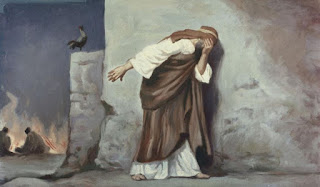
Let's compare and contrast the rooster with Peter, because in doing so we can learn a valuable spiritual lesson. In h
is article called Why Do Roosters Crow on the website Chicken Scratch, Joseph Hudson writes: 

“As with a vast majority of seemingly-strange animal behavior, one of the primary motivations for roosters to crow is to attract a mate. While our human ears struggle to detect any nuances between calls, scientists have analyzed the crows of distinct roosters and found that each rooster has a slightly different crow.

Thus, many researchers have concluded that the slight changes between each rooster are used as a method of impressing potential mates and out-gunning competing roosters.

The number of changes is extensive. Many roosters like to introduce a warbling effect into the calls as a sign of complexity and health. Further, the length of the song itself will vary between animals. While a rooster’s crow may seem arbitrary to many listeners, they are playing a distinct and repeatable song.

Depending on the rooster, this repetition may occur as often as every two minutes, or as infrequently as every ten. While the studies have not been wholly conclusive, it appears that hens tend to be more quickly attracted to roosters that exhibit longer and more complex songs.

Beyond the complexity of the call, there is also a much simpler variable: volume. One of the key differences in the crows of different roosters is how long they can become. While not always true, a larger rooster can typically produce a higher maximum volume compared to a smaller specimen. Thus, exhibiting a higher volume is a means by which roosters can brag about their size, strength, and health.

This effect is amplified when multiple roosters are within the hearing range of each other. When placed in the vicinity of another rooster, roosters tend to increase the volume of their crowing. This often results in a kind of competition between the males, resulting in a back-and-forth battle with increasing volume each round.

In extreme instances, agitated roosters have been known to damage their lungs or vocal cords in an attempt to out-shine another rooster. They are liable to become so engrossed in outperforming the other, and winning the affection of a mate, that they forget any self-preservation instincts and overwork themselves. While they typically recover from these episodes, the damage can sometimes be permanent.”

Hudson also states in his article:

“Unlike hens, which are primarily communal and docile animals, roosters are fiercely territorial. Thus, marking their territory is one of the primary reasons why a rooster may crow. In any given community, there will be much fewer roosters than hens. Hens often outnumber their male equivalents by over a hundred to one.

Therefore, roosters are allowed to rule a fairly large range of territory. A typical rooster will lay claim to an area of roughly an acre. It considers this range to be its property and will become disturbed if its land is intruded on by another male bird.

Crowing for territorial reasons takes on two forms. A rooster will often seek to remind other birds in the area that a certain portion of land is its territory. This is generally the function of the ‘alarm clock’ morning crowing that roosters are so well known for. When crowing for this reason, a rooster will attempt to find the highest perch possible.

Normally, this will be a tree or fence post. Then, the rooster will project out into its territory. This call normally resembles its mating song, but with even more embellishments added. In fact, territorial marking will often have the secondary effect of attracting a mate.” 

Now consider Peter in the courtyard warming himself among the soldiers with servant girls around. Peter and the soldiers are likened to the roosters and the females are likened to the hens. His protests and denials of being associated with Christ are like the rooster’s crows to mark out its territory. It’s as if Peter is saying, “This is my territory. I do not know Him. I’m not from Galilee.” Just as there is “a kind of competition between the male (roosters), resulting in a back-and-forth battle with increasing volume each round,” likewise, each one of Peter’s denials seemed to increase in intensity like a crescendo. 

Consider how “agitated roosters have been known to damage their lungs or vocal cords in an attempt to out-shine another rooster. They are liable to become so engrossed in outperforming the other, and winning the affection of a mate, that they forget any self-preservation instincts and overwork themselves. While they typically recover from these episodes, the damage can sometimes be permanent.” And consider how Peter became so agitated that he hurt himself spiritually in his attempts to prove he was not Christ’s disciple. 

In Mark's gospel it states:

"While Peter was below in the courtyard, one of the servant girls of the high priest came by. When she saw Peter warming himself, she looked closely at him. 

'You also were with that Nazarene, Jesus,' she said. 

But he denied it. 'I don't know or understand what you're talking about,' he said, and went out into the entryway. 

When the servant girl saw him there, she said again to those standing around, 

'This fellow is one of them.' Again he denied it. After a little while, those standing near said to Peter, 

'Surely you are one of them, for you are a Galilean.' 

He began to call down curses, and he swore to them, 'I don't know this man you're talking about.'

Immediately the rooster crowed the second time. Then Peter remembered the word Jesus had spoken to him: 'Before the rooster crows twice you will disown me three times.' And he broke down and wept."(Mar 14:66-72)

You can clearly see the crescendo of denial that reaches its climax when Peter even called down curses on himself and swore to them that he didn't know the Lord. Like a rooster, who becomes engrossed in outperforming the others, Peter was so caught up in not wanting to be seen before them as a follower of Christ, that he forgot any self-preservation instincts and overworked himself to the point of doing permanent damage to his spirit that could only be healed by the Lord.

Consider how the rooster that night had only crowed once by the time Peter had already denied the Lord three times. Roosters typically crow once every two minutes or as infrequently as every ten minutes. Therefore, the time between the rooster’s two crows that night would have been between two and ten minutes. During that short space of time, Peter had already denied the Lord three times, just as the Lord said he would do. As if Peter was in some sort of competition, he outgunned the crow and got out three vehement denials of Christ in that short space of time before the rooster even had a chance to get out a second crow.

In Matthew, Luke, and John’s gospels, they record the Lord saying, “Before the rooster crows today, you will disown Me three times.” That would have a different meaning than if He had said, "Before the rooster crows twice you will disown me three times." Roosters start to crow two hours before the onset of light. This is called anticipatory predawn crowing. Therefore if the Lord had said that Peter would disown him three times before the rooster crows today, that would indicate the imminence of Peter's denial of the Lord, which would even occur a couple of hours before dawn; whereas the statement that he would deny the Lord three times before the rooster crowed twice connotes the quickness with which he would deny the Lord three times in such a very short time span. 

But whether the Lord said the rooster would crow today or the rooster would crow twice, the analogy between Peter’s denials and the rooster’s crow is still valid. And besides, since Peter likely influenced the writing of Mark’s gospel, it is likely that Mark’s record of what Jesus said about the rooster crowing twice is more accurate than the others, since this was spoken directly by Jesus to Peter. He would probably have a better recollection of it than anyone else, since it involved him personally and had such a big impact on his life.

Either way you look at it, essentially the rooster’s crow is coming from its animal nature and not from anything spiritual. In the same way, Peter’s denials came from the baser instincts of his sinful human nature. It shows that no matter how emphatically Peter boasted about his loyalty and faithfulness to Christ, he was still capable of committing such a damnable sin as disowning the Lord whom he loved. If Peter, who loved the Lord so much and was such a passionate follower of Christ, could do this, how much more the rest of us who follow Jesus!

This was no small thing to disown the Lord. For Jesus had warned, “But whoever disowns me before others, I will disown before my Father in heaven.” (Mat 10:33). This indicates that one who disowns Christ after having known the Lord cannot be saved unless he repents and asks forgiveness before he dies. Peter certainly repented and was reinstated by Jesus after his resurrection from the dead.

Watch and Pray!
The one thing that could have kept Peter from denying Christ in the first place was prayer. The Lord had told him to watch and pray in the Garden of Gethsemane lest he fall into temptation. He said, "Watch and pray so that you will not fall into temptation. The spirit is willing, but the flesh is weak." (Mat 26:41). Peter’s spirit was willing to follow the Lord to prison and even to death, but his flesh was weak. Since he didn’t take the time to pray, his spirit remained weak, and when presented with a strong temptation, he fell into it.

The same goes for all of us who follow the Lord as His disciples. The spirit is willing but the flesh is weak. Because of the sinful nature, we are capable of committing damnable sins that can keep us from heaven. That’s why we must be careful to watch and pray so that we do not fall into temptation.

On the other hand, Jesus is our perfect example. He always took the time to pray every day, often very early while it was still dark, and even late at night, or throughout the night. And He did so especially on that fateful night, as the disciples slept, yet He prayed intensely all the way through to victory in the garden, surrendering His will to the will of the Father. And when He was confronted with all the temptations that night brought to Him, including His arrest and mock trial before the high priest, He didn't falter a bit. He remained faithful to the Heavenly Father all throughout that ordeal, even as Peter in contrast to Him was outside disowning Him. He was tempted in every way just as we are, yet was without sin (Heb 4:15). May we all follow in His steps (1 Pet 2:21) by imitating Him and obeying His command to watch and pray so that we do not fall into temptation.

Attribution: All Scripture taken from the Holy Bible NIV, copyright Zondervan, used by permission. Excerpts from Why Do Roosters Crow by Joseph Hudson taken from Chicken Scratch website, used for educational and commentary purposes only per the Fair Use Act. Image of Peter Denies Christ also used per the Fair Use Act.

Author's note: If you enjoyed this post, please also see the following: Sins That Will Keep You From HeavenSins of IgnoranceSins of OmissionAsk for the Ancient PathsThe False Gospel of Eternal Security, and Seeking Him in the Wee Hours of the Night. You may find the Main Directory for this blog at Home, and you may also access my complete blog directory at "Writing for the Master."

Do You Want to Know Him?
If you want to know Jesus personally, you can. It all begins when you repent and believe in Jesus.  Do you know what God's Word, the Bible says?

“Jesus came into Galilee, preaching the gospel of God, and saying, ‘The time is fulfilled, and the kingdom of God is at hand; repent and believe in the gospel.’” (Mar 1:14b-15).  He preached that we must repent and believe.

Please see my explanation of this in my post called "Do You Want to Know Jesus?"
_________________________________________________

Len Lacroix is the founder of Doulos Missions International.  He was based in Eastern Europe for four years, making disciples, as well as helping leaders to be more effective at making disciples who multiply, developing leaders who multiply, with the ultimate goal of planting churches that multiply. His ministry is now based in the United States with the same goal of helping fulfill the Great Commission. www.dmiworld.org.

Wednesday, September 26, 2018

Chosen for Obedience

Dear God seekers,

In Peter's first epistle he opens with a very beautiful greeting that is packed full of rich meaning, which gives us insight into why we have been chosen by God. He says:

"Peter, an apostle of Jesus Christ,

To God’s elect, strangers in the world, scattered throughout Pontus, Galatia, Cappadocia, Asia and Bithynia, who have been chosen according to the foreknowledge of God the Father, by the sanctifying work of the Spirit, for obedience to Jesus Christ and sprinkling by his blood:

Grace and peace be yours in abundance." (1 Pe 1:1-2, NIV '78)

I love these opening lines of his letter, and in order to draw out all the meaning welled up in them, let's look at each of his points in one particular phrase, through which he addressed his salutation to those "who have been chosen according to the foreknowledge of God the Father, by the sanctifying work of the Spirit, for obedience to Jesus Christ and sprinkling by his blood." This will be our main text, which we'll focus on.

Chosen 
First, the  apostle said we "have been chosen." What an honor and a privilege to be chosen by God to serve Him. He later goes on to say, "But you are a chosen people, a royal priesthood, a holy nation, God’s special possession, that you may declare the praises of him who called you out of darkness into his wonderful light." (1 Pe 2:9, NIV).

Remember Jesus said to his disciples, "You did not choose me, but I chose you..." (John 15:16a, NIV). That also applies to all the Lord's disciples today, since He still chooses disciples according to His grace.

The apostle Paul wrote to the Romans, “So too, at the present time there is a remnant chosen by grace. And if by grace, then it cannot be based on works; if it were, grace would no longer be grace. What then? What the people of Israel sought so earnestly they did not obtain. The elect among them did, but the others were hardened." (Rom 11:5-7, NIV)

When Paul wrote here about "the elect," he used the Greek word "ekloge," meaning (divine) selection: - chosen, election. When we elect someone, we have a choice. Otherwise, it would not be considered an election if we only had one option. Likewise, God had a choice, and he chose what Paul called "a remnant."

A remnant is a small portion of the whole. When we have a remnant of a piece of carpet, it’s a small piece. Likewise, there is a remnant chosen by God’s grace. Not all Jews and not all who call themselves Christians are chosen. Some people who seek God’s righteousness are seeking it by works, and they don’t obtain it. Then there are those who were not seeking it, and they obtain it. Those who obtained it without seeking it are the chosen ones.

God’s choice is always perfect. It’s always wise. It’s always just.

It’s extremely important to understand that when God chose the elect, it was based entirely on His grace. Grace is unmerited favor, which means you cannot earn it.

Paul wrote to Timothy saying that God "has saved us and called us with a holy calling, not according to our works, but according to His own purpose and grace which was granted us in Christ Jesus from all eternity." (2Ti 1:9). He taught that God did not save us because He knew in advance the good works we would do. God did not choose us based on our works. He saved us and chose us from all eternity, before the beginning of time, according to His grace. This way we cannot get the glory. All the glory belongs to the Lord.

In our main text of 1 Peter 1:2, the apostle actually identifies the audience to whom he is writing by putting the word "elect" (Gr. eklektos) together with two other Greek words to form the expression that is best translated as the "elect exiles of the dispersion" or the "elect sojourners living abroad." This reminds us that we have been chosen by God to live as strangers and aliens temporarily in this godless world, before we go to our eternal home in heaven. Peter actually goes on to make that very point later on in the beginning of his epistle, when he states : "Since you call on a Father who judges each person’s work impartially, live out your time as foreigners here in reverent fear." (1 Pe 1:17, NIV). He also says later, "Dear friends, I urge you, as aliens and strangers in the world, to abstain from sinful desires, which wage war against your soul." (1 Pe 2:11, NIV 78). This world is not our home; we who are chosen are just passing through.

According to Foreknowledge
In Peter's opening line of his epistle that we are focusing on today, he said that we are "chosen according to the foreknowledge of God." (1 Pe 1:2, NIV). That means God knew us before we were born, and even then He had already chosen us. As I wrote in my article, Election and Predestination:

The apostle Paul said, "For those whom He foreknew, He also predestined to become conformed to the image of His Son, so that He would be the firstborn among many brethren; and these whom He predestined, He also called; and these whom He called, He also justified; and these whom He justified, He also glorified." (Rom 8:29-30)

The Lord knew the elect beforehand. This is an amazing aspect about our relationship with the Lord that He actually knew us beforehand. Even our own parents didn’t know us until we were born. So we often think that God only began to know us once we were born. But as He said to Jeremiah the prophet: "Before I formed you in the womb I knew you, And before you were born I consecrated you; I have appointed you a prophet to the nations." (Jer 1:5). According to God’s Word, this is true of all those who are chosen.

So the point here is we who are God's elect existed in God's mind throughout eternity past, before we existed in creation. Before there was even one Christian alive on earth, God had already made His choice. He already had in mind those whom He had chosen, and He knew us.

By the Sanctifying Work of the Spirit
Let's go back to our main text now in Peter's opening salutation of his first epistle, where he said we are chosen "through the sanctifying work of the Spirit." (1 Pe 1:2, NIV). When God called us and set us apart in Christ from the world to serve Him, He sanctified us instantaneously by the power of the Holy Spirit. For the apostle says in Hebrews, "And by that will, we have been made holy through the sacrifice of the body of Jesus Christ once for all." (Heb 10:10, NIV). That speaks of what's already happened when we came to Christ. But the Lord also continues to sanctify us on an ongoing basis after we come to Christ, as He works on making us holy. He says in Hebrews, "For by one sacrifice he has made perfect forever those who are being made holy." (Heb 10:14, NIV).

Therefore, there are two kinds of sanctification, or two aspects of the same sanctification. There is that which is instant and that which is progressive. Let's remember that the progressive kind involves our ongoing cooperation with the Holy Spirit in making practical changes in our lives for the sake of holiness. The apostle says, "Make every effort to live in peace with everyone and to be holy; without holiness no one will see the Lord." (He 12:14, NIV). This means we must strive to be holy, since no one will see the Lord without holiness.

Peter explicitly says in the first part of his epistle, "But just as He who called you is holy, so be holy in all you do; for it is written: 'Be holy, because I am holy.'" (1 Pe 1:15-16, NIV). The fact that we must be instructed to "be holy" just as the Lord is holy means that this is the practical kind of holiness that requires our Spirit-empowered effort as described in Hebrews 12 above.

For more on this see my articles, Holy Living in a Perverted World and Walking in Truth, Righteousness, and Holiness.

For Obedience to Jesus Christ
Over in our main text again, the apostle Peter says in the opening of his epistle that we are chosen "for obedience to Jesus Christ." (1 Pe 1:2). We are chosen to be obedient to Christ, or as the NASB puts it, we are "chosen...to obey Jesus Christ." As I stated in my article, Is Obedience Optional?, this is not something we can opt out of, when we follow Christ. According to Scripture, obedience to God is a salvation requirement, no matter what anyone else may tell you. Peter is explicit here that the reason we were chosen was for obedience to the Lord. He re-emphasizes this later in his first chapter saying, "As obedient children, do not conform to the evil desires you had when you lived in ignorance." (1 Pe 1:14, NIV). He compares the elect here to obedient children, and instructs us not to conform to those evil desires we were once controlled by when we didn't know the truth. This is directly related to the imperative to "be holy" in verses 15 and 16 that I have already mentioned in the previous section.

Obedience is an essential part of salvation. In Hebrews the apostle says that "once made perfect, He became the source of eternal salvation for all who obey Him" (Heb 5:9). Notice that He's the source of salvation for all who obey Him. If you are still not convinced, then please read my other articles called The Obedience of FaithDoing What is RightFaith Works!, and If -- A Picture Paints a Thousand Words.

Sprinkled with His Blood
Lastly, the apostle Peter says we were "sprinkled with his blood." (1 Pe 1:2). Although we are chosen to obey the Lord Jesus, we all fall short at some time or another, and that's why I'm so glad we are also chosen to be sprinkled with His blood. It's the blood that washes all our sins away and makes us whole. It's the blood that saves our soul. Peter said, "For you know that it was not with perishable things such as silver or gold that you were redeemed from the empty way of life handed down to you from your ancestors, but with the precious blood of Christ, a lamb without blemish or defect." (1 Pe 1:18-19, NIV).

It's His blood that purifies us. As John wrote, "But if we walk in the light, as he is in the light, we have fellowship with one another, and the blood of Jesus, his Son, purifies us from all sin." (1 John 1:7, NIV). The life is in the blood (Lev 17:11), and the blood of Jesus is pure and holy, because He knew no sin (2 Cor 5:21), nor did He ever commit any sin (1 Pe 1:22). Since He rose from the dead as the Resurrection and the Life, we are saved from death through His atoning blood that was shed on the cross. He said, “I am the resurrection and the life. The one who believes in me will live, even though he dies; and whoever lives by believing in me will never die. Do you believe this?” (John 11:25-26, NIV).

Putting it All Together
According to the Bible, God's Word, those who know Christ are chosen to live as foreigners in a godless world according to God's foreknowledge for a specific purpose, which is to be obedient to Christ and sprinkled with His blood. It's only because we have been sprinkled with the blood of Jesus that we can say to one another as Peter did, "Grace and peace be yours in abundance." (1 Pe 1:2, NIV).

Attribution notice: Most Scripture quotations taken from the Holy Bible New International Version (NIV), copyright Zondervan, used by permission. The "Wise and Foolish Builders" painting © 2012 Danny Hahlbohm of Inspired Art, all rights reserved by the artist.

Author's note: If you enjoyed this article, I invite you to read my other articles called The Obedience of FaithIs Obedience Optional?Obedient to the Heavenly VisionFollowing in His StepsLiving on Earth as They Do in HeavenDoing What is RightFaith Works!, If -- A Picture Paints a Thousand Words, Aim for Perfection, Walking in the Perfect Will of God, Called to Be BlamelessElection and Predestination, and my daughter's poem, Overflowing Blessings. There are more articles on the Home page of this blog, too. You can also find my complete collection of blogs at Writing for the Master.

Do You Want to Know Him?
If you want to know Jesus personally, you can. It all begins when you repent and believe in Jesus.  Do you know what God's Word, the Bible says?

“Jesus came into Galilee, preaching the gospel of God, and saying, ‘The time is fulfilled, and the kingdom of God is at hand; repent and believe in the gospel.’” (Mar 1:14b-15).  He preached that we must repent and believe.

Please see my explanation of this in my post called "Do You Want to Know Jesus?"
_________________________________________________

Len Lacroix is the founder of Doulos Missions International.  He was based in Eastern Europe for four years, making disciples, as well as helping leaders to be more effective at making disciples who multiply, developing leaders who multiply, with the ultimate goal of planting churches that multiply. His ministry is now based in the United States with the same goal of helping fulfill the Great Commission. www.dmiworld.org.

Friday, December 16, 2016

Amazing Grace

All throughout the Bible we see that God is gracious and compassionate. “The LORD is gracious and compassionate, slow to anger and rich in love.” (Ps 145:8, NIV). I for one am a recipient of His amazing grace! Let’s look at some examples of those who received His grace in Scripture.
Adam and Eve
Through sin they knew that they were naked, so they became afraid of God and hid themselves from Him.

Then the eyes of both of them were opened, and they knew that they were naked; and they sewed fig leaves together and made themselves loin coverings. They heard the sound of the LORD God walking in the garden in the cool of the day, and the man and his wife hid themselves from the presence of the LORD God among the trees of the garden. Then the LORD God called to the man, and said to him, "Where are you?" He said, "I heard the sound of You in the garden, and I was afraid because I was naked; so I hid myself." And He said, "Who told you that you were naked? Have you eaten from the tree of which I commanded you not to eat?" (Gen 3:7-11)

God graciously made garments for them to cover their shameful nakedness. “The LORD God made garments of skin for Adam and his wife, and clothed them.” (Gen 3:21). These garments required the shedding of blood. Therefore, we see God's grace all the way back to the garden of Eden.

Noah
All men on earth were wicked in the days of Noah. “Then the LORD saw that the wickedness of man was great on the earth, and that every intent of the thoughts of his heart was only evil continually. The LORD was sorry that He had made man on the earth, and He was grieved in His heart. The LORD said, ‘I will blot out man whom I have created from the face of the land, from man to animals to creeping things and to birds of the sky; for I am sorry that I have made them.’"  (Gen 6:5-7)

However, Noah found grace in God’s sight. “But Noah found favor in the eyes of the LORD. These are the records of the generations of Noah. Noah was a righteous man, blameless in his time; Noah walked with God.” (Gen 6:8-9).

He was obedient. “Thus Noah did; according to all that God had commanded him, so he did. (Gen 6:22)

He built the ark by faith. “By faith Noah, being warned by God about things not yet seen, in reverence prepared an ark for the salvation of his household, by which he condemned the world, and became an heir of the righteousness which is according to faith.” (Heb 11:7)

He was thankful and built an altar to the Lord. “Then Noah built an altar to the LORD, and took of every clean animal and of every clean bird and offered burnt offerings on the altar. The LORD smelled the soothing aroma; and the LORD said to Himself, ‘I will never again curse the ground on account of man, for the intent of man's heart is evil from his youth; and I will never again destroy every living thing, as I have done.’” (Gen 8:20-21)

Abraham 
He was justified by grace through faith. “For if Abraham was justified by works, he has something to boast about, but not before God. For what does the Scripture say? ‘Abraham believed God, and it was credited to him as righteousness.’ Now to the one who works, his wage is not credited as a favor, but as what is due. But to the one who does not work, but believes in Him who justifies the ungodly, his faith is credited as righteousness,” (Rom 4:2-5)

Lot 
Although he hesitated when he was told to flee from Sodom, the Lord spared his life and that of his daughters. The Scripture says “But he hesitated. So the men seized his hand and the hand of his wife and the hands of his two daughters, for the compassion of the LORD was upon him; and they brought him out, and put him outside the city.” (Gen 19:16)

“Then the LORD rained on Sodom and Gomorrah brimstone and fire from the LORD out of heaven, and He overthrew those cities, and all the valley, and all the inhabitants of the cities, and what grew on the ground.” (Gen 19:24-25)

The Israelites
God had compassion on them and heard their groaning in Egypt, when they were in bondage as slaves.

"Go and gather the elders of Israel together and say to them, 'The LORD, the God of your fathers, the God of Abraham, Isaac and Jacob, has appeared to me, saying, "I am indeed concerned about you and what has been done to you in Egypt."'" (Exo 3:16)

"So the people believed; and when they heard that the LORD was concerned about the sons of Israel and that He had seen their affliction, then they bowed low and worshiped." (Exo 4:31)

'I HAVE CERTAINLY SEEN THE OPPRESSION OF MY PEOPLE IN EGYPT AND HAVE HEARD THEIR GROANS, AND I HAVE COME DOWN TO RESCUE THEM; COME NOW, AND I WILL SEND YOU TO EGYPT.' (Act 7:34)

Though they worshiped idols and grumbled and complained, and many died because of it, He sent them bread from heaven and water from the rock, which was Christ.

"Nevertheless, with most of them God was not well-pleased; for they were laid low in the wilderness. Now these things happened as examples for us, so that we would not crave evil things as they also craved. Do not be idolaters, as some of them were; as it is written, 'THE PEOPLE SAT DOWN TO EAT AND DRINK, AND STOOD UP TO PLAY.' Nor let us act immorally, as some of them did, and twenty-three thousand fell in one day. Nor let us try the Lord, as some of them did, and were destroyed by the serpents. Nor grumble, as some of them did, and were destroyed by the destroyer. Now these things happened to them as an example, and they were written for our instruction, upon whom the ends of the ages have come." (1Co 10:5-11)

In the Promised Land, they went astray and worshiped idols again. They committed adultery with the false gods of the nations. Therefore, God gave them over to the hands of their enemies, sending them into Babylonian captivity for 70 years. Yet He brought them back to their land afterward and restored them. God was willing to take them back in spite of their unfaithfulness. He preserved a remnant.

Rahab the Harlot
Though she was a harlot, because she had faith and feared God, welcoming the Hebrew spies, she was spared when the Israelites destroyed Jericho (Heb 11:31).

Joshua said to the two men who had spied out the land, "Go into the harlot's house and bring the woman and all she has out of there, as you have sworn to her." So the young men who were spies went in and brought out Rahab and her father and her mother and her brothers and all she had; they also brought out all her relatives and placed them outside the camp of Israel. They burned the city with fire, and all that was in it. Only the silver and gold, and articles of bronze and iron, they put into the treasury of the house of the LORD. However, Rahab the harlot and her father's household and all she had, Joshua spared; and she has lived in the midst of Israel to this day, for she hid the messengers whom Joshua sent to spy out Jericho. (Jos 6:22-25)

She became the wife of a Hebrew named Salmon. Together they had a son named Boaz who married Ruth the Moabite, whose grandson was Jesse the father of David (Mat 1:5-6).

David 
"David found favor in God's sight, and asked that he might find a dwelling place for the God of Jacob.” (Act 7:46)

Then David the king went in and sat before the LORD, and he said, "Who am I, O Lord GOD, and what is my house, that You have brought me this far? "And yet this was insignificant in Your eyes, O Lord GOD, for You have spoken also of the house of Your servant concerning the distant future. And this is the custom of man, O Lord GOD. "Again what more can David say to You? For You know Your servant, O Lord GOD! "For the sake of Your word, and according to Your own heart, You have done all this greatness to let Your servant know. "For this reason You are great, O Lord GOD; for there is none like You, and there is no God besides You, according to all that we have heard with our ears. "And what one nation on the earth is like Your people Israel, whom God went to redeem for Himself as a people and to make a name for Himself, and to do a great thing for You and awesome things for Your land, before Your people whom You have redeemed for Yourself from Egypt, from nations and their gods? "For You have established for Yourself Your people Israel as Your own people forever, and You, O LORD, have become their God. "Now therefore, O LORD God, the word that You have spoken concerning Your servant and his house, confirm it forever, and do as You have spoken, that Your name may be magnified forever, by saying, 'The LORD of hosts is God over Israel'; and may the house of Your servant David be established before You. "For You, O LORD of hosts, the God of Israel, have made a revelation to Your servant, saying, 'I will build you a house'; therefore Your servant has found courage to pray this prayer to You. "Now, O Lord GOD, You are God, and Your words are truth, and You have promised this good thing to Your servant. "Now therefore, may it please You to bless the house of Your servant, that it may continue forever before You. For You, O Lord GOD, have spoken; and with Your blessing may the house of Your servant be blessed forever." (2Sa 7:18-29)

David sent messengers and took her, and when she came to him, he lay with her; and when she had purified herself from her uncleanness, she returned to her house. The woman conceived; and she sent and told David, and said, "I am pregnant." (2Sa 11:4-5)

When the time of mourning was over, David sent and brought her to his house and she became his wife; then she bore him a son. But the thing that David had done was evil in the sight of the LORD. (2Sa 11:27)

Nathan then said to David, "You are the man! Thus says the LORD God of Israel, 'It is I who anointed you king over Israel and it is I who delivered you from the hand of Saul. (2Sa 12:7)

Then David said to Nathan, "I have sinned against the LORD." And Nathan said to David, "The LORD also has taken away your sin; you shall not die. (2Sa 12:13)

Then David comforted his wife Bathsheba, and went in to her and lay with her; and she gave birth to a son, and he named him Solomon. Now the LORD loved him. (2Sa 12:24)

Gideon 
He is listed in the book of Hebrews as a man of faith, although he took the gold earrings he received and made them into an ephod and all Israel played the harlot with it there, so that it became a snare to Gideon and his household.

Yet Gideon said to them, "I would request of you, that each of you give me an earring from his spoil." (For they had gold earrings, because they were Ishmaelites.) They said, "We will surely give them." So they spread out a garment, and every one of them threw an earring there from his spoil. The weight of the gold earrings that he requested was 1,700 shekels of gold, besides the crescent ornaments and the pendants and the purple robes which were on the kings of Midian, and besides the neck bands that were on their camels' necks. Gideon made it into an ephod, and placed it in his city, Ophrah, and all Israel played the harlot with it there, so that it became a snare to Gideon and his household. (Jdg 8:24-27)

Barak
Although he did not go to battle without Deborah against Sisera and his army, he conquered by faith and is listed in the Hebrews hall of faith (Heb 11:32).

Samson
Although he fell into sexual immorality with a harlot in Gaza, as well as with Delilah, he walked by faith and was used mightily by God to deliver the Israelites. He too, is considered a man of faith in the book of Hebrews (Heb 11:32).

Jephthah
He was the son of a harlot (Jdg 11:1), who made a foolish vow that cost his one and only child her life, yet he conquered the enemy by faith and was another recipient of God’s amazing grace (Heb 11:32).

Jephthah made a vow to the LORD and said, "If You will indeed give the sons of Ammon into my hand, then it shall be that whatever comes out of the doors of my house to meet me when I return in peace from the sons of Ammon, it shall be the LORD'S, and I will offer it up as a burnt offering." So Jephthah crossed over to the sons of Ammon to fight against them; and the LORD gave them into his hand. He struck them with a very great slaughter from Aroer to the entrance of Minnith, twenty cities, and as far as Abel-keramim. So the sons of Ammon were subdued before the sons of Israel. When Jephthah came to his house at Mizpah, behold, his daughter was coming out to meet him with tambourines and with dancing. Now she was his one and only child; besides her he had no son or daughter. (Jdg 11:30-34)

Peter the Apostle
Though he denied the Lord three times, the Lord restored him and used him mightily.

Then he began to curse and swear, "I do not know the man!" And immediately a rooster crowed. And Peter remembered the word which Jesus had said, "Before a rooster crows, you will deny Me three times." And he went out and wept bitterly. (Mat 26:74-75)

So when they had finished breakfast, Jesus *said to Simon Peter, "Simon, son of John, do you love Me more than these?" He *said to Him, "Yes, Lord; You know that I love You." He *said to him, "Tend My lambs." He *said to him again a second time, "Simon, son of John, do you love Me?" He *said to Him, "Yes, Lord; You know that I love You." He *said to him, "Shepherd My sheep." He *said to him the third time, "Simon, son of John, do you love Me?" Peter was grieved because He said to him the third time, "Do you love Me?" And he said to Him, "Lord, You know all things; You know that I love You." Jesus *said to him, "Tend My sheep. "Truly, truly, I say to you, when you were younger, you used to gird yourself and walk wherever you wished; but when you grow old, you will stretch out your hands and someone else will gird you, and bring you where you do not wish to go." Now this He said, signifying by what kind of death he would glorify God. And when He had spoken this, He *said to him, "Follow Me!" (Joh 21:15-19)

The Adulteress Caught in the Act
Although she was caught in adultery, in the very act, Jesus did not condemn her, but told her to go and sin no more.

The scribes and the Pharisees *brought a woman caught in adultery, and having set her in the center of the court, they *said to Him, "Teacher, this woman has been caught in adultery, in the very act. "Now in the Law Moses commanded us to stone such women; what then do You say?" They were saying this, testing Him, so that they might have grounds for accusing Him. But Jesus stooped down and with His finger wrote on the ground. But when they persisted in asking Him, He straightened up, and said to them, "He who is without sin among you, let him be the first to throw a stone at her." Again He stooped down and wrote on the ground. When they heard it, they began to go out one by one, beginning with the older ones, and He was left alone, and the woman, where she was, in the center of the court. Straightening up, Jesus said to her, "Woman, where are they? Did no one condemn you?" She said, "No one, Lord." And Jesus said, "I do not condemn you, either. Go. From now on sin no more."] (Joh 8:3-11)

As the apostle Paul said, the grace of God teaches us to say "No" to ungodliness (Tit 2:12).

Woman at the Well
She was another adulteress the Lord saved wondrously. Though she had had five husbands and was living with a sixth man who was not her husband, the Lord saved her and used her to bring many to Himself.

He *said to her, "Go, call your husband and come here." The woman answered and said, "I have no husband." Jesus *said to her, "You have correctly said, 'I have no husband'; for you have had five husbands, and the one whom you now have is not your husband; this you have said truly." (Joh 4:16-18)

From that city many of the Samaritans believed in Him because of the word of the woman who testified, "He told me all the things that I have done." So when the Samaritans came to Jesus, they were asking Him to stay with them; and He stayed there two days. Many more believed because of His word; and they were saying to the woman, "It is no longer because of what you said that we believe, for we have heard for ourselves and know that this One is indeed the Savior of the world." (Joh 4:39-42)

Paul the Apostle 
Although he did much harm to the saints and persecuted the church, God had mercy on him. He considered himself to have been the chief of sinners.

He said, "It is a trustworthy statement, deserving full acceptance, that Christ Jesus came into the world to save sinners, among whom I am foremost of all. Yet for this reason I found mercy, so that in me as the foremost, Jesus Christ might demonstrate His perfect patience as an example for those who would believe in Him for eternal life. Now to the King eternal, immortal, invisible, the only God, be honor and glory forever and ever. Amen." (1Ti 1:15-17)

Now there was a disciple at Damascus named Ananias; and the Lord said to him in a vision, "Ananias." And he said, "Here I am, Lord." And the Lord said to him, "Get up and go to the street called Straight, and inquire at the house of Judas for a man from Tarsus named Saul, for he is praying, and he has seen in a vision a man named Ananias come in and lay his hands on him, so that he might regain his sight." But Ananias answered, "Lord, I have heard from many about this man, how much harm he did to Your saints at Jerusalem; and here he has authority from the chief priests to bind all who call on Your name." But the Lord said to him, "Go, for he is a chosen instrument of Mine, to bear My name before the Gentiles and kings and the sons of Israel; for I will show him how much he must suffer for My name's sake." So Ananias departed and entered the house, and after laying his hands on him said, "Brother Saul, the Lord Jesus, who appeared to you on the road by which you were coming, has sent me so that you may regain your sight and be filled with the Holy Spirit." And immediately there fell from his eyes something like scales, and he regained his sight, and he got up and was baptized; (Act 9:10-18)

Therefore, Paul could say of himself, "By the grace of God I am what I am." (1 Cor 15:10)

Corinthian Adulterer
Although this Christian man committed sexual immorality with his father's wife, and had to be put out of the church, he was later forgiven and restored to fellowship. The people comforted him and reaffirmed their love for him.

Paul said, “It is actually reported that there is immorality among you, and immorality of such a kind as does not exist even among the Gentiles, that someone has his father's wife.” (1Co 5:1)

Later Paul wrote to the Corinthians about him saying, “Sufficient for such a one is this punishment which was inflicted by the majority, so that on the contrary you should rather forgive and comfort him, otherwise such a one might be overwhelmed by excessive sorrow. Wherefore I urge you to reaffirm your love for him. For to this end also I wrote, so that I might put you to the test, whether you are obedient in all things. But one whom you forgive anything, I forgive also; for indeed what I have forgiven, if I have forgiven anything, I did it for your sakes in the presence of Christ, so that no advantage would be taken of us by Satan, for we are not ignorant of his schemes.” (2Co 2:6-11)

Jezebel the False Prophetess
Although she taught and led the Lord’s servants astray so that they committed acts of immorality and ate things sacrificed to idols, He gave her time to repent.

'But I have this against you, that you tolerate the woman Jezebel, who calls herself a prophetess, and she teaches and leads My bond-servants astray so that they commit acts of immorality and eat things sacrificed to idols. 'I gave her time to repent, and she does not want to repent of her immorality. 'Behold, I will throw her on a bed of sickness, and those who commit adultery with her into great tribulation, unless they repent of her deeds. 'And I will kill her children with pestilence, and all the churches will know that I am He who searches the minds and hearts; and I will give to each one of you according to your deeds. (Rev 2:20-23)

Putting it All Together
From Genesis to Revelation, we see that while God hates sin, He is gracious and compassionate, slow to anger and abounding in love. He is constantly showing amazing grace to people all over the world, and will continue to do so until the end of the age. It's no wonder He is known as the God of all grace (1Pe 5:10). Let’s remember that we are saved by grace through faith. As Paul said, “For by grace you have been saved through faith; and that not of yourselves, it is the gift of God; not as a result of works, so that no one may boast.” (Eph 2:8-9).

Of course, grace is not a license to sin (Rom 6:1; Jude 1:4). Anyone who is familiar with my ministry knows that I emphasize the necessity of Holy Living, Practical Righteousness, the Obedience of Faith, and Aiming for Perfection. Yet while the Lord is holy and requires of us holiness, perfection, righteousness, and truth, He also demonstrates abundant grace to the humble when we fall short. The key is to repent and confess your sin to him as David did when the prophet Nathan rebuked him. He said, "I have sinned against the LORD." If you read Psalm 51, you can see how deeply he humbled himself in repentance before God.

James wrote, “But He gives a greater grace. Therefore it says, ‘God is opposed to the proud, but gives grace to the humble.’ Submit therefore to God. Resist the devil and he will flee from you. Draw near to God and He will draw near to you. Cleanse your hands, you sinners; and purify your hearts, you double-minded. Be miserable and mourn and weep; let your laughter be turned into mourning and your joy to gloom. Humble yourselves in the presence of the Lord, and He will exalt you.” (Jas 4:6-10)

In the words of John Newton:

Amazing grace! How sweet the sound
That saved a wretch like me!
I once was lost, but now am found;
Was blind, but now I see.
’Twas grace that taught my heart to fear,
And grace my fears relieved;
How precious did that grace appear
The hour I first believed.

Attribution notice: Most Scripture quotations taken from the NASB.

Author's note: If you enjoyed this post, I also recommend reading Costly Grace, Drifting Away, By Grace Alone, The Lord Healed My Backsliding, The Conditional Security of the Believer, The Truth Set Me Free!, Is Obedience Optional?, The Cost of Discipleship, God Forgives and Forgets, The Love of Jesus, Aim for Perfection, Walking in the Perfect Will of GodLiving a Life Worthy of the Lord, Repentance That Leads to Life, Holding Fast the Faithful Word, No Flesh Will Be Justified By Works, Separation from the World, The Straight and Narrow Path, Sins That Will Keep You From Heaven, Ask for the Ancient Paths, The Top Ten Things Jesus Taught, The Apostasy Parables, and Salvation with Fear and Trembling. See the Home page of this blog for more of my articles about Seeking the Lord. You can also find my complete collection of blogs at Writing for the Master.

Do You Want to Know Him?
If you want to know Jesus personally, you can. It all begins when you repent and believe in Jesus.  Do you know what God's Word, the Bible says?

“Jesus came into Galilee, preaching the gospel of God, and saying, ‘The time is fulfilled, and the kingdom of God is at hand; repent and believe in the gospel.’” (Mar 1:14b-15).  He preached that we must repent and believe.

Please see my explanation of this in my post called "Do You Want to Know Jesus?"

_________________________________________________

Len Lacroix is the founder of Doulos Missions International.  He was based in Eastern Europe for four years, making disciples, as well as helping leaders to be more effective at making disciples who multiply, developing leaders who multiply, with the ultimate goal of planting churches that multiply. His ministry is now based in the United States with the same goal of helping fulfill the Great Commission. www.dmiworld.org.

Monday, March 24, 2014

Righteousness by Faith not Law

Although the Law and Prophets have not been abolished, and none of the commandments have passed from the Law (Mt 5:17-19), observing the Law does not justify anyone.  We are justified by faith in Christ alone.

How False Teachers Sneaked In
The apostle Paul tells how false teachers entered the Church in Jerusalem during the first century, teaching justification through the Law.  Paul says that prior to the time when this heresy was introduced, he and Barnabas had brought Titus, a Greek believer, to Jerusalem with them. He met privately with those among the apostles and elders that were of reputation, so that he could share with them the gospel he preached among the Gentiles. Yet none of the Jewish apostles or elders there required Titus to be circumcised.  They apparently had no problem with Titus remaining uncircumcised.

But then some false brethren sneaked into the Church, while Paul was there with Titus, to spy out the liberty that they had in Christ Jesus, in order to bring them into bondage. They wanted to push Paul and Titus back into observing the Law as a means of justification.  Yet Paul refused to yield in subjection to them for even an hour.  Paul states:

“Then after an interval of fourteen years I went up again to Jerusalem with Barnabas, taking Titus along also. It was because of a revelation that I went up; and I submitted to them the gospel which I preach among the Gentiles, but I did so in private to those who were of reputation, for fear that I might be running, or had run, in vain. But not even Titus, who was with me, though he was a Greek, was compelled to be circumcised. But it was because of the false brethren secretly brought in, who had sneaked in to spy out our liberty which we have in Christ Jesus, in order to bring us into bondage. But we did not yield in subjection to them for even an hour, so that the truth of the gospel would remain with you.” (Gal 2:1-5)

Peter's Fall from Grace
Although Paul and Titus did not give in to these false brethren, who were Judaizers, they apparently affected the apostle Peter, also known as Cephas. He made the mistake of going back to the Law for a while.  The apostle Paul tells the story of what happened:

“But when Cephas came to Antioch, I opposed him to his face, because he stood condemned. For prior to the coming of certain men from James, he used to eat with the Gentiles; but when they came, he began to withdraw and hold himself aloof, fearing the party of the circumcision. The rest of the Jews joined him in hypocrisy, with the result that even Barnabas was carried away by their hypocrisy. But when I saw that they were not straightforward about the truth of the gospel, I said to Cephas in the presence of all, "If you, being a Jew, live like the Gentiles and not like the Jews, how is it that you compel the Gentiles to live like Jews?” (Gal 2:11-14)

We learn from Paul that these Judaizers came from James, and were known as the party of the circumcision.  But prior to their arrival in the Church, Peter used to eat with Gentiles. Remember, the Lord revealed to him that he was not to call anything unclean that He had called clean.  The Lord had sent Peter to the Gentile home of Cornelius to preach the gospel and they had all been baptized with the Holy Spirit.  Peter had learned from the Lord that it was not a problem for him to associate with Gentiles.  It was only after the entrance of the Judaizers into the Church that Peter yielded in subjection to their heresy. 

When he left his base in Jerusalem to visit Antioch, where Paul was based, Paul noticed that Peter began to withdraw and hold himself aloof, fearing the party of the circumcision.  Out of his fear of what the Judaizers would say of him if he associated with uncircumcised Gentiles, he withdrew from them, even though they were justified believers in Christ. As Peter set the bad example, the rest of the Jews joined him in hypocrisy, with the result that even Barnabas was carried away by their hypocrisy.  It was at that point that Paul saw that they were not straightforward about the truth of the gospel and knew he needed to confront Peter publicly to his face.

Paul said to Cephas in the presence of all, "If you, being a Jew, live like the Gentiles and not like the Jews, how is it that you compel the Gentiles to live like Jews?”  In other words, Peter had been living like a Gentile himself, rather than like a Jew as he actually was.  And now through his behavior among the Gentiles he was compelling the Gentiles to live like Jews.  He was compelling them through peer pressure to observe the Law, when Peter, himself a Jew, was not even observing.  This was clearly hypocrisy, which nullified the grace of God.

What Paul said to Peter in that confrontation teaches us many things.  He said:

"We are Jews by nature and not sinners from among the Gentiles; nevertheless knowing that a man is not justified by the works of the Law but through faith in Christ Jesus, even we have believed in Christ Jesus, so that we may be justified by faith in Christ and not by the works of the Law; since by the works of the Law no flesh will be justified. But if, while seeking to be justified in Christ, we ourselves have also been found sinners, is Christ then a minister of sin? May it never be! For if I rebuild what I have once destroyed, I prove myself to be a transgressor. For through the Law I died to the Law, so that I might live to God. I have been crucified with Christ; and it is no longer I who live, but Christ lives in me; and the life which I now live in the flesh I live by faith in the Son of God, who loved me and gave Himself up for me. I do not nullify the grace of God, for if righteousness comes through the Law, then Christ died needlessly." (Gal 2:15-21)

Paul’s first point was that he and Peter were biological Jews who knew that a man is not justified by the works of the Law but through faith in Christ Jesus.  Even they had believed in Christ Jesus, so that they might be justified by faith in Christ and not by the works of the Law.  Both Peter and Paul knew that no flesh will be justified by the works of the Law.

Paul’s second point was this: “If, while seeking to be justified in Christ, we ourselves have also been found sinners, is Christ then a minister of sin? May it never be!” He meant that when a Jew, like he or Peter, seeks to be justified through faith in Christ, they would become aware in the process that they are not observing the Law.  They would be conscious of the fact that they were sinners, breaking God’s Law.  Even so, it did not mean that Christ promotes sin.  He never will. 

Rebuilding What You Have Destroyed
Then Paul likened their Law breaking to the literal process of breaking or destroying something. He said, “For if I rebuild what I have once destroyed, I prove myself to be a transgressor.” In other words, if he or Peter would begin to go back and try to reconstruct, or put back together, the Law that they had broken when they sought justification by faith in Christ, they would only be proving that they themselves had in fact transgressed the Law and broken it in the first place. 

Dead to the Law
Therefore, he was saying that they should not do so. Instead, it was through the Law that Paul died to the Law, so that he might live to God.  Paul knew that the Law itself would declare him a lawbreaker if he sought to rebuild it after he had broken it.  So he could never turn back to it again, once he sought justification through faith in Christ.  He had died to the Law, so that he might live to God.  There was no other way.

How did Paul die to the Law?  He explained, “I have been crucified with Christ; and it is no longer I who live, but Christ lives in me; and the life which I now live in the flesh I live by faith in the Son of God, who loved me and gave Himself up for me.” When Paul was baptized into Christ, he died with Christ.  At that point, as a dead man, he became dead to the Law and freed from it.  And from that point, it was no longer Paul who lived, it was Christ who lived in him.  He lived by faith alone in the Son of God, who loved Paul and gave Himself up for him.

This must be our practice as well.  We must die to the Law when we are crucified with Christ.  Then it is no longer we who live, and since we are dead, we cannot observe the Law.  All we can do is live by faith in the Son of God, who loved us and gave Himself for us.  Then it is no longer I myself who lives, but Christ who lives in me.  It’s His life in me that’s setting me free and making me holy.

We must not go back to observing the Law, which is hypocrisy, since we do not actually observe the whole Law, but only certain parts. Doing so nullifies the grace of God, and those who do so stand condemned like Peter (2:11).  Paul explained how it condemns us when he wrote to the Galatians:

“For as many as are of the works of the Law are under a curse; for it is written, ‘Cursed is everyone who does not abide by all things written in the book of the Law, to perform them.’ Now that no one is justified by the Law before God is evident; for, ‘The righteous man shall live by faith.’ However, the Law is not of faith; on the contrary, ‘He who practices them shall live by them.’ Christ redeemed us from the curse of the Law, having become a curse for us--for it is written, ‘Cursed is everyone who hangs on a tree’-- in order that in Christ Jesus the blessing of Abraham might come to the Gentiles, so that we would receive the promise of the Spirit through faith.”  (Gal 3:10-14)

His first point was that everyone who does not abide by all things written in the book of the Law, to perform them is cursed.  He who practices them shall live by them. It’s all or nothing.  If you seek to perform some things in the Law for the sake of justification, but not all, then you are cursed.  The fact is that the Law justifies no one in the sight of God.  So it is a futile effort to seek to be justified by the Law.  Therefore, don’t put yourself under a curse by trying to be justified that way.

What should we do then?  Since we know the Law is not of faith, our justification will never include observing the Law. The righteous man shall live by faith. Our faith must be in Christ alone.  Christ redeemed us from the curse of the Law, having become a curse for us--for it is written, ‘Cursed is everyone who hangs on a tree. Instead of going back to observing the Law as a means of justification, putting yourself under a curse, rather live by faith in Christ.  He became a curse for us, when He hung on that tree, and redeemed us from the curse of the Law.

Freedom in Christ by the Spirit
Praise God, we are free from the Law! So let's not turn back again to observing it and be enslaved by it all over again.  We do not need to be circumcised or observe special days and months and seasons and years. (see Gal 4:9-10)

"It was for freedom that Christ set us free; therefore keep standing firm and do not be subject again to a yoke of slavery." (Gal 5:1). However, we must not use our freedom as a cover up for evil.  As Paul wrote: "For you were called to freedom, brethren; only do not turn your freedom into an opportunity for the flesh, but through love serve one another." (Gal 5:13)  And as Peter said, "Live as free people, but do not use your freedom as a cover-up for evil; live as God’s slaves." (1 Pe 2:16).

It is possible to be justified by faith in Christ and then live according to the sinful nature, pleasing the sinful nature, and committing acts of the sinful nature.  But those who live like that will ultimately be destroyed, if they don't repent, as Jesus and the apostles taught.  Paul listed some examples of the acts of the sinful nature, and warned that those who practice such things will not inherit the kingdom of God (see Gal 5:21).

That is why I have already been teaching all along in my other articles that we must obey God and keep His commandments.  What matters is the keeping of the commandments of God (see 1 Co 7:19). But this is done by faith in Christ, as we live by the Spirit, walking in love, living for righteousness, not through the flesh.  As Paul wrote:

"But I say, walk by the Spirit, and you will not carry out the desire of the flesh. For the flesh sets its desire against the Spirit, and the Spirit against the flesh; for these are in opposition to one another, so that you may not do the things that you please. But if you are led by the Spirit, you are not under the Law."  (Gal 5:16-18)

Living by the Spirit and being led by the Spirit is a matter of sowing seeds to please the Spirit, in order to bear the fruit of the Spirit and ultimately reap eternal life. As Paul said:

"Do not be deceived, God is not mocked; for whatever a man sows, this he will also reap. For the one who sows to his own flesh will from the flesh reap corruption, but the one who sows to the Spirit will from the Spirit reap eternal life." (Gal 6:7-8)

Apart from Christ you can do nothing.  It’s only His life in you that will please the Father, not what you can do for God.  Our obedience must never be an attempt on our part to be justified. But a true disciple will obey the Lord’s commandments, and the Holy Spirit does take from the Law as He leads us in the way to live that is pleasing to God. That is part of being led by the Spirit, taught by God, allowing Him to speak to us through the whole Bible. It is not seeking justification through the Law.

The Risk of Abusing God's Amazing Grace
In fact, the Lord Jesus Himself respected and fulfilled the entire Law.  And now because He lives in us, He works His desires, which are still the same, except for the sacrifices, rituals, ceremonies, food and drink ordinances, observation of special days, week, months, and years, and the separation of Jews and Gentiles. Actually we must fear God even more now than they did under the Old Covenant, because we are being led and evaluated by The Holy Spirit.  Therefore, there is greater risk of abusing God's amazing grace.

This is what the Lord told brother Yong-Doo Kim, whom I have written about previously in my article, Baptized by Blazing Fire -- a Korean church's testimony.  Brother Kim wrote in Baptize by Blazing Fire Book II:

"When God gives us a chance, we must take it, no matter what. Jesus said, 'That particular saint mocked God and troubled the Holy Spirit. Therefore, if she does not mourn and sincerely repent, she will not be entering heaven.  If the judgment of the congregation members is hard, then how much more will I judge the Pastors who are committing adultery? The ministers must repent to the point of death. Currently, the ministers of today are mocking God, they say, "These are the days of grace, and the gospel sets us free, just repent and one will be forgiven unconditionally!" These are the days one needs to be in fear more than the days of the Old Testament.' The Lord warned us that the day is coming when we will all have to give account for our deeds."

Brother Kim continued, "As I write on this chapter, I am experiencing many hours of dismay and dissension. Jesus said, 'Do we then nullify the law by this faith. Not at all! Rather we uphold the law.' (Romans 3:31). In fact, we are living our daily life within the Lord’s amazing grace. However, living in His grace does not mean our sins just disappear. We are abusing God’s grace if we do not repent. A daily repentant life is the fastest and shortest route to God’s mercy and compassion."

Furthermore, when the first century apostles and elders in Jerusalem met to decide the case regarding the Judaizers requiring circumcision of Gentile believers, their final written decision contained provisions taken directly from the Law.  They ended their letter to the Gentiles with the following instructions: "You are to abstain from food sacrificed to idols, from blood, from the meat of strangled animals and from sexual immorality. You will do well to avoid these things. Farewell." (Act 15:29).  Let's not abuse God's amazing grace!  

The Obedience of Faith
I encourage you to read the other articles I have written on the need for obedience in Working God's Way and Eternal Destinations, as well as right here in Seeking the Lord, especially the following ones, beginning with the first three articles in the left-hand column:

Is Obedience Optional?
The Law of Christ 
Faith Works!
The Law Fulfilled in Us
The Law Established Through Faith
The Cost of Discipleship
The New Covenant
Costly Grace
Deleted Scriptures in the Bible?
Did Jesus Nail the Law to the Cross?
The Law is Good if Used Lawfully
The Ways of Life
The Obedience of Faith
Striving to Enter the Kingdom of God
Aim for Perfection
Righteous Deeds and White Robes
Doing What is Right
Your Rewards Are Based on Your Practice
Partaking of the Divine Nature
Walking in the Perfect Will of God
Pressing on Toward the Goal
Obedience by the Spirit
What Then Must We Observe?              
The Flesh vs. the Spirit

Attribution notice: Most Scripture quotations taken from the NASB.

Author's note Also see The Spirit's Law of Life, The Spirit of the Law, and Baptized with the Spirit. You can access the Main Directory for Seeking the Lord, or my complete blog directory at "Writing for the Master."  Now I'd like to ask a very important question.

Do You Want to Know Him?
If you want to know Jesus personally, you can. It all begins when you repent and believe in Jesus.  Do you know what God's Word, the Bible says?

“Jesus came into Galilee, preaching the gospel of God, and saying, ‘The time is fulfilled, and the kingdom of God is at hand; repent and believe in the gospel.’” (Mar 1:14b-15).  He preached that we must repent and believe.

Please see my explanation of this in my post called "Do You Want to Know Jesus?"
_________________________________________________

Len Lacroix is the founder of Doulos Missions International.  He was based in Eastern Europe for four years, making disciples, as well as helping leaders to be more effective at making disciples who multiply, developing leaders who multiply, with the ultimate goal of planting churches that multiply. His ministry is now based in the United States with the same goal of helping fulfill the Great Commission. www.dmiworld.org.

Wednesday, June 29, 2011

Hearing the Lord's Voice

Do we only know how to recognize and listen to the voice of a man, such as a pastor, preacher, or blogger? Or do we know how to recognize and listen to the voice of the Lord? What have we been trained to do?

One of the most important aspects of seeking the Lord is hearing His voice. Every disciple needs to learn to do this as an essential part of making Christ central. Let's turn to the Scriptures and let the Word of God speak for itself.

Jesus said His sheep would know His voice
"My sheep hear My voice, and I know them, and they follow Me." (Joh 10:27). If you are one of His sheep, Jesus said you would hear His voice. It comes with being a sheep, and sheep are not very smart. So don't feel like this is beyond your ability to do.

Moses heard the voice of the Lord
The Lord spoke to Moses on top of a mountain in a burning bush. "When Moses saw it, he marveled at the sight; and as he approached to look more closely, there came the voice of the Lord: 'I AM THE GOD OF YOUR FATHERS, THE GOD OF ABRAHAM AND ISAAC AND JACOB.' Moses shook with fear and would not venture to look." (Act 7:31-32)

Peter heard the voice of the Lord
There was a time when God was about to direct Peter to begin taking the gospel to the Gentiles. Up to that point, they were only preaching to Jews. But God first spoke to a Gentile man, named Cornelius, who sent his servants to get Peter. "On the next day, as they were on their way and approaching the city, Peter went up on the housetop about the sixth hour to pray. But he became hungry and was desiring to eat; but while they were making preparations, he fell into a trance; and he *saw the sky opened up, and an object like a great sheet coming down, lowered by four corners to the ground, and there were in it all kinds of four-footed animals and crawling creatures of the earth and birds of the air. A voice came to him, 'Get up, Peter, kill and eat!' But Peter said, 'By no means, Lord, for I have never eaten anything unholy and unclean.' Again a voice came to him a second time, 'What God has cleansed, no longer consider unholy.' This happened three times, and immediately the object was taken up into the sky." (Act 10:9-16).

Sometimes the Lord speaks to both parties, in order to prepare them for something extraordinary. In this case, He spoke to Cornelius and Peter to prepare them for what He was about to do in their lives, before they even met each other. I've seen the Lord do this over and over in my own life. For example, before and after we were married, the Lord has spoken to both my wife and I about many things, including ways He was directing us to serve Him.

Paul heard the voice of the Lord
When the apostle Paul was on the road to Damascus, sent with authority to persecute the disciples of Christ there, the Lord met him on that road in a vision and changed his life. "And he fell to the ground and heard a voice saying to him, 'Saul, Saul, why are you persecuting Me?' And he said, 'Who are You, Lord?' And He said, 'I am Jesus whom you are persecuting, but get up and enter the city, and it will be told you what you must do.'" (Act 9:4-6).

When the Lord speaks to you, sometimes He will ask you a question. He already knows the answer, but wants you to discover it yourself. So don't be surprised if the Lord asks you a question.

We must not harden our hearts when we hear the Lord’s voice
The writer of Hebrews stated: "He again fixes a certain day, 'Today,' saying through David after so long a time just as has been said before, 'TODAY IF YOU HEAR HIS VOICE, DO NOT HARDEN YOUR HEARTS.'" (Heb 4:7)

This teaches us that when the Lord speaks, you have a choice. You can either humble yourself and receive what He tells you. Or you can harden your heart. Be careful not to harden your heart. In order to avoid that, you will need to have faith and believe what the Lord is saying.

God’s Word is active and living
"For the word of God is living and active and sharper than any two-edged sword, and piercing as far as the division of soul and spirit, of both joints and marrow, and able to judge the thoughts and intentions of the heart." (Heb 4:12)

God's Word is alive. So when He speaks to you, it penetrates deep down inside of you, reaching places that even a surgeon could not reach if he were to cut you open with a knife. The Word is sharper than any scalpel. It's able to get into our soul and spirit and separate the two. It's able to show you your own thoughts and motives.

Israelites perished because they didn’t listen to the Lord’s voice
"For the sons of Israel walked forty years in the wilderness, until all the nation, that is, the men of war who came out of Egypt, perished because they did not listen to the voice of the LORD, to whom the LORD had sworn that He would not let them see the land which the LORD had sworn to their fathers to give us, a land flowing with milk and honey." (Jos 5:6)

It's true that thousands of Israelites perished in the wilderness, because they did not listen and obey the Lord's voice when He spoke. So we need to be careful that we are not merely hearers, but also doers of God's Word.

The voice of the Lord is powerful and majestic
"Ascribe to the LORD, O sons of the mighty, Ascribe to the LORD glory and strength. Ascribe to the LORD the glory due to His name; Worship the LORD in holy array. The voice of the LORD is upon the waters; The God of glory thunders, The LORD is over many waters. The voice of the LORD is powerful, The voice of the LORD is majestic. The voice of the LORD breaks the cedars; Yes, the LORD breaks in pieces the cedars of Lebanon. He makes Lebanon skip like a calf, And Sirion like a young wild ox. The voice of the LORD hews out flames of fire. The voice of the LORD shakes the wilderness; The LORD shakes the wilderness of Kadesh. The voice of the LORD makes the deer to calve And strips the forests bare; And in His temple everything says, "Glory!" The LORD sat as King at the flood; Yes, the LORD sits as King forever. The LORD will give strength to His people; The LORD will bless His people with peace." (Psa 29:1-11)

When the Lord needs to utter His voice, He can make it loud and clear, if He needs to. It's powerful and majestic, and shakes the wilderness. So no matter where you are at, trust more in His ability to speak to you than in your ability to hear from Him.

Isaiah heard the voice of the Lord
Isaiah the prophet had an amazing vision of the Lord. Here is what the Lord said to Him at that time. He wrote: "Then I heard the voice of the Lord, saying, 'Whom shall I send, and who will go for Us?' Then I said, 'Here am I. Send me!'" (Isa 6:8)

You see how the Lord asked him a question, as He did with Paul? The Lord was looking for a voluntary commitment from the heart, and Isaiah willingly offered Himself to the Lord for His service.

Samuel heard the voice of the Lord
Perhaps one of my favorite examples in Scripture of someone hearing from the Lord is Samuel. When he was just a boy, serving in the temple with Eli, the priest, "the LORD called Samuel; and he said, 'Here I am.' Then he ran to Eli and said, 'Here I am, for you called me.' But he said, 'I did not call, lie down again.' So he went and lay down. The LORD called yet again, 'Samuel!' So Samuel arose and went to Eli and said, 'Here I am, for you called me.' But he answered, 'I did not call, my son, lie down again.' Now Samuel did not yet know the LORD, nor had the word of the LORD yet been revealed to him. So the LORD called Samuel again for the third time. And he arose and went to Eli and said, 'Here I am, for you called me.' Then Eli discerned that the LORD was calling the boy. And Eli said to Samuel, 'Go lie down, and it shall be if He calls you, that you shall say, "Speak, LORD, for Your servant is listening."' So Samuel went and lay down in his place. Then the LORD came and stood and called as at other times, 'Samuel! Samuel!' And Samuel said, 'Speak, for Your servant is listening.'" (1Sa 3:4-10)

As a little boy, when he first heard the Lord's voice, it sounded familiar, and he thought it was the person in the other room. But he quickly learned that it was the Lord speaking. When you go before the Lord, you should pray with an attitude like Samuel, "Speak, LORD, for Your servant is listening."

The Lord has enabled us to know the mind of Christ
Paul wrote to the Corinthians, "For WHO HAS KNOWN THE MIND OF THE LORD, THAT HE WILL INSTRUCT HIM? But we have the mind of Christ." (1Co 2:16)

Who has ever heard of someone knowing what God is thinking? Yet that's exactly what happens when we are a disciples of Christ. We actually have His mind, and through prayer we can discover what the Lord desires in a given situation.

John heard the voice of the Lord
The apostle John recorded his experience on the isle of Patmos. He wrote: "I was in the Spirit on the Lord's day, and I heard behind me a loud voice like the sound of a trumpet, saying, 'Write in a book what you see, and send it to the seven churches: to Ephesus and to Smyrna and to Pergamum and to Thyatira and to Sardis and to Philadelphia and to Laodicea.' Then I turned to see the voice that was speaking with me. And having turned I saw seven golden lampstands; and in the middle of the lampstands I saw one like a son of man, clothed in a robe reaching to the feet, and girded across His chest with a golden sash. His head and His hair were white like white wool, like snow; and His eyes were like a flame of fire. His feet were like burnished bronze, when it has been made to glow in a furnace, and His voice was like the sound of many waters. In His right hand He held seven stars, and out of His mouth came a sharp two-edged sword; and His face was like the sun shining in its strength." (Rev 1:10-16)

John clearly heard the Lord's voice as loud as a loud trumpet, and like the sound of many waters. He also saw visions from God. We have the book of Revelation today because of it. All that happened to him while he was in a lonely, desolate place, being persecuted for his faith in Christ. So when you feel alone, remember that the Lord may want to speak to you during that time when you are free of distractions.

When everyone is hearing the Lord, there is a common sense of expectation for God to move
The prophets Elijah and Elisha both knew God was about to take Elijah. :And it came about when the LORD was about to take up Elijah by a whirlwind to heaven, that Elijah went with Elisha from Gilgal. Elijah said to Elisha, 'Stay here please, for the LORD has sent me as far as Bethel.' But Elisha said, 'As the LORD lives and as you yourself live, I will not leave you.' So they went down to Bethel." (2Ki 2:1-2)

Not only Elisha and Elijah knew, but the prophets at Bethel also knew God was about to take Elijah. "Then the sons of the prophets who were at Bethel came out to Elisha and said to him, 'Do you know that the LORD will take away your master from over you today?' And he said, 'Yes, I know; be still.'" (2Ki 2:3)

Because Elisha knew the God was about to take Elijah from him, he followed Elijah, so that he could be with him when it happened. "Elijah said to him, 'Elisha, please stay here, for the LORD has sent me to Jericho.' But he said, 'As the LORD lives, and as you yourself live, I will not leave you.' So they came to Jericho." (2Ki 2:4)

Even the prophets at Jericho knew the Lord was about to take Elijah from Elisha. "The sons of the prophets who were at Jericho approached Elisha and said to him, 'Do you know that the LORD will take away your master from over you today?' And he answered, 'Yes, I know; be still.'" (2Ki 2:5)

Elisha insisted on staying with Elijah, knowing God would soon take him. "Then Elijah said to him, 'Please stay here, for the LORD has sent me to the Jordan.' And he said, 'As the LORD lives, and as you yourself live, I will not leave you.' So the two of them went on." (2Ki 2:6)

I just want to point out that when all these people -- Elisha, Elijah, the prophets at Bethel, and the prophets at Jericho -- were all hearing from the Lord about the same thing, they had a sense of expectation. And the same is true today in the Church. When the Body of Christ is listening to the Lord's voice, we will all be hearing the same thing. Then we'll have a mutual sense of expectation for what the Lord is about to do.

Elijah heard the Lord’s voice in a gentle breeze
The prophet Elijah fasted for forty days after eating and drinking. "So he arose and ate and drank, and went in the strength of that food forty days and forty nights to Horeb, the mountain of God." (1Ki 19:8)

The Word of the Lord came to him while fasting for forty days. "Then he came there to a cave and lodged there; and behold, the word of the LORD came to him, and He said to him, 'What are you doing here, Elijah?'" (1Ki 19:9)

He spoke to the Lord of his zeal saying, "I have been very zealous for the LORD, the God of hosts; for the sons of Israel have forsaken Your covenant, torn down Your altars and killed Your prophets with the sword. And I alone am left; and they seek my life, to take it away." (1Ki 19:10)

The Lord was not in the wind or earthquake. "So He said, 'Go forth and stand on the mountain before the LORD.' And behold, the LORD was passing by! And a great and strong wind was rending the mountains and breaking in pieces the rocks before the LORD; but the LORD was not in the wind. And after the wind an earthquake, but the LORD was not in the earthquake." (1Ki 19:11)

The Lord was not in the fire, but in the gentle breeze. "After the earthquake a fire, but the LORD was not in the fire; and after the fire a sound of a gentle blowing. When Elijah heard it, he wrapped his face in his mantle and went out and stood in the entrance of the cave. And behold, a voice came to him and said, 'What are you doing here, Elijah?'" (1Ki 19:12-13)

At that time, the Lord's voice was not in the tornado, and it was not in the earthquake or the fire. It was in a gentle breeze, and what Elijah heard was a still, small voice. Many times this is the way the Lord will speak to you. It's not dramatic. It's just a still, small voice in your heart. You need to learn to distinguish it. Often fasting will help you hear more clearly what the Lord is saying to you.

Putting it All Together
Moses, Peter, Paul, Isaiah, Samuel, David and John heard the voice of the Lord. So did the Israelites, but they perished in the wilderness, because they didn’t listen to the Lord’s voice.

When everyone is hearing the Lord, there is a mutual sense of expectation for God to move. Elijah and Elisha both knew God was about to take Elijah, as did the prophets at Bethel and Jericho. Because Elisha knew the God was about to take Elijah from him soon, he insisted on staying with him.

The voice of the Lord is powerful, majestic, and shakes the wilderness. John heard it as loud as a loud trumpet, and also said his voice was like the sound of many waters.

The Word of the Lord came to Elijah while fasting for forty days. The Lord was not in the wind or earthquake. The Lord was not in the fire. Elijah heard the Lord’s voice in a gentle breeze.

Jesus said His sheep would know His voice. That means you can hear the Lord's voice. It's not that difficult. The Lord has enabled us to know the mind of Christ. Many times the Lord’s voice sounds like our own thoughts. It will come to us as we quiet ourselves before the Lord in prayer and worship and reading the Word.

God’s Word is active and living. But we need to believe the Lord is speaking to us and act upon what we hear. If we don’t believe, we will not act. If we don’t believe or act, we will harden our hearts. We must not harden our hearts when we hear the Lord’s voice.

Let me encourage you today to listen for the Lord's voice. Get alone with him and quiet yourself. Worship and read His Word, and then wait upon Him to speak. He will be faithful to do it, and it will always agree with the Scriptures. Then just be sure to do whatever He tells you.

Attribution notice: Most Scripture quotations taken from the NASB.

Author's note: If you enjoyed this post, I recommend reading The Voice That Changed Everything, Inquiring of the Lord, Led by the Spirit - Part I, and Led by the Spirit - Part II.  You may also like the other posts in this blog available through the Home page. You may also access my blog directory at "Writing for the Master."

Do You Want to Know Him?
If you want to know Jesus personally, you can. It all begins when you repent and believe in Jesus.  Do you know what God's Word, the Bible says?

“Jesus came into Galilee, preaching the gospel of God, and saying, ‘The time is fulfilled, and the kingdom of God is at hand; repent and believe in the gospel.’” (Mar 1:14b-15).  He preached that we must repent and believe.

Please see my explanation of this in my post called "Do You Want to Know Jesus?"
_________________________________________________

Len Lacroix is the founder of Doulos Missions International.  He was based in Eastern Europe for four years, making disciples, as well as helping leaders to be more effective at making disciples who multiply, developing leaders who multiply, with the ultimate goal of planting churches that multiply. His ministry is now based in the United States with the same goal of helping fulfill the Great Commission. www.dmiworld.org.