
Showing posts with label pray. Show all posts

Monday, January 10, 2022

Peter and the Rooster: A Call to Watch and Pray

We are all familiar with the passage in the gospels where Peter denies Christ despite his emphatic declaration of loyalty and fidelity to Jesus.

"Peter declared, 'Even if all fall away, I will not.' 'Truly I tell you,' Jesus answered, 'today—yes, tonight—before the rooster crows twice you yourself will disown me three times.' But Peter insisted emphatically, 'Even if I have to die with you, I will never disown you.' And all the others said the same." (Mar 14:30 -31).

Peter and the Rooster
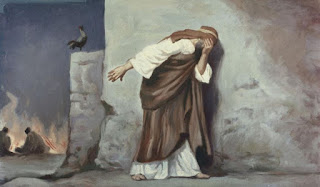
Let's compare and contrast the rooster with Peter, because in doing so we can learn a valuable spiritual lesson. In h
is article called Why Do Roosters Crow on the website Chicken Scratch, Joseph Hudson writes: 

“As with a vast majority of seemingly-strange animal behavior, one of the primary motivations for roosters to crow is to attract a mate. While our human ears struggle to detect any nuances between calls, scientists have analyzed the crows of distinct roosters and found that each rooster has a slightly different crow.

Thus, many researchers have concluded that the slight changes between each rooster are used as a method of impressing potential mates and out-gunning competing roosters.

The number of changes is extensive. Many roosters like to introduce a warbling effect into the calls as a sign of complexity and health. Further, the length of the song itself will vary between animals. While a rooster’s crow may seem arbitrary to many listeners, they are playing a distinct and repeatable song.

Depending on the rooster, this repetition may occur as often as every two minutes, or as infrequently as every ten. While the studies have not been wholly conclusive, it appears that hens tend to be more quickly attracted to roosters that exhibit longer and more complex songs.

Beyond the complexity of the call, there is also a much simpler variable: volume. One of the key differences in the crows of different roosters is how long they can become. While not always true, a larger rooster can typically produce a higher maximum volume compared to a smaller specimen. Thus, exhibiting a higher volume is a means by which roosters can brag about their size, strength, and health.

This effect is amplified when multiple roosters are within the hearing range of each other. When placed in the vicinity of another rooster, roosters tend to increase the volume of their crowing. This often results in a kind of competition between the males, resulting in a back-and-forth battle with increasing volume each round.

In extreme instances, agitated roosters have been known to damage their lungs or vocal cords in an attempt to out-shine another rooster. They are liable to become so engrossed in outperforming the other, and winning the affection of a mate, that they forget any self-preservation instincts and overwork themselves. While they typically recover from these episodes, the damage can sometimes be permanent.”

Hudson also states in his article:

“Unlike hens, which are primarily communal and docile animals, roosters are fiercely territorial. Thus, marking their territory is one of the primary reasons why a rooster may crow. In any given community, there will be much fewer roosters than hens. Hens often outnumber their male equivalents by over a hundred to one.

Therefore, roosters are allowed to rule a fairly large range of territory. A typical rooster will lay claim to an area of roughly an acre. It considers this range to be its property and will become disturbed if its land is intruded on by another male bird.

Crowing for territorial reasons takes on two forms. A rooster will often seek to remind other birds in the area that a certain portion of land is its territory. This is generally the function of the ‘alarm clock’ morning crowing that roosters are so well known for. When crowing for this reason, a rooster will attempt to find the highest perch possible.

Normally, this will be a tree or fence post. Then, the rooster will project out into its territory. This call normally resembles its mating song, but with even more embellishments added. In fact, territorial marking will often have the secondary effect of attracting a mate.” 

Now consider Peter in the courtyard warming himself among the soldiers with servant girls around. Peter and the soldiers are likened to the roosters and the females are likened to the hens. His protests and denials of being associated with Christ are like the rooster’s crows to mark out its territory. It’s as if Peter is saying, “This is my territory. I do not know Him. I’m not from Galilee.” Just as there is “a kind of competition between the male (roosters), resulting in a back-and-forth battle with increasing volume each round,” likewise, each one of Peter’s denials seemed to increase in intensity like a crescendo. 

Consider how “agitated roosters have been known to damage their lungs or vocal cords in an attempt to out-shine another rooster. They are liable to become so engrossed in outperforming the other, and winning the affection of a mate, that they forget any self-preservation instincts and overwork themselves. While they typically recover from these episodes, the damage can sometimes be permanent.” And consider how Peter became so agitated that he hurt himself spiritually in his attempts to prove he was not Christ’s disciple. 

In Mark's gospel it states:

"While Peter was below in the courtyard, one of the servant girls of the high priest came by. When she saw Peter warming himself, she looked closely at him. 

'You also were with that Nazarene, Jesus,' she said. 

But he denied it. 'I don't know or understand what you're talking about,' he said, and went out into the entryway. 

When the servant girl saw him there, she said again to those standing around, 

'This fellow is one of them.' Again he denied it. After a little while, those standing near said to Peter, 

'Surely you are one of them, for you are a Galilean.' 

He began to call down curses, and he swore to them, 'I don't know this man you're talking about.'

Immediately the rooster crowed the second time. Then Peter remembered the word Jesus had spoken to him: 'Before the rooster crows twice you will disown me three times.' And he broke down and wept."(Mar 14:66-72)

You can clearly see the crescendo of denial that reaches its climax when Peter even called down curses on himself and swore to them that he didn't know the Lord. Like a rooster, who becomes engrossed in outperforming the others, Peter was so caught up in not wanting to be seen before them as a follower of Christ, that he forgot any self-preservation instincts and overworked himself to the point of doing permanent damage to his spirit that could only be healed by the Lord.

Consider how the rooster that night had only crowed once by the time Peter had already denied the Lord three times. Roosters typically crow once every two minutes or as infrequently as every ten minutes. Therefore, the time between the rooster’s two crows that night would have been between two and ten minutes. During that short space of time, Peter had already denied the Lord three times, just as the Lord said he would do. As if Peter was in some sort of competition, he outgunned the crow and got out three vehement denials of Christ in that short space of time before the rooster even had a chance to get out a second crow.

In Matthew, Luke, and John’s gospels, they record the Lord saying, “Before the rooster crows today, you will disown Me three times.” That would have a different meaning than if He had said, "Before the rooster crows twice you will disown me three times." Roosters start to crow two hours before the onset of light. This is called anticipatory predawn crowing. Therefore if the Lord had said that Peter would disown him three times before the rooster crows today, that would indicate the imminence of Peter's denial of the Lord, which would even occur a couple of hours before dawn; whereas the statement that he would deny the Lord three times before the rooster crowed twice connotes the quickness with which he would deny the Lord three times in such a very short time span. 

But whether the Lord said the rooster would crow today or the rooster would crow twice, the analogy between Peter’s denials and the rooster’s crow is still valid. And besides, since Peter likely influenced the writing of Mark’s gospel, it is likely that Mark’s record of what Jesus said about the rooster crowing twice is more accurate than the others, since this was spoken directly by Jesus to Peter. He would probably have a better recollection of it than anyone else, since it involved him personally and had such a big impact on his life.

Either way you look at it, essentially the rooster’s crow is coming from its animal nature and not from anything spiritual. In the same way, Peter’s denials came from the baser instincts of his sinful human nature. It shows that no matter how emphatically Peter boasted about his loyalty and faithfulness to Christ, he was still capable of committing such a damnable sin as disowning the Lord whom he loved. If Peter, who loved the Lord so much and was such a passionate follower of Christ, could do this, how much more the rest of us who follow Jesus!

This was no small thing to disown the Lord. For Jesus had warned, “But whoever disowns me before others, I will disown before my Father in heaven.” (Mat 10:33). This indicates that one who disowns Christ after having known the Lord cannot be saved unless he repents and asks forgiveness before he dies. Peter certainly repented and was reinstated by Jesus after his resurrection from the dead.

Watch and Pray!
The one thing that could have kept Peter from denying Christ in the first place was prayer. The Lord had told him to watch and pray in the Garden of Gethsemane lest he fall into temptation. He said, "Watch and pray so that you will not fall into temptation. The spirit is willing, but the flesh is weak." (Mat 26:41). Peter’s spirit was willing to follow the Lord to prison and even to death, but his flesh was weak. Since he didn’t take the time to pray, his spirit remained weak, and when presented with a strong temptation, he fell into it.

The same goes for all of us who follow the Lord as His disciples. The spirit is willing but the flesh is weak. Because of the sinful nature, we are capable of committing damnable sins that can keep us from heaven. That’s why we must be careful to watch and pray so that we do not fall into temptation.

On the other hand, Jesus is our perfect example. He always took the time to pray every day, often very early while it was still dark, and even late at night, or throughout the night. And He did so especially on that fateful night, as the disciples slept, yet He prayed intensely all the way through to victory in the garden, surrendering His will to the will of the Father. And when He was confronted with all the temptations that night brought to Him, including His arrest and mock trial before the high priest, He didn't falter a bit. He remained faithful to the Heavenly Father all throughout that ordeal, even as Peter in contrast to Him was outside disowning Him. He was tempted in every way just as we are, yet was without sin (Heb 4:15). May we all follow in His steps (1 Pet 2:21) by imitating Him and obeying His command to watch and pray so that we do not fall into temptation.

Attribution: All Scripture taken from the Holy Bible NIV, copyright Zondervan, used by permission. Excerpts from Why Do Roosters Crow by Joseph Hudson taken from Chicken Scratch website, used for educational and commentary purposes only per the Fair Use Act. Image of Peter Denies Christ also used per the Fair Use Act.

Author's note: If you enjoyed this post, please also see the following: Sins That Will Keep You From HeavenSins of IgnoranceSins of OmissionAsk for the Ancient PathsThe False Gospel of Eternal Security, and Seeking Him in the Wee Hours of the Night. You may find the Main Directory for this blog at Home, and you may also access my complete blog directory at "Writing for the Master."

Do You Want to Know Him?
If you want to know Jesus personally, you can. It all begins when you repent and believe in Jesus.  Do you know what God's Word, the Bible says?

“Jesus came into Galilee, preaching the gospel of God, and saying, ‘The time is fulfilled, and the kingdom of God is at hand; repent and believe in the gospel.’” (Mar 1:14b-15).  He preached that we must repent and believe.

Please see my explanation of this in my post called "Do You Want to Know Jesus?"
_________________________________________________

Len Lacroix is the founder of Doulos Missions International.  He was based in Eastern Europe for four years, making disciples, as well as helping leaders to be more effective at making disciples who multiply, developing leaders who multiply, with the ultimate goal of planting churches that multiply. His ministry is now based in the United States with the same goal of helping fulfill the Great Commission. www.dmiworld.org.

Wednesday, September 9, 2020

What We Should Always Be Doing

There are several things that the Bible says we should always be doing. I have found at least twenty-two of them in Scripture. Let's take a look at God's Word and see what they are.

Always Pray
Then Jesus told his disciples a parable to show them that they should always pray and not give up. (Luk 18:1)

Be always on the watch, and pray that you may be able to escape all that is about to happen, and that you may be able to stand before the Son of Man."  (Luk 21:36)

Always Do What Pleases the Lord
"The one who sent me is with me; he has not left me alone, for I always do what pleases Him." (Joh 8:29)

Always Keep Your Conscience Clear
"So I strive always to keep my conscience clear before God and man." (Act 24:16)

Always Do As Love Does
[Love] always protects, always trusts, always hopes, always perseveres. (1Co 13:7)

Always Give Yourselves Fully to the Work of the Lord
Therefore, my dear brothers and sisters, stand firm. Let nothing move you. Always give yourselves fully to the work of the Lord, because you know that your labor in the Lord is not in vain. (1Co 15:58)

Always Being Given Over to Death for Jesus
"For we who are alive are always being given over to death for Jesus' sake, so that his life may also be revealed in our mortal body." (2Co 4:11)

Always Confident
"Therefore we are always confident and know that as long as we are at home in the body we are away from the Lord." (2Co 5:6)

Always Giving Thanks to God for Everything
"Always giving thanks to God the Father for everything, in the name of our Lord Jesus Christ. (Eph 5:20)

Always Pray in the Spirit
"And pray in the Spirit on all occasions with all kinds of prayers and requests. With this in mind, be alert and always keep on praying for all the Lord's people." (Eph 6:18)

Always Rejoice in the Lord
"Rejoice in the Lord always. I will say it again: Rejoice!" (Php 4:4)

Rejoice always, (1Th 5:16)

Always Full of Grace
"Let your conversation be always full of grace, seasoned with salt, so that you may know how to answer everyone." (Col 4:6)

Always Strive To Do What Is Good For Each Other
"Make sure that nobody pays back wrong for wrong, but always strive to do what is good for each other and for everyone else." (1Th 5:15)

Always Be Gentle
"...to slander no one, to be peaceable and considerate, and always to be gentle toward everyone." (Tit 3:2)

Always Be Prepared to Give an Answer
"But in your hearts revere Christ as Lord. Always be prepared to give an answer to everyone who asks you to give the reason for the hope that you have. But do this with gentleness and respect," (1Pe 3:15)

Always Keep Your Eyes on the Lord
"I keep my eyes always on the LORD. With him at my right hand, I will not be shaken." (Psa 16:8)

Always Be Mindful of God's Unfailing Love
"...for I have always been mindful of your unfailing love and have lived in reliance on your faithfulness." (Psa 26:3)

Always Extol and Praise the Lord
"I will extol the LORD at all times; his praise will always be on my lips." (Psa 34:1). We never take a vacation from praising God.

"For what you have done I will always praise you in the presence of your faithful people. And I will hope in your name, for your name is good." (Psa 52:9)

Always Have Hope
"As for me, I will always have hope; I will praise you more and more." (Psa 71:14)

Always Seek His Face 
"Look to the LORD and his strength; seek his face always." (Psa 105:4)

Always Do What is Right
"Blessed are those who act justly, who always do what is right." (Psa 106:3)

Always Obey God's Commandments
"I will always obey your law, for ever and ever." (Psa 119:44)

Always Trust God
"Trust in him at all times, you people; pour out your hearts to him, for God is our refuge." (Psa 62:8)

My soul is consumed with longing for your laws at all times. (Psa 119:20)

Closing Words

Therefore, based on what we have read in God's Word, there are certain things we must always do. To summarize them, we should always pray, always do what pleases the Lord, always keep your conscience clear, always do as love does, always give yourselves fully to the work of the Lord, always being given over to death for Jesus, always be confident, always give thanks to God for everything, always pray in the Spirit, always rejoice in the Lord, always be full of grace, always strive to do what is good for each other, always be gentle, always be prepared to give an answer, always keep your eyes on the Lord, always be mindful of God's unfailing love, always extol and praise the Lord, always have hope, always seek the Lord's face, always do what is right, always obey God's commandments, and no matter what, always trust God. May the Lord help us to do so. Amen.

Attribution notice: Scripture quotations taken from the Holy Bible NIV, copyright Zondervan, used by permission. 

Author's note: If you enjoyed this post, please also see the following: The Top Ten Things Jesus Taught, Living a Life Worthy of the Lord, The Wardrobe of the Saints, Following in His Steps, and Living on Earth as They Do in Heaven. You may find the Main Directory for this blog at Home, and you may also access my complete blog directory at "Writing for the Master." 

Do You Want to Know Him?
If you want to know Jesus personally, you can. It all begins when you repent and believe in Jesus.  Do you know what God's Word, the Bible says?

“Jesus came into Galilee, preaching the gospel of God, and saying, ‘The time is fulfilled, and the kingdom of God is at hand; repent and believe in the gospel.’” (Mar 1:14b-15).  He preached that we must repent and believe. 

Please see my explanation of this in my post called "Do You Want to Know Jesus?"

_________________________________________________

Len Lacroix is the founder of Doulos Missions International.  He was based in Eastern Europe for four years, making disciples, as well as helping leaders to be more effective at making disciples who multiply, developing leaders who multiply, with the ultimate goal of planting churches that multiply. His ministry is now based in the United States with the same goal of helping fulfill the Great Commission. www.dmiworld.org. 

Friday, March 29, 2019

If My People Who Are Called by My Name

Let's turn together to a famous passage and see what the Lord is saying to us through it. This one comes from 2 Chronicles 7 from the time that Solomon dedicated the temple to God. After he finished building the temple, the Lord appeared to him at night and said:

"If my people, who are called by My name, will humble themselves and pray and seek My face and turn from their wicked ways, then I will hear from heaven, and I will forgive their sin and will heal their land." (2 Chr 7:14, NIV).


There are four tasks in this verse that are our duty, if we are the Lord's people who are called by His name:

1. Humble ourselves 

The first condition within our responsibility is to humble ourselves. It's necessary to humble yourself beneath the mighty hand of God and in due time he will lift you up (1 Pe 5:6). There are various ways to humble yourself, including fasting, prostrating yourself before the Lord on the floor, and going without the usual comforts of life and luxuries you typically enjoy. Daniel said, "I ate no choice food; no meat or wine touched my lips; and I used no lotions at all until the three weeks were over." (Dan 10:3, NIV). Sometimes the people in the Bible would put on rough, abrasive, uncomfortable clothing called sackcloth and sprinkle ashes on their heads.

2. Pray

The second condition that we must meet is to pray. Prayer is essential in order to maintain communion with God. Nothing else can take its place. It's our two-way communication with Him. We talk to Him, and we listen to what He says to us in our hearts by His Spirit and through his Word. We should have regular times of prayer each day, and then there are special seasons of prayer, too. We need to pray without ceasing (1 Thes 5:17).

3. Seek His face

Our third responsibility in order to meet the conditions is to seek the Lord's face. Nobody can do it for you. Seeking His face and seeking His presence are virtually synonymous. We get hungry for God and desire His presence more than the air we breath. We long to be with Him, because we love Him. Everything else is laid aside while we seek His face.

4. Turn from our wicked ways

The fourth condition that is our responsibility is to turn from our wicked ways. This requires repentance for our sins, confessing before Him, and turning our backs on the wicked things we've been doing. For more on this, see Repentance That Leads to Life. The apostle Paul wrote:

"Nevertheless, God’s solid foundation stands firm, sealed with this inscription: 'The Lord knows those who are his,' and, 'Everyone who confesses the name of the Lord must turn away from wickedness.'” (2 Tim 2:19, NIV).

A great example of this is the way that Nehemiah prayed. He wrote, "...I sat down and wept. For some days I mourned and fasted and prayed before the God of heaven. Then I said:

'Lord, the God of heaven, the great and awesome God, who keeps his covenant of love with those who love him and keep his commandments, let your ear be attentive and your eyes open to hear the prayer your servant is praying before you day and night for your servants, the people of Israel. I confess the sins we Israelites, including myself and my father’s family, have committed against you. We have acted very wickedly toward you. We have not obeyed the commands, decrees and laws you gave your servant Moses.'" (Neh 1:4-7). For the rest of his prayer, read verses 8-11.

Daniel was another great example of how to pray. He wrote:

"So I turned to the Lord God and pleaded with him in prayer and petition, in fasting, and in sackcloth and ashes. I prayed to the Lord my God and confessed:

'Lord, the great and awesome God, who keeps his covenant of love with those who love him and keep his commandments, we have sinned and done wrong. We have been wicked and have rebelled; we have turned away from your commands and laws. We have not listened to your servants the prophets, who spoke in your name to our kings, our princes and our ancestors, and to all the people of the land.'" (Dan 9:3-6). For the rest of his prayer, read verses 7-19.

Those four conditions listed above must be met in order for us to receive the promise found in 2 Chronicles 7:14. Once we meet them, then the Lord will fulfill His promise and do his part, which includes these three things:

5. I will hear from heaven

If we want the Lord to hear our prayers, which we all do, then it behooves us to meet the four conditions above. It's an amazing thing to know that God in heaven has heard you, and this brings great joy to your heart when it happens. It's God's job to hear from heaven. His ear is not too dull to hear, "but your iniquities have separated you from your God; your sins have hidden his face from you, so that he will not hear." (Is 59:2).

6. I will forgive their sin

Not only does the Lord hear from heaven, but He also forgives our sin, when we meet the conditions above. He is eager to forgive us, which only He can do, but He needs us to do our part first. There can be no forgiveness without sincere repentance and turning away from wickedness. Yet "If we confess our sins, he is faithful and just and will forgive us our sins and purify us from all unrighteousness." (1 Jn 1:9, NIV).

7. I will heal their land

The final thing God promises to do if we meet the above conditions is to heal our land. This is His job. We cannot do it, the government cannot do it, programs cannot do it, scientists cannot do it, doctors cannot do it, and no man on earth can do it. When we look at all the problems in our land -- the crime, the lawlessness, the murder of innocent children, the drug addiction, the sickness, the disease, the hopelessness, the suicide, the poverty, the economic problems, the injustice, the social issues, the deep divisions, the wars, the political problems, the corruption in our government, the environmental problems, and the problems affecting our wildlife -- our land is in desperate need of healing. Only the Lord can heal it, so it's essential that we do our part, in order for Him to do His part.


Closing Words
We must do our job and meet certain conditions, which are to humble ourselves, pray, seeking His face, and turn from our wicked ways. But once we meet those conditions, then the Lord will do His job. which is to hear from heaven, forgive our sins, and heal our land.

Attribution notice: Scriptures taken from the Holy Bible NIV, copyright Zondervan, used by permission.The image may be subject to copyright, used per the Fair Use Act for educational and commentary purposes.

Author's note: If you enjoyed this post, please also see the following: Stay at Home and Seek the Lord (during COVID Quarantine)Ask for the Ancient PathsSins That Will Keep You From HeavenBowing Low in WorshipRepentance That Leads to Life, The Land Mourns in the Last Days, Seeking Him in the Wee Hours of the NightCrying Out to God Loudly, Lifting Your Face in Prayer, and Lifting Hands in Prayer. You may also enjoy my daughter Charity's poem called America, Turn Back to God. You may find the Main Directory for this blog at Home, and you may also access my complete blog directory at "Writing for the Master."

Do You Want to Know Him?
If you want to know Jesus personally, you can. It all begins when you repent and believe in Jesus.  Do you know what God's Word, the Bible says?

“Jesus came into Galilee, preaching the gospel of God, and saying, ‘The time is fulfilled, and the kingdom of God is at hand; repent and believe in the gospel.’” (Mar 1:14b-15).  He preached that we must repent and believe.

Please see my explanation of this in my post called "Do You Want to Know Jesus?"
_________________________________________________

Len Lacroix is the founder of Doulos Missions International.  He was based in Eastern Europe for four years, making disciples, as well as helping leaders to be more effective at making disciples who multiply, developing leaders who multiply, with the ultimate goal of planting churches that multiply. His ministry is now based in the United States with the same goal of helping fulfill the Great Commission. www.dmiworld.org.

Saturday, March 2, 2019

Praying Heart-Prayers

I have previously written about the need to cry out to God loudly in prayer, which I still believe is important and necessary. But have you ever felt like you don't know how you ought to pray in a given situation? God has a great solution for that. Today I'm going to discuss what I call heart-prayers, whereby you pray without using intelligible words, and sometimes even inaudibly.

The apostle Paul wrote, "In the same way the Spirit also helps our weakness; for we do not know how to pray as we should, but the Spirit Himself intercedes for us with groanings too deep for words;" (Rom 8:26).

The Help of the Holy Spirit
This verse speaks of the help of the Holy Spirit in prayer, because our weakness greatly limits us in our ability to pray for ourselves and for one another. Our natural human condition is that we do not know how to pray as we should. As Matthew Henry said, "We are often at a loss - graces are weak, affections cold, thoughts wandering, and it is not always easy to find the heart to pray, 2Sa_7:27. The apostle speaks of this in the first person: 'We know not.' He puts himself among the rest. Folly, and weakness, and distraction in prayer, are what all the saints are complaining of. If so great a saint as Paul knew not what to pray for, what little reason have we to go forth about that duty in our own strength!"

Moreover, we don't know what to pray for specifically, because we do not fully understand our situation as the Lord does. Another reason is that in our nearsightedness we tend to focus on our immediate need rather than on what is best in the long term and even in eternity. We also tend to be partial in favor of our own selfish desires.

In light of all that, it's no wonder we need the assistance of the Spirit in prayer. There are many ways in which He helps us, including through the Word of God as we pray and read it. He speaks to us through it and reveals to us the promises of God for us, as well as how to go about living. He also speaks directly to our hearts as well. But the help Paul was speaking of here is specifically referring to the Spirit's help by praying for us. Not only do we have the assurance that Jesus Christ is interceding for us in heaven before the Father, but we also have the promise that the Spirit is interceding for us in our hearts.

Matthew Henry commented: "The Spirit in the heart helps, dwelling in us, working in us, as a Spirit of grace and supplication, especially with respect to the infirmities we are under when we are in a suffering state, when our faith is most apt to fail; for this end the Holy Ghost was poured out." He explains that the word for "Helps" is the Greek word "sumantilambanetai," meaning "heaves with us, over against us, helps as we help one that would lift up a burden, by lifting over against him at the other end - helps with us, that is, with us doing our endeavour, putting forth the strength we have. We must not sit still, and expect that the Spirit should do all; when the Spirit goes before us we must bestir ourselves. We cannot without God, and he will not without us. What help? Why, the Spirit itself makes intercession for us, dictates our requests...draws up our plea for us...so graciously has God provided for the encouragement of the praying remnant. The Spirit, as an enlightening Spirit, teaches us what to pray for, as a sanctifying Spirit works and excites praying graces, as a comforting Spirit silences our fears, and helps us over all our discouragements. The Holy Spirit is the spring of all our desires and breathings towards God."

The Spirit's Intercession for Us
Now keeping in mind the meaning of this help of the Spirit who heaves with us, consider what Albert Barnes aptly pointed out about the meaning of "Maketh intercession," regarding this work of the Spirit in our hearts. He stated, "The word used here huper-entungchanei, occurs no where else in the New Testament. The word entungchanō, however, is used several times. It means properly to be present with anyone for the purpose of aiding, as an advocate does in a court of justice; hence, to intercede for anyone, or to aid or assist in any manner. In this place it simply means that the Holy Spirit greatly assists or aids us; not by praying for us, but in our prayers and infirmities."

It's interesting to note that the root word "huper" is where we get our English word "hyper". It means over, beyond, and more than, in much the same way we use the word hyper today, as in hyperactive. I like this word huper or hyper, because it connotes something extraordinary like turbo power in an automobile engine or like the after-burners on a fighter jet that light up with flames shooting out the back, as the aircraft takes off in a steep climb skyward. But huper also means "in behalf of, or for the sake of." When you combine this word "huper" with the word "entungchanei" which refers to interceding, you have a powerful word. The Spirit Himself "hyper-intercedes" for us in a manner that is supernatural, extraordinary, more than we could ever do on our own, and beyond our natural abilities. He does all of this on our behalf or for us, which is the other part of the meaning of huper, and that's why it says the Spirit intercedes "for us." This is like turbo-prayer on our behalf.

It also reminds me of another illustration from auto mechanics, which is something called overdrive. According to Wikipedia, "Overdrive is a term used to describe the operation of an automobile cruising at sustained speed with reduced engine revolutions per minute, leading to better fuel consumption, lower noise, and lower wear." When your vehicle shifts into this gear, you are able to cruise long distances at high speeds with less friction and wear on your engine. When the Spirit performs this hyper-supplication within us, it's a wonderful feature, because we are enabled to accomplish far more in prayer than we ever could on our own, and we can do so without wearing ourselves out.

Groanings Too Deep for Words
Let's just recap for a moment. The Spirit heaves with us inside as we pray and assists us with the heavy lifting by providing this supernatural, high-powered intercession within us. It's a sort of extreme prayer or ultra-intercession. What does that look like or sound like? Let's return to Matthew Henry's comments for more on that:

"Now this intercession which the Spirit makes is, (1.) With groanings that cannot be uttered. The strength and fervency of those desires which the Holy Spirit works are hereby intimated. There may be praying in the Spirit where there is not a word spoken; as Moses prayed (Exo_14:15), and Hannah, 1Sa_1:13. It is not the rhetoric and eloquence, but the faith and fervency, of our prayers, that the Spirit works, as an intercessor, in us. Cannot be uttered; they are so confused, the soul is in such a hurry with temptations and troubles, we know not what to say, nor how to express ourselves. Here is the Spirit interceding with groans that cannot be uttered. When we can but cry, 'Abba, Father,' and refer ourselves to him with a holy humble boldness, this is the work of the Spirit."

Henry pointed out here that this intercession of the Spirit is with groanings too deep for words. As I've been saying, this happens at a much higher level, above and beyond anything we are capable of in ourselves. Since these groanings are so deep that they cannot be expressed with words, they may come forth as a deep sigh, a cry, or a moan. By definition a groan is a deep inarticulate sound made in pain or despair. That's basically what we're talking about here. In some cases, it may even be completely inaudible to the human ear, such as what happened when Moses cried out to God in his heart.

When he was leading the Israelites out of Egypt, as they were being chased by the Egyptian army and the people were crying out to him that he should have left them in Egypt, he was telling them not to be afraid because the Lord would fight for them. But even as he was in the midst of all that commotion, he must have been crying out to God fervently in his heart with faith, because the Lord said to him, "Why are you crying out to me?" (Ex 14:15a).

Another example that Matthew Henry cited was the time when Hannah was earnestly praying to God, and her lips were moving, but no sound was coming out. "Now it came about, as she continued praying before the LORD, that Eli was watching her mouth. As for Hannah, she was speaking in her heart, only her lips were moving, but her voice was not heard. So Eli thought she was drunk. Then Eli said to her, 'How long will you make yourself drunk? Put away your wine from you.' But Hannah replied, 'No, my lord, I am a woman oppressed in spirit; I have drunk neither wine nor strong drink, but I have poured out my soul before the LORD. Do not consider your maidservant as a worthless woman, for I have spoken until now out of my great concern and provocation." (1Sa 1:12-16). That's a great definition of heart-prayer, which illustrates what this intercession of the Spirit for us in our hearts may actually look like sometimes. It could be completely silent, except to the one praying, who is aware of the deep cries within his or her heart, and to the Lord who hears that silent prayer, as well as to the angels who are involved in carrying our prayers to God.

Another example from Scripture of heart-prayers is the time when Abraham's servant was sent back to get a wife for Isaac. The servant said, “Before I finished praying in my heart, Rebekah came out, with her jar on her shoulder. She went down to the spring and drew water, and I said to her, ‘Please give me a drink.’" (Gen 24:45, NIV). The actual prayer that he prayed in his heart is found in verses 42 to 44. It was not a short prayer either, but it was definitely inaudible.

Here's another one you may not have noticed before in the gospels, regarding what happened when Jesus met the demoniac in the region of the Gerasenes. "When Jesus stepped ashore, he was met by a demon-possessed man from the town. For a long time this man had not worn clothes or lived in a house, but had lived in the tombs. When he saw Jesus, he cried out and fell at his feet, shouting at the top of his voice, 'What do you want with me, Jesus, Son of the Most High God? I beg you, don’t torture me!' For Jesus had commanded the impure spirit to come out of the man." (Lk 8:27-29a, NIV).

In this passage, notice that it says the reason the demon inside the man caused him to cry out at the top of his voice, begging Jesus not to torture him, was that Jesus "had commanded" the impure spirit to come out of the man. However, as with the silent prayer of Moses referred to in Exodus 14:15, there is no record quoting the Lord's actual command to the impure spirit to come out of the man, as we see in other passages, but only a retrospective statement about it after the fact. It's my opinion that Jesus in his heart may have commanded the demon to come out of the man without doing so out loud. While others around Him didn't hear it, the demon did!

My Experience
I had an experience like this one time. I used to work as a bellman in a four diamond hotel when I was in graduate school studying Missiology or World Missions in the Regent University School of Divinity. This particular time there was a guest who called himself "Michaelangelo," who was staying by himself at the hotel. He began acting bizarrely not long after he checked in. I was standing in front of the bell stand in the large front lobby of the hotel next to my fellow bellman John. We were looking directly across at the front desk on the other side of the lobby, where one of the female front desk clerks was standing. John was also in graduate school, but he was studying psychology in the School of Counseling.

At that point, I recall that "Michaelangelo" the guest came around the corner into the lobby and I believe he spit his room key out of his mouth onto the front desk counter top. As he was interacting with the front desk lady, which I believe was about some complaint of his, John was evaluating him out loud to me in a low voice. He was seeking to diagnose the man's psychological problem. Perhaps he was diagnosing the man as schizophrenic and/or having obsessive-compulsive disorder. On the other hand, my approach was to view things as Jesus did from a spiritual perspective, and I sensed that this man was demon possessed, but I kept that to myself. I simply looked right at the man from across the room as he stood at the front desk, and in my heart I silently but authoritatively commanded the demon in the name of Jesus Christ to come out of him. However, I was not scowling at him or making any kind of angry expression.

At that point, as if the man actually heard me, he looked at me and came right over to me, challenging me belligerently to my face. He was a little shorter than me, so as he stood closely right in front of me just inches from my chest, he looked up at me and commanded me to tell him my name. He said something like, "What is your name? I command you to tell me your name!" I maintained my peace and the professional servant-to-guest demeanor, but I referred to my name printed on my name tag attached to my uniform and I called him "sir." I didn't back down or back away from him a single inch, despite his intimidation tactics. Then he began to say, "I don't like you!" He looked at John the student of psychology and said, "I like you," then he looked back at me he said, "but I don't like you." Eventually he went away and the front desk lady commended me for maintaining my peace and not being afraid of him. The police ended up being called in to deal with something going on in the man's room, and I cannot recall if he was suicidal or what. But that seems to come to mind for some reason.

My point in telling that story is that although I had not said a word out loud, in my heart I silently commanded that demon to come out of the man, and I believe the demon inside him heard me loud and clear. As a side note, I also found it interesting that the demon in him liked the person who was studying psychology, but it didn't like me who was operating in the supernatural power of the Spirit. I have never forgotten that incident, and it seems to me that it was a clear example of a heart-prayer assisted by the Holy Spirit. That's why I tend to think this is what Jesus did to the demon inside the man in the region of the Gaderenes. In other places in Scripture, we see the words recorded that Jesus spoke to the demons, but in this passage, it only refers to Jesus' command after the fact by saying, "For Jesus had commanded the impure spirit to come out of the man."

Here is another example of heart-prayer from the gospels. This time it's from the incident when Jesus raised Lazarus from the dead. "So they took away the stone. Then Jesus looked up and said, 'Father, I thank you that you have heard me. I knew that you always hear me, but I said this for the benefit of the people standing here, that they may believe that you sent me.' When he had said this, Jesus called in a loud voice, 'Lazarus, come out!' The dead man came out, his hands and feet wrapped with strips of linen, and a cloth around his face. Jesus said to them, 'Take off the grave clothes and let him go.'” (Jn 11:41-44, NIV).

I want you to notice the part that says, "Then Jesus looked up and said, 'Father, I thank you that you have heard me. I knew that you always hear me, but I said this for the benefit of the people standing here, that they may believe that you sent me.'" This means that Jesus had prayed to the Father in His heart silently, and when He thanked the Father for hearing Him, He only did so for the benefit of those watching. The reason it benefited them was that they could not hear His silent heart-prayer to the Father, and by His thanking the Father for hearing that silent prayer, it helped them to believe that that the Father had sent Him when they saw Him raise Lazarus from the dead.

He Perceives Our Thoughts
According to King David, the Lord knows our deepest thoughts. He said, "You perceive my thoughts from afar...Before a word is on my tongue you, Lord, know it completely." (Ps 139:2b, 4). That means that you can communicate heart to heart and thought to thought with Him without even speaking the words out loud with your mouth. He already knows what you're going to say before you say it. There are times when this type of heart-prayer is all you are able to do, either because of the place you find yourself in, where you are not free to pray out loud, such as when you are sharing Jesus with a non-believer, or because you are unable to speak, or because you don't know how you should pray. In moments like these, all you may be able to do is to cry out to Him in your heart, and He hears it.

According to the will of God
In the verse following our main text, it says that the Spirit always prays according to the will of God. Paul wrote, "And He who searches the hearts knows what the mind of the Spirit is, because He intercedes for the saints according to the will of God." (Rom 8:27). That's another great benefit of this intercession of the Spirit in our hearts. As Matthew Henry says, "The Spirit in the heart never contradicts the Spirit in the word. Those desires that are contrary to the will of God do not come from the Spirit. The Spirit interceding in us evermore melts our wills into the will of God. Not as I will, but as thou wilt." According to the apostle John, "This is the confidence we have in approaching God: that if we ask anything according to his will, he hears us." Therefore, God always hears these prayers of the Holy Spirit in our hearts.

Praying in the Spirit
One more way that the Spirit's intercession in our hearts for us may be manifested is by praying in the Spirit. I realize that some people reading this have never spoken in tongues, so they cannot relate to this or understand exactly what it is, but I and many others who have received the promised baptism with the Holy Spirit have experienced it first hand and know it well (Lk 11:13; 24:49; Ac 1:8; 2:4, 16-18). Not everyone has the gift of tongues in the sense of delivering messages publicly in a known or unknown language that they have never learned to speak (1 Co 12:10; 14:26). Whenever someone does so, there needs to be someone with the gift of interpretation of tongues to deliver the message to the people in a language they can understand (1 Co 14:27). But the Lord does give us a prayer language that we can use in our prayer time to communicate directly with Him and edify ourselves (1 Co 14:4).

Paul spoke of it quite a bit in his epistles. He wrote, "For one who speaks in a tongue does not speak to men but to God; for no one understands, but in his spirit he speaks mysteries...One who speaks in a tongue edifies himself...Now I wish that you all spoke in tongues...For if I pray in a tongue, my spirit prays, but my mind is unfruitful. What is the outcome then? I will pray with the spirit and I will pray with the mind also; I will sing with the spirit and I will sing with the mind also...I thank God, I speak in tongues more than you all." (1Co 14:2, 4a, 5a, 14-15, 18). He also wrote, "With all prayer and petition pray at all times in the Spirit, and with this in view, be on the alert with all perseverance and petition for all the saints." (Eph 6:18). Jude wrote, "But you, beloved, building yourselves up on your most holy faith, praying in the Holy Spirit," (Jud 1:20). Therefore, we know that there is something called praying in the Spirit, and one way this happens is, as Paul said, praying in a tongue. When I pray in a tongue (i.e., pray in tongues), my spirit prays, but my mind does not understand what I am saying. The Spirit prays through me to the Father, making intercession for me and those I am praying for. This enables us to effectively pray the will of God when we know not how we should pray or what we should pray.

Closing Words
As we can see from Scripture, because of our weaknesses, we don't know how we should pray. God has graciously provided the saints with the help of the Spirit, who heaves with us, "hyper-praying" on our behalf with groanings too deep for words. This is a marvelous service that He provides! It has many applications, including silent heart-prayers, sighs, groans, calling out His name, and even praying in tongues. The Holy Spirit cooperates with us as we pray, and He knows exactly how to pray according to the will of God. Let me encourage you to fully take advantage of all the Lord has provided for you as a believer. Don't miss out on anything the Lord has for you.

Attribution notice: Most Scripture quotations taken from the NASB, copyright Lockman Foundation, used by permission. Other Scriptures from the Holy Bible NIV, copyright Zondervan, used by permission. The artwork of a woman praying in her closet is by my daughter Charity Lacroix, and you can find more of her artwork and calligraphy at A Brush with Life.

Author's note: If you enjoyed this post, please also see the following: Who Intercedes for UsCrying Out to God Loudly, Lifting Your Face in Prayer, Lifting Hands in Prayer, and Baptized with the Holy Spirit. You may find the Main Directory for this blog at Home, and you may also access my complete blog directory at "Writing for the Master."

Do You Want to Know Him?
If you want to know Jesus personally, you can. It all begins when you repent and believe in Jesus.  Do you know what God's Word, the Bible says?

“Jesus came into Galilee, preaching the gospel of God, and saying, ‘The time is fulfilled, and the kingdom of God is at hand; repent and believe in the gospel.’” (Mar 1:14b-15).  He preached that we must repent and believe.

Please see my explanation of this in my post called "Do You Want to Know Jesus?"
_________________________________________________

Len Lacroix is the founder of Doulos Missions International.  He was based in Eastern Europe for four years, making disciples, as well as helping leaders to be more effective at making disciples who multiply, developing leaders who multiply, with the ultimate goal of planting churches that multiply. His ministry is now based in the United States with the same goal of helping fulfill the Great Commission. www.dmiworld.org.

Thursday, December 10, 2015

Saints Alive in Jesus

Who are the saints? Traditionally, many Christians have come to think of saints as those who live exemplary lives for Christ and have been officially recognized for that by the Church after their death. In this traditional sense, these people are elevated and referred to with the title of Saint before their name. In fact, many practices are connected with this tradition, such as the veneration of relics. In one country, they have an annual parade where they carry the hand of Saint Stephen in a box.

As long as this is what the Bible teaches, we are fine. But if not, then once again, we need to follow Scripture as our sole rule of faith and not traditions of men. It was Jesus Himself who told the religious people of His day that they invalidated the word of God by their tradition, which they had handed down. (Mar 7:13). So let’s see what the Bible teaches on this. 

The Usage and Meaning of the Term "Saints"
First of all, the term “saints” is used 68 times in the Bible (Psa. 16:3; 34:9; Dan. 7:18,21,22,25,27; Mat. 27:52; Acts 9:13,32,41; 26:10; Rom. 1:7; 8:27; 12:13; 15:25,26,31; 16:2,15; 1Co. 1:2; 6:1,2; 14:33; 16:1,15; 2Co. 1:1; 8:4; 9:1,12; 13:13; Eph. 1:1,15,18; 2:19; 3:8,18; 4:12; 5:3; 6:18; Php. 1:1; 4:22; Col. 1:2,4,12,26; 1Th. 3:13; 2Th. 1:10; 1Ti. 5:10; Phm. 1:5,7; Heb. 6:10; 13:24; Jude 1:3; Rev. 5:8; 8:3,4; 11:18; 13:7,10; 14:12; 16:6; 17:6; 18:20,24; 19:8; 20:9). In the Old Testament, it is used 8 times and 60 times in the New Testament. The most frequent occurrence of it is found in Revelation (13 times), Ephesians (9 times), Romans (8 times), Daniel (6 times), 1 Corinthians (6 times), 2 Corinthians (5 times), Colossians (4 times), and Acts (4 times). The term in Greek for saint is “hagios”, meaning “sacred (physically pure, morally blameless or religious, ceremonially consecrated): - (most) holy (one, thing), saint.” (Strongs).

Now that we have established the fact that the term "saints" means the "holy ones", I'd like to say a word about the use of the expression "holy man". The only two people in the Bible referred to as “a holy man” were Elisha and John the Baptist (2Ki 4:9; Mk 6:20). The Lord Jesus Christ, of course, is referred to as "The Holy One", and five of those instances are in the New Testament (2Ki. 19:22; Job 6:10; Psa. 78:41; 89:18; 106:16; Pro. 9:10; 30:3; Isa. 1:4; 5:19,24; 10:20; 12:6; 17:7; 29:19,23; 30:11,12,15; 31:1; 37:23; 40:25; 41:14,16,20; 43:3,14; 45:11; 47:4; 48:17; 49:7; 54:5; 55:5; 60:9,14; Jer. 50:29; 51:5; Eze. 39:7; Hos. 11:9,12; Hab. 3:3; Mark 1:24; Luke 4:34; John 6:69; 1Pe. 1:15; 1Jn. 2:20).

The singular version of the word "saint" is rarely used in the Bible, but it does exist. For example, Aaron, the brother of Moses is referred to as a saint (Psa. 106:16). Moreover, the prophet Daniel received a vision from God, in which he heard one saint speaking, and then he heard another saint reply to the first one (Dan. 8:13). Lastly the apostle Paul told the Philippians to greet "every saint" there (Php. 4:21).

The Believers In Rome Were Called Saints
Paul wrote, "To all who are beloved of God in Rome, called as saints: Grace to you and peace from God our Father and the Lord Jesus Christ." (Rom 1:7)

These Roman believers in Christ were called as saints while they were still alive on earth, serving the Lord. Paul was addressing as "holy ones" all who were beloved of God in that city.

This term was used not only of the Romans believers, but also the believers in Jerusalem (Act 9:13; 26:10; Rom 15:25, 26), Lydda (Act 9:32), Achaia (2Co 1:1), Ephesus (Eph 1:1; 2:19), Philippi (Phi 1:1), Corinth (1Co 1:2), and Colossae (Col 1:2).

Let’s see what other things Paul wrote to the saints.

Paul prayed for the saints regularly
One of the things we note in the Bible is that Paul prayed for the saints continually. He wrote, "For God, whom I serve in my spirit in the preaching of the gospel of His Son, is my witness as to how unceasingly I make mention of you, always in my prayers making request, if perhaps now at last by the will of God I may succeed in coming to you." (Rom 1:9-10).

And he taught that we as saints should pray for one another: "With all prayer and petition pray at all times in the Spirit, and with this in view, be on the alert with all perseverance and petition for all the saints." (Eph 6:18)

Paul prayed for them often, because they it was necessary. Even the Holy Spirit intercedes for the saints (Rom 8:27). Saints need to pray for each other constantly. This is quite different from the traditional view of saints, in which we ask the saints in heaven to pray for us.

Paul, the great apostle, considered himself the least of all saints
To me, the very least of all saints, this grace was given, to preach to the Gentiles the unfathomable riches of Christ, (Eph 3:8)

Paul put himself below every other person in Christ who had been made holy, calling himself the least of the saints! This is amazing, considering he lived a selfless life of complete dedication to Christ, suffered much for the Lord, preached the gospel all over the world, and wrote thirteen of the twenty-seven New Testament Bible books that we have today.

Paul longed to impart a spiritual gift to the saints
For I long to see you so that I may impart some spiritual gift to you, that you may be established; that is, that I may be encouraged together with you while among you, each of us by the other's faith, both yours and mine. (Rom 1:11-12)

So even though they were saints, they needed ministry. They needed to have a spiritual gift imparted to them. And Paul also knew that he would likewise benefit from his contact with them as well. This is always the way it goes. There are no big shots in the kingdom. No matter what our role, whether saints or apostles, we all benefit mutually from one another when we minister to each other.

Saints have nothing in themselves to boast about
Where then is boasting? It is excluded. By what kind of law? Of works? No, but by a law of faith. For we maintain that a man is justified by faith apart from works of the Law.
(Rom 3:27-28)

Even though the Romans were saints, they couldn’t boast about it. The reason is that it was not by their works that they were considered saints, it was because they had been justified by faith. Neither can we boast, except in the cross of Jesus Christ.

Righteousness comes through faith in Jesus Christ
For in it the righteousness of God is revealed from faith to faith; as it is written, "BUT THE RIGHTEOUS man SHALL LIVE BY FAITH." (Rom 1:17)

Even the righteousness of God through faith in Jesus Christ for all those who believe; for there is no distinction; (Rom 3:22)

These Romans were justified the same way everyone else is – by faith. This is a revelation you need to receive from the Holy Spirit. There's a lot of meaning packed into that short phrase, "the just shall live by faith." Meditate on this until you get it. To be justified means to be made righteous. We are justified not by our works but by faith in Jesus Christ. And when we’re justified, we are put in right standing with our Holy God.

The saints need to be equipped to do works of service
for the equipping of the saints for the work of service, to the building up of the body of Christ; (Eph 4:12).

The saints are not just those who have finished the race and are in heaven now. Saints are also those of us here on earth who still need to be equipped, so that we can do the works the Lord has prepared for us to do since the world was created!

Saints are all those who call on the name of Jesus who have been sanctified 
Paul wrote, "To the church of God which is at Corinth, to those who have been sanctified in Christ Jesus, saints by calling, with all who in every place call on the name of our Lord Jesus Christ, their Lord and ours:" (1Co 1:2)

The saints will possess the kingdom and judge the world
The heavenly being that spoke to the prophet Daniel said, "But the saints of the Highest One will receive the kingdom and possess the kingdom forever, for all ages to come." (Dan 7:18)

Paul wrote, "Or do you not know that the saints will judge the world? If the world is judged by you, are you not competent to constitute the smallest law courts?" (1Co 6:2)

Since the saints will one day possess the kingdom and judge the world, we should be able to settle disputes between saints without taking matters before legal courts. And there are many other implications for the lives of saints today when we consider this glorious future.

There are saints in all the churches of the saints
Paul wrote, "For God is not a God of confusion but of peace, as in all the churches of the saints." (1Co 14:33)

Not every church is a church of the saints. Some congregations may be churches in name only and have none of Jesus' life in them. The true gospel is not preached there, and they are spiritually dead. But then there are churches of the saints! This is where you will find saints, if you want to meet one or be one, too!

Saints are supposed to live pure and holy lives
Paul said that it is proper among the saints to live pure and holy lives, and that immorality, impurity, and greed must not be named among them. He wrote, "But immorality or any impurity or greed must not even be named among you, as is proper among saints;" (Eph 5:3)

How much this message is needed today in the churches of the saints! Holiness is a topic so seldom spoken about. It seems no one believes in holiness anymore. Yet we are taught by the Lord to "be holy, even as I am holy." (1 Pe 1:16). This is perhaps the most important point in this entire article. For more on this critically necessary topic, please see my articles, Holy Living in a Perverted World, Ask for the Ancient Paths, Only the Holy -- Three Shocking Testimonies, Avoid Becoming a Corrupted Christian, and Holy Fire Baptism.

Saints need their eyes opened in order to see
Paul wrote, "I pray that the eyes of your heart may be enlightened, so that you will know what is the hope of His calling, what are the riches of the glory of His inheritance in the saints," (Eph 1:18)

Paul prayed for the saints in Ephesus that the eyes of their heart be enlightened, so they would know the riches of the glory of Jesus’ inheritance in the saints. Have your eyes been opened to this yet? If not, ask the Lord to open them.

He said, "For this reason I bow my knees before the Father, from whom every family in heaven and on earth derives its name, that He would grant you, according to the riches of His glory, to be strengthened with power through His Spirit in the inner man, so that Christ may dwell in your hearts through faith; and that you, being rooted and grounded in love, may be able to comprehend with all the saints what is the breadth and length and height and depth, and to know the love of Christ which surpasses knowledge, that you may be filled up to all the fullness of God." (Eph 3:14-19)

Putting it All Together
So we can see that the saints are all who have been justified by faith in Jesus Christ and sanctified, and who follow Him. This includes those who have passed on into glory already and those of us who are still here on earth. It’s not a special class or title reserved for the elite Christians. That false tradition only renders the Word of God invalid. It leads people to think they should rely on this supposed elite class of officially recognized saints to pray for them and get their messages to God’s throne. Yet no place in the Bible are we taught to pray to those saints in heaven or to ask them to pray for us. Neither does the Bible teach us to adore relics or assign special powers to them.

If you are a believer in Christ, do you normally think of yourself as a saint?
If you have been justified by faith in Christ, have you also been sanctified as well?
If you are truly a saint, how should that affect the way you speak and act?

Once we recognize that all disciples of Christ are called to be saints, then we should begin to act like it. We should pursue holiness that we may be sanctified, pray for the saints, greet the saints, do the works of service the Lord has given each of us to do, and leaders should equip the saints for these works. But none of us can boast, because it is not by our own merits that we are saints. It’s through the shed blood of Jesus Christ our Lord. My prayer with Paul is that the eyes of your heart may also be opened to see who you are in God and what He has given you. It’s glorious. 

Attribution notice: Most Scripture quotations taken from the NASB

Author's Note: If you enjoyed this article, I also recommend reading Holy Living in a Perverted World, Ask for the Ancient Paths, Only the Holy -- Three Shocking Testimonies, Avoid Becoming a Corrupted Christian, Keeping Your Body Pure and Holy, and Holy Fire Baptism. You can access the Seeking the Lord Main Directory or my complete blog directory at "Writing for the Master." Now I'd like to ask a very important question.

Do You Want to Know Him?
If you want to know Jesus personally, you can. It all begins when you repent and believe in Jesus.  Do you know what God's Word, the Bible says?

“Jesus came into Galilee, preaching the gospel of God, and saying, ‘The time is fulfilled, and the kingdom of God is at hand; repent and believe in the gospel.’” (Mar 1:14b-15).  He preached that we must repent and believe.

Please see my explanation of this in my post called "Do You Want to Know Jesus?"
_________________________________________________

Len Lacroix is the founder of Doulos Missions International.  He was based in Eastern Europe for four years, making disciples, as well as helping leaders to be more effective at making disciples who multiply, developing leaders who multiply, with the ultimate goal of planting churches that multiply. His ministry is now based in the United States with the same goal of helping fulfill the Great Commission. www.dmiworld.org.

Friday, February 28, 2014

The Disciples’ Prayer

Prayer is the disciple’s life connection to God.  It’s vital to our relationship with Him.  And yet it is widely overlooked, and its importance is underestimated.  If we understood how vital it is, we would pray more often and more earnestly, and not allow ourselves to be distracted by other things. 

When the disciples asked the Lord to teach them to pray, He taught them a model prayer to show them the kind of content their prayers should have, as well as how to approach God.

"And it happened as He was praying in a certain place, when He ceased, one of His disciples said to Him, 'Lord, teach us to pray, as John also taught His disciples.' And He said to them, 'When you pray, say: Our Father, who is in Heaven, hallowed be Your name. Your kingdom come, Your will be done, as in Heaven, so also on the earth. Give us day by day our daily bread, and forgive us our sins, for we ourselves also forgive everyone who is indebted to us. And lead us not into temptation, but deliver us from evil.'" (Luk 11:1-4, MKJV; cf., Mt 6:9-13)

Teach us to pray
The request of the disciples was, "Lord, teach us to pray."  We can learn to pray from a verbal teaching on prayer, as well as life lessons, which are trials and temptations we go through.  In this instance, He taught them verbally.  But He gave them plenty of other opportunities to learn to pray through trials and circumstances, such as the storm at sea.

Pray like this
Jesus taught them what to pray about and how to approach God in prayer.  He said, "When you pray, say:" In other words, “Pray like this.”

Our Father in heaven
“Our Father in heaven.” (v. 2). Address the heavenly Father reverently and lovingly, as “Our Father in heaven.” He also did not say to pray to Mary, but our heavenly Father.

Hallowed be Your name
“Hallowed be Your name.” (v. 2). As you approach God, praise, magnify, and exalt His holy name.  We enter His gates with thanksgiving in our hearts, and come into His courts with praise (Ps 100:4).

Your kingdom come
“Your kingdom come.” Seek first His kingdom (see Lk 12:31; Mt 6:33).  His kingdom is the royal realm where He has absolute and universal dominion.  It’s where He rules and reigns. It’s God’s Divine Government over which He has supreme administration.

When you pray for God’s kingdom to come, you are praying for Him as the sovereign King to come and live and rule in your heart.  The government of God’s kingdom is on Jesus’ shoulders (Is 9:6). He is the King of kings (Re 19:16; cf., Re 17:14; 1 Ti 6:15). There can only be one king on the throne inside your heart.  As Him to come and take His place on the throne.

Your will be done on earth as it is in heaven
“May your will be done on earth as it is in heaven.” (v. 2). In heaven God’s will goes unchallenged and is always done. On earth there are many enemies of God and hindrances to block his will. His will is best.  When you pray like this, then it will guide you to pray in His will.  And even if you make a mistake and pray outside His will, He will know that you asked for His will to be done, so He will answer it according to His will, rather than how you wanted it.

When you do God's will, that is one way this prayer of your will be answered.  He said, "For whoever does the will of God, he is My brother and sister and mother." (Mar 3:35).  He also said, “Blessed are those who hear the word of God and observe it." (Luk 11:27-28). 

Jesus prayed for the Father’s will, when it was contrary to His own (Mt 26:39-42).  This is what we must do also, following our Lord's example. His will is what we live for, not our own. This is critical, because of the power of the will. Live your life for the will of God.  Live according to His will. (1 Pe 4:1-6).  The one who does the will of God lives forever. (1 Jn 2:17). His will us holy, righteous, perfect, and true.

Give us each day our daily bread
“Give us each day our daily bread.” (v.3). Once you have first sought God's kingdom, His will, and His righteousness, then you can bring your petitions before His throne.  Ask for what you need today.
Don’t worry about your needs for tomorrow and next week and next month. It’s all right to pray about those, but don’t worry about them, because God is able to handle all your needs each day, if you ask Him to.

Notice that he used the expression “daily bread.”  He did not expect you to have enough bread stockpiled for months to come. He also did not expect you to live luxuriously on food fit for a king.  Sometimes we are blessed with plenty, but let us not forget share it with others.  And if all we have is bread to eat, then we know the Lord has answered our prayer and He provided it.

The meals our Lord ate and fed to others were simple meals like a piece of fruit, or a fish, and some bread.  On a feast day like Passover, then there was more to eat and drink like lamb and wine.  Our daily bread also represents our basic necessities that we need for each day, such as clothing and shelter.

Some people wait until the end of their day to pray.  Sometimes it will happen this way, because of your schedule, but it is not wise to make it your routine.  How can you ask for what you need today at the end of your day?

When you pray, “Give us each day our daily bread,” and you are thinking about future days ahead, the fact is you still must ask.  The Lord instructed us to ask the Father for everything we need. Of course, “Your Father knows what you need before you ask Him.” (Mt 6:8b)  Yet you still need to ask Him.

Forgive us our sins
“Forgive us our sins.” (v. 4). We have all sinned, and we all stumble in many ways.  We need to repent daily, because we commit so many sins, often without knowing it.  We need to ask God for forgiveness, believing that Jesus died on the cross for our sin, and rose from the dead, victorious over sin and death.

In order to be forgiven, you must repent sincerely from your sin, and confess it.  "If we confess our sins, He is faithful and righteous to forgive us our sins and to cleanse us from all unrighteousness." (1Jn 1:9)  Cry out for mercy. “Lord, have mercy on me!” and pray for the Lord to have mercy on others, too.  We need the God's mercy much more than we realize!

We also forgive everyone who sins against us
“We also forgive everyone who sins against us.” (v. 4)  This is another condition in order for us to be forgiven. We must forgive, because if we do not forgive, God will not forgive us.  "For if you forgive others for their transgressions, your heavenly Father will also forgive you. But if you do not forgive others, then your Father will not forgive your transgressions.” (Mat 6:14-15)  The spirit of unforgiveness will lead you down to hell. Release those who are indebted to you.

Lead us not into temptation
“Lead us not into temptation.” (v. 4).  He taught us to pray and ask the Father not to lead us into temptation. He told us to “Watch and pray so that you will not fall into temptation. The spirit is willing, but the flesh is weak.” (Mt 26:40-41).

We sometimes feel confident that we can withstand the temptations that lie ahead of us in life without praying much, or without praying at all.  Yet even Jesus had to pray, and often spent the whole night in prayer.  He was tempted by the devil (Mt 4). He was “tempted in all things as we are, yet without sin.” (Heb 4:15). Temptation is common and every temptation is a common one

"Therefore let him who thinks he stands take heed that he does not fall. No temptation has overtaken you but such as is common to man; and God is faithful, who will not allow you to be tempted beyond what you are able, but with the temptation will provide the way of escape also, so that you will be able to endure it." (1Co 10:12-13, NASB)

Don’t become complacent, thinking you stand. That's just the pride that comes before a fall.  Rather take heed lest you fall!

God does not tempt us. James said, "Let no one say when he is tempted, 'I am being tempted by God'; for God cannot be tempted by evil, and He Himself does not tempt anyone. But each one is tempted when he is carried away and enticed by his own lust. Then when lust has conceived, it gives birth to sin; and when sin is accomplished, it brings forth death." (Jas 1:13-15)

Deliver us from evil
“Deliver us from evil” and some versions say “deliver us from the evil one.” (v. 4) The word “deliver” is from the Greek word rhuomai, meaning to rescue or deliver.  This is the same as crying to God, “Rescue us! Deliver us!”  And when you personalize it, then you should cry out, “Deliver me! Save me! Lord, save my soul!”  Or if you are sick, you should cry out, “Lord, heal me!”

Only God can deliver you, save your soul, set you free, and heal you by the power that is in Jesus’ name.  All power is in that name. “Salvation is found in no one else, for there is no other name under heaven given to mankind by which we must be saved.” (Ac 4:12)

The entire prayer is for “us” not me. That doesn’t mean you cannot pray for yourself.  You should pray for yourself, and when you come to Christ, you must pray for yourself.  But we must pray for others, too, and not just ourselves.

The devil is so evil and does so much more than we realize with the purpose to harm us.  He comes to kill, steal, and destroy people.  Jesus knew the devil would continue to do that, so He instructed us to pray for deliverance.

Disciples’ Prayer and Sinner's Prayer
This is called “The Lord’s Prayer,” but it is actually the “Disciples’ Prayer.” (Lk 11:1).  It is also a “Sinner’s Prayer.”  A person could pray this prayer sincerely from their heart to give their life to Jesus and be saved, as long as they repent of their sin, believe that Jesus died on the cross for their sins, and that He rose from the dead.

If you want to become a disciple of Jesus Christ, this is how you should pray. And if you want to grow as a disciple, this is how to pray. This was also “The Lord’s Prayer,” except He never needed to ask forgiveness (Heb 4:15).  But I am sure He needed to forgive others.

Notice how concise this prayer is.  There is so much meaning packed into so few words.

Putting it All Together
Learn to pray the way Jesus taught His disciples to pray.  He will also give you life experiences to learn how to pray, so be sure you don’t miss those practical opportunities.

Pray to God, the Father in heaven in the name of our Lord Jesus Christ.  Approach Him with reverence, awe, and love Him with all your heart, soul, mind and strength.  Begin with praise and thanksgiving, just pouring out your love on Him and adoring Him.

Always put God’s concerns ahead of your own, and ahead of any petitions you may bring to Him.  There may be times where you have an emergency and you cry out to God for help without spending time in praise and thanksgiving, but normally you should take the time to do this first.

Begin with blessing Him, and His name, and seeking His kingdom, His righteousness, His will in your life to be done just as it is in heaven.  Ask the Lord to reign in your heart as King.  Lay your life on the alter as a living sacrifice to Him. That pleases the Father.  If that is your heart’s greatest desire, then all the requests you make of Him after that will be in accordance with His will.  If not, then He will know that you want His will above all else, so He will answer it according to His will.

After you have put the Lord and His concerns first, then bring your concerns to Him for yourself and others.  Bring all those petitions and requests before His throne, knowing that you will receive whatever you ask for in prayer.

Remember to repent daily and ask forgiveness, as well as forgive others.  Pray away those temptations the devil has planned for you and others.  Pray for salvation and deliverance and healing. And remember, everyone who asks receives, the one who seeks finds, and to the one who knocks the door shall be opened.

Attribution notice: Most Scripture quotations taken from the NASB. "Prayer Warrior" painting © 2012 Danny Hahlbohm, all rights reserved by the artist.

Author's Note:  If you enjoyed this message,  you may also like Lifting Hands in Prayer, Lifting Your Face in Prayer, and Crying Out to God Loudly.   I also invite you to visit the Main Directory for Seeking the Lord, and my collection of blogs at "Writing for the Master."  Now let me ask you a very important question. 

Do You Want to Know Him?
If you want to know Jesus personally, you can. It all begins when you repent and believe in Jesus.  Do you know what God's Word, the Bible says?

“Jesus came into Galilee, preaching the gospel of God, and saying, ‘The time is fulfilled, and the kingdom of God is at hand; repent and believe in the gospel.’” (Mar 1:14b-15).  He preached that we must repent and believe.

Please see my explanation of this in my post called "Do You Want to Know Jesus?"
_________________________________________________

Len Lacroix is the founder of Doulos Missions International.  He was based in Eastern Europe for four years, making disciples, as well as helping leaders to be more effective at making disciples who multiply, developing leaders who multiply, with the ultimate goal of planting churches that multiply. His ministry is now based in the United States with the same goal of helping fulfill the Great Commission. www.dmiworld.org.

Sunday, November 17, 2013

Is a Woman's Hair Her Head Covering?

Up until about a year ago, my wife and I had always believed the woman’s covering was just her hair. However, through some of the divine revelations the Lord has given to the Church through His sons and daughters, He has shown us that women should wear a head covering. 

For example, I have written about Claire Andoun from Cameroon in my articles, Godly Attire and Adornment -- Seven Divine Revelations and Garments of Godliness. Sister Claire once lived a life of sin and disobedience to the Lord, but now she lives holy for Jesus, and she also wears a head covering.  In the seven divine revelations I have written about, if you watch the videos of sisters Linda and Ayo, you will see they are wearing head coverings.  In that article, I also wrote that sister Olga from Russia said, “My dear sisters…when you come before the Lord, please cover your heads. How can you stay in God’s presence with your heads uncovered?  And you’re not ashamed? Don’t defend yourselves by saying, ‘The Lord says this is only for wives. It’s not for me.’ Sisters, when you come before God, you must cover your heads.”

The apostle Paul wrote:

“But I want you to realize that the head of every man is Christ, and the head of the woman is man, and the head of Christ is God. Every man who prays or prophesies with his head covered dishonors his head. But every woman who prays or prophesies with her head uncovered dishonors her head—it is the same as having her head shaved. For if a woman does not cover her head, she might as well have her hair cut off; but if it is a disgrace for a woman to have her hair cut off or her head shaved, then she should cover her head.”

“A man ought not to cover his head, since he is the image and glory of God; but woman is the glory of man. For man did not come from woman, but woman from man; neither was man created for woman, but woman for man. It is for this reason that a woman ought to have authority over her own head, because of the angels. Nevertheless, in the Lord woman is not independent of man, nor is man independent of woman.” (1 Cor 11:3-11).

If our hair is our covering, then why do we men take off our hats when we pray?  Even Paul refers to this, saying, “A man ought not to cover his head.”  He meant that men must not cover their heads when they pray or prophesy.  He said, “Every man who prays or prophesies with his head covered dishonors his head.” If a man’s covering was his hair, then how could he avoid having his head covered when he prays or prophesies? He would have to shave his head.  However, it’s not speaking about a man’s hair, when it says he ought not to cover his head. Paul was speaking about a man wearing something on his head. 

My parents taught me as a child to remove my hat when I entered a church, and I learned in the military to remove my headgear before I began praying or eating.  What would you think if your pastor wore a baseball cap or a cowboy hat while he prayed or preached? I have only ever seen one preacher wearing a hat while he preached, and he looked very strange to me.  It just didn’t seem right. 

Therefore, if we apply the same thing to women, we must admit that her hair is not her only covering.  That is the God-given one for sure, but she should have a sign of authority on her head when she prays or prophesies.  Paul said, “Every woman who prays or prophesies with her head uncovered dishonors her head.” If you think he is referring to her hair, then you believe he meant that she should not cut all her hair off.  But let me show you why it would make no sense for him to say that. He said, “For if a woman does not cover her head, she might as well have her hair cut off.”  So if the only covering a woman needed were her hair, then in order for her to have her head uncovered, it would mean her head was shaved.  Put differently, if the covering were hair, he wouldn't say, “Let her also be shorn,” because for him to refer to her as uncovered, she'd already have a shaved head! Yet Paul could not have meant that, since he said, “If a woman does not cover her head, she might as well have her hair cut off.”  He referred to cutting her hair off as something distinctly different from not wearing a head covering.

And speaking of cutting off a woman’s hair, it’s very common today for women to wear short hair like men.  But Paul wrote, “It is a disgrace for a woman to have her hair cut off or her head shaved.”  He was using the natural order of things regarding men and women’s hair, in order to teach a spiritual lesson. As is the natural, so is the spiritual.  Just as it is a disgrace for men to wear long hair and women to wear short hair, so men must not cover their heads when they pray or prophesy, while women should in fact cover their heads during these special times in the Lord’s presence.

Michael Thomas Sambo teaches:

“Christ is the Head of the man and man is the image and glory of God. The man is the head of the woman and the woman is his glory. During worship: prayer, prophesying or preaching, the man should not cover his head. During this formal period, Christ is the One in headship and God's glory is to be seen. If a man covers his head at this period, it shows he has covered the headship of Christ and the glory of God. During this formal period, man is not in focus, he is not in headship and the glory is not his but God's, hence his headship and glory are to be covered. This is visibly done by the veil on the woman's head. Angels who minister to the saints during worship expect submission to this rule by Christ's followers. Outside this formal period, the wearing of any kind of veil by man is not an offence as long as it befits a believer and does not transgress the law of decency.”

“Similarly, outside this formal period, the woman is not under obligation to be veiled. This is because her long hair ‘Is a glory to her for her hair is giving her for a covering.’ Covering her head with a veil is only required during worship, after which she is at liberty to leave her head uncovered by a veil. Her hair could be seen on her to her glory in her normal living. Her hairdo must be decent and befitting to a believer. She must avoid hairdo that changes her hair from the natural to unnatural. That will be lying against the truth and grieving the Holy Spirit. She must not plate gold or items of beauty and fashion into her hair. She should avoid the use of jewelry and the art of dressing for show.”

I agree with brother Michael’s view on this.  My wife and our daughters have found a place called Garlands of Grace, that makes beautiful head coverings for women, like the ones pictured in this article, and all the ladies in our house look pretty in them.

An evangelist named brother Ezekiel Moses has been to heaven and hell and back, and received many revelations from the Lord.  I have published his testimony in my article Ezekiel Moses Testimony of Heaven and Hell and spoken with him by phone. The Lord also said something to him, which is not mentioned in this video.  He said to brother Ezekiel, "Can a woman pray without covering her hair?  Think about it."  That is essentially the same question the Holy Spirit asked through the apostle Paul, who wrote: "Judge for yourselves: Is it proper for a woman to pray to God with her head uncovered?" (1 Co 11:13).  Ezekiel says the Lord specifically told him women must cover their hair when they pray, and honor God, as it says in 1 Corinthians 11:3-11.

I once shared these verses with a sister in Christ, who had asked me why my wife and daughters cover their heads, and the next day she wrote to me saying, “I read the verse you gave me and now I understand, that there should be another covering other than the hair. Then when I went to bed, I kept dreaming of someone telling me over and over that woman should cover her head when praying. And the person quoted 1 Peter 3 as the other verse I should read. Whether this was from the Lord or my mind, I don’t know. But today for the first time in my life, I covered my head when I went to church and it just felt right.”

Each person has to hear from the Lord on this.  But if you really want to know what pleases Him, and you seek Him about it, He will lead you into all Truth.  So please prayerfully consider these things.

Attribution notice: Most Scripture quotations taken from the NASB. Most other Scriptures taken from The Holy Bible, New International Version® NIV®, unless otherwise noted. Photos of the woman  and the girl with head coverings, courtesy of Garlands of Grace.

Author's note: Also see Godly Attire & Adornment -- Seven Divine Revelations, Michael Thomas Sambo's Revelation of Heaven and HellIs it a Sin for a Woman to Cut Her Hair?Sister Ayo - a Revelation of Heaven and Hell, Restored Truth, The Highest Form of Slavery, and Walking in the Perfect Will of God. I also recommend Ten Articles on Modest Apparel by Free Grace Broadcasters.  You can find my complete collection of blogs at Writing for the Master.

Do You Want to Know Him?
If you want to know Jesus personally, you can. It all begins when you repent and believe in Jesus.  Do you know what God's Word, the Bible says?

“Jesus came into Galilee, preaching the gospel of God, and saying, ‘The time is fulfilled, and the kingdom of God is at hand; repent and believe in the gospel.’” (Mar 1:14b-15).  He preached that we must repent and believe.

Please see my explanation of this in my post called "Do You Want to Know Jesus?"
_________________________________________________

Len Lacroix is the founder of Doulos Missions International.  He was based in Eastern Europe for four years, making disciples, as well as helping leaders to be more effective at making disciples who multiply, developing leaders who multiply, with the ultimate goal of planting churches that multiply. His ministry is now based in the United States with the same goal of helping fulfill the Great Commission. www.dmiworld.org.