Showing posts with label Lord. Show all posts

Saturday, July 11, 2026

Home

In this blog, I provide encouragement and biblical teaching on seeking the Lord with all your heart, loving Him with all your heart, soul, mind, and strength, and living a life of holiness, righteousness, and truth.

As the Scripture says:

'You will seek Me and find Me when you search for Me with all your heart. (Jer 29:13)

And "Enter through the narrow gate; for the gate is wide and the way is broad that leads to destruction, and there are many who enter through it. "For the gate is small and the way is narrow that leads to life, and there are few who find it. (Mat 7:13-14)

Some of the topics covered include seeking the Lord, prayer, worship, tithing, inquiring of the Lord, hearing His voice, obedience, grace, godly attire and adornment, sanctification, consecration, backsliding, repentance, brokenness, suffering, humility, the fear of the Lord, the role of the commandments for the disciple of Christ, and the conditions of the New Covenant.  I hope this will be an edifying and encouraging experience for you that will help you to grow in your walk with the Lord.

Seeking the Lord Striving to Enter the Kingdom of God Holy Fire Baptism
Lifting Your Face in Prayer Lifting Hands in Prayer Crying Out to God Loudly
Pressing on Toward the Goal Taking Heaven by Force God Exalts the Humble and Brings Down the Proud
Whom Are You Seeking? Should you fear the Lord? Is a Woman's Hair Her Head Covering?
Aim for Perfection Obedience by the Spirit Is Obedience Optional?
Salvation with Fear and Trembling Holy Living in a Perverted World Drifting Away
The Cost of Discipleship Deleted Scriptures in the Bible? Is Tithing Required?
Where Should You Give Your Tithe? Walking in the Perfect Will of God Avoid Becoming a Corrupted Christian
The Obedience of Faith Did Jesus Nail the Law to the Cross? Law of Love in the New Testament
The New Covenant Law of Love in the New Testament The Law Fulfilled in Us
The Law Established Through Faith Costly Grace The Law of Christ
The Eyes of the Lord Garments of Godliness The Three Elijahs
The Burning Ones The End Has Come Now, But Not Yet
The Happy Hunters on Fire You're Better Off Following Jesus God Chooses the Weak Things 
The Beauty of Brokenness Seeing Jesus, Loving Him, Character and Glory Hearing the Lord's Voice

Inquiring of the Lord Praise the Lord!
The Loving God Who Bids Us to Come One thing Righteousness, Peace, and Joy
Is the the Self-Help and Actualization Movement a Sham? From Self-confidence to Confidence in the Lord The Self-Help Gospel
Checklist for Revival God Has Not Rejected His Jewish People, Has He? The Fiery Sufferings of the Believer
The Flaming Sword Clean Hands and a Pure Heart The Spirit of the Law
Keeping Your Body Pure and Holy An Open Mind that Loves the Truth Carrying Your Cross or Cross Dressing?
Is Practical Righteousness a Lost Truth? The Apostasy Parables

The Top Ten Things Jesus Taught
The Disciples’ Prayer Is Tolerance a Virtue? Righteousness by Faith not Law
Life is Short. Eternity is Not. Noah's Ark a Type of Christ Grace, Mercy, and Peace
Ultimate Accountability Separation from the World The Knowledge of the Holy
The Forgotten Sin of Worldliness Ask for the Ancient Paths Sins That Will Keep You From Heaven
The Straight and Narrow Path Unhealthy Competition A Peculiar People
Listen to Jesus, Who Upholds Moses and the Prophets Hope for You

Beware of Philosophy and Empty Deception
The Love of Jesus The Difference Between a Disciple and a Believer Having a Servant's Heart
Avoiding Worldly Worship Purge the Evil from Among You Who is God?
Living a Life Worthy of the Lord Praying for the Lord Jesus Who is God? - Part II
The Way, Will, and Word of God Overcomers in This Life Who is God - Part III
Saints Alive in Jesus Bowing Low in Worship Repentance That Leads to Life
Keeping a Good Conscience Remember Lot’s Wife Called to be Blameless
If -- A Picture Paints a Thousand Words The Lord Will Rejoice Over You The Nature of Persecution
The Wardrobe of the Saints Filled Up to All the Fullness of God Loving Deeply
Seeking Glory from God Amazing Grace God's Sovereign Plans and Purposes
Abominations in the Sight of God Identification with Christ Alabaster Jar
Running from God Forgetting the Past Was Jesus Seeker Friendly?
God's View of Public Bathing Is Secular Music for Christians? Ignorance is Not Bliss
In the Yolk of Christianity Songs of the Holy Fire Known by God
Modern Day Idols Sinners in the Hands of an Angry God Walking in Truth, Righteousness, and Holiness
Escaping from Dead Religion Living Sacrifices in Consuming Fire God's Amazing Plan for Your Life
Your Identity in Christ Having the Love of God in Your Heart Knowing the Lord
Following in His Steps Our God is an Awesome God! Hide and Seek with God
Belonging to the Lord No Turning Back David, A Man After God's Own Heart
Living on Earth as They Do in Heaven Chosen for Obedience The Ironies Between Jesus and Barabbas
Dedication to God Keep Your Lamp Burning The Holy Fire Series
The Active Nature of Faith Why God Hides His Face Only What's Done for Christ Will Last
Praying Heart-Prayers Trembling at His Word Seeking Him in the Wee Hours of the Night
If My People Who Are Called by My Name The Flesh vs the Spirit The Sin of Sodom
Christian Perfection The Timeless Beauty of Holiness Stay at Home and Seek the Lord (COVID Quarantine)
Global Prayer Meeting Sins of Ignorance Sins of Omission
What We Should Always Be Doing The "Never" Promises to Sinners The "Never" Promises to the Righteous
Things You Should Never Do Things God Will Never Do The Throne of God
Peter and the Rooster: A Call to Watch and Pray The Fruit Test of a Genuine Disciple Black and White
The Blessing of Abraham Being Blessable Gospel Power vs Sin's Power
Grace in Its Various Forms The Afflictions of the Righteous Heavenly Wisdom vs. Worldly Wisdom
The Faith of God What Does It Mean to Repent? Understanding God's View of Earthly Things
The Apostasy (False Christianity) Before the Rapture of the Church The Revelation of Love Testimonies of People Who Have Seen Jesus
How to Prepare for the Rapture The Blessings of Being in Christ Does Being Saved Make All Your Troubles Disappear?
Day by Day The All-Powerful Blood of Jesus Thoughts Directly Affect Your Destiny
Having An Eternal Perspective Transformed From Glory to Glory

Author's Note: You may also access my complete blog directory at Writing for the Master.

Attribution notice: Most Scripture quotations taken from the NASB. "Seek My Face" painting © 2012 Danny Hahlbohm, all rights reserved by the artist. 

Do You Want to Know Him?
If you want to know Jesus personally, you can. It all begins when you repent and believe in Jesus.  Do you know what God's Word, the Bible says?

“Jesus came into Galilee, preaching the gospel of God, and saying, ‘The time is fulfilled, and the kingdom of God is at hand; repent and believe in the gospel.’” (Mar 1:14b-15).  He preached that we must repent and believe.

Please see my explanation of this in my post called "Do You Want to Know Jesus?"
_________________________________________________

Len Lacroix is the founder of Doulos Missions International.  He was based in Eastern Europe for four years, making disciples, as well as helping leaders to be more effective at making disciples who multiply, developing leaders who multiply, with the ultimate goal of planting churches that multiply. His ministry is now based in the United States with the same goal of helping fulfill the Great Commission. www.dmiworld.org.

Friday, November 14, 2025

The Blessings of Being in Christ

Today I'd like to share with you the blessings of being in Christ. But before I do, I'd like to explain what it means to be in Christ, and what it does not mean. 

What it Does Not Mean
Let begin with what it does not mean to be in Christ.

It does not mean being in a church, in a religion, or in a denomination. It does not mean doing your acts of righteousness before men to be seen by them. It does not mean being like the hypocrites and like the Pharisees. It does not mean merely believing in Jesus, but not holding to His teaching or putting His words into practice. It does not mean serving two masters. It does not mean having a mere form of godliness but denying its power (Mt 5:20; 6:1, 5a; 7:21; 2 Tim 3:5).

What it Does Mean
Now that we've established what it doesn't mean to be in Christ, let me explain what it does mean.

Jesus said, “On that day you will realize that I am in my Father, and you are in me, and I am in you.” (Joh 14:20)

Allow me to list several things that are meant by the expression "in Christ":

  • It is to be in Christ such that your entire life is found in Him.
  • It is to be in deep, personal relationship with Christ (Jn 10:14, 27; 14:23; 15:15; 1 Cor 1:9).
  • It is to abide in Christ and He in you (Jn 15:4).
  • It is to live and move and have your being in Him (Ac 17:28; Col 2:6).
  • It is dwelling continually in His presence.
  • It is to have total and complete union with Him (Jn 17:23; Rom 6:5).
  • It is to have perfect oneness and intimacy with Him (Eph 5:31-32).
  • It is to be His possession and belong to Him (Jn 17:6; 1 Pe 2:9; Is 43:1).
  • It is to make Him your all in all (Col 3:11).
  • It is to live your life for Him and not for yourself (2 Cor 5:15).
  • It is to live by faith in Christ (Gal 2:20).
  • It is to live in true reality (Col 2:17).
  • It is to be alive to God (Rom 6:11).
  • It is to be hidden with Christ in God (Col 3:3).

Benefits of Being in Christ
Having established clearly what the Bible means when it uses the expression "in Christ", now I'd like to deepen your understanding of every good thing we have in Christ (Phm 1:6). Here are some of the countless blessings that includes:

  • Receiving eternal life - “For the wages of sin is death, but the gift of God is eternal life in Christ Jesus our Lord.” (Rom 6:23; cf., 1Co 15:22; 2Ti 1:1)
  • Experiencing salvation with eternal glory – “Therefore I endure everything for the sake of the elect, that they too may obtain the salvation that is in Christ Jesus, with eternal glory.” (2Ti 2:10; cf., 1Pe 5:10; 2Th 1:12)
  • Receiving forgiveness – “Be kind and compassionate to one another, forgiving each other, just as in Christ God forgave you.” (Eph 4:32)
  • Being redeemed – “In Him we have redemption through His blood, the forgiveness of sins, in accordance with the riches of God's grace.” (Eph 1:7)
  • Being free from condemnation – “Therefore, there is now no condemnation for those who are in Christ Jesus,” (Rom 8:1)
  • Never being separated from the love of God – “neither height nor depth, nor anything else in all creation, will be able to separate us from the love of God that is in Christ Jesus our Lord.” (Rom 8:39)
  • Being part of His Body, belonging to all the other members – “so in Christ we, though many, form one body, and each member belongs to all the others.” (Rom 12:5)
  • Being one with His Body – “There is neither Jew nor Gentile, neither slave nor free, nor is there male and female, for you are all one in Christ Jesus.” (Gal 3:28)
  • Having God’s grace freely bestowed on you and being accepted by God as one of His sons (Eph 1:6, NASB; 1Co 1:4; 2Ti 1:9)
  • Sanctification – “To the church of God in Corinth, to those sanctified in Christ Jesus and called to be his holy people, together with all those everywhere who call on the name of our Lord Jesus Christ; their Lord and ours:” (1Co 1:2)
  • Being chosen to be holy and blameless - “For he chose us in him before the creation of the world to be holy and blameless in his sight. In love” (Eph 1:4, 11)
  • Being God’s holy people – “Paul and Timothy, servants of Christ Jesus, To all God's holy people in Christ Jesus at Philippi, together with the overseers and deacons:” (Php 1:1)
  • Being a child of God – “So in Christ Jesus you are all children of God through faith,” (Gal 3:26)
  • Being part of a new family – “Even if you had ten thousand guardians in Christ, you do not have many fathers, for in Christ Jesus I became your father through the gospel.” (1Co 4:15)
  • Being included – “And you also were included in Christ when you heard the message of truth, the gospel of your salvation. When you believed, you were marked in him with a seal, the promised Holy Spirit,” (Eph 1:13)
  • Being brought near to God – “But now in Christ Jesus you who once were far away have been brought near by the blood of Christ.” (Eph 2:13)
  • Being seated in heavenly realms - And God raised us up with Christ and seated us with him in the heavenly realms in Christ Jesus, (Eph 2:6)
  • Having the assurance of all God’s promises – “For no matter how many promises God has made, they are ‘Yes’ in Christ. And so through him the ‘Amen’ is spoken by us to the glory of God.” (2Co 1:20)
  • Receiving the answers to your prayers - "If you abide in Me, and My words abide in you, ask whatever you wish, and it will be done for you.” (Joh 15:7, NASB)
  • Having the veil removed - “But their minds were made dull, for to this day the same veil remains when the old covenant is read. It has not been removed, because only in Christ is it taken away.” (2Co 3:14; Mat. 27:51; Mark 15:38; Luke 23:45)
  • Having freedom – “This matter arose because some false believers had infiltrated our ranks to spy on the freedom we have in Christ Jesus and to make us slaves.” (Gal 2:4)
  • Able to approach God with freedom and confidence – “In him and through faith in him we may approach God with freedom and confidence.” (Eph 3:12)
  • To speak before God – “Unlike so many, we do not peddle the word of God for profit. On the contrary, in Christ we speak before God with sincerity, as those sent from God.” (2Co 2:17)
  • Being made to stand firm – “Now it is God who makes both us and you stand firm in Christ. He anointed us,” (2Co 1:21)
  • Always being led into God’s triumph – “But thanks be to God, who always leads us in His triumph in Christ, and manifests through us the sweet aroma of the knowledge of Him in every place.” (2Co 2:14)
  • Being a new creation – “Therefore, if anyone is in Christ, the new creation has come: The old has gone, the new is here!” (2Co 5:17)
  • Being reconciled to God – “that God was reconciling the world to himself in Christ, not counting people's sins against them. And he has committed to us the message of reconciliation.” (2Co 5:19)
  • Having the righteousness of God - “and be found in him, not having a righteousness of my own that comes from the law, but that which is through faith in Christ; the righteousness that comes from God on the basis of faith.” (Php 3:9)
  • Being the righteousness of God - “God made him who had no sin to be sin for us, so that in him we might become the righteousness of God.” (2Co 5:21)
  • Being circumcised in heart – “In him you were also circumcised with a circumcision not performed by human hands. Your whole self ruled by the flesh was put off when you were circumcised by Christ,” (Col 2:11)
  • Experiencing God’s kindness to us – “in order that in the coming ages he might show the incomparable riches of his grace, expressed in his kindness to us in Christ Jesus.” (Eph 2:7)
  • Being created as God’s handiwork to do good works – “For we are God's handiwork, created in Christ Jesus to do good works, which God prepared in advance for us to do.” (Eph 2:10)
  • Sharing in the promise given to Abraham – “This mystery is that through the gospel the Gentiles are heirs together with Israel, members together of one body, and sharers together in the promise in Christ Jesus.” (Eph 3:6)
  • Being called heavenward – “I press on toward the goal to win the prize for which God has called me heavenward in Christ Jesus.” (Php 3:14)
  • Having your heart and mind guarded – “And the peace of God, which transcends all understanding, will guard your hearts and your minds in Christ Jesus.” (Php 4:7)
  • Experiencing peace – “Greet one another with a kiss of love. Peace to all of you who are in Christ.” (1Pe 5:14)
  • Having all your needs met – “And my God will meet all your needs according to the riches of his glory in Christ Jesus.” (Php 4:19) 
  • Being enriched in every way - “For in him you have been enriched in every way; with all kinds of speech and with all knowledge;” (1Co 1:5)
  • Blessed with every spiritual blessing – “Praise be to the God and Father of our Lord Jesus Christ, who has blessed us in the heavenly realms with every spiritual blessing in Christ.” (Eph 1:3)
  • Having completeness and perfection – “He is the one we proclaim, admonishing and teaching everyone with all wisdom, so that we may present everyone fully mature in Christ.” (Col 1:28)
  • Experiencing God’s fullness – “For in Christ all the fullness of the Deity lives in bodily form, and in Christ you have been brought to fullness. He is the head over every power and authority.” (Col 2:9-10)
  • Being built into God’s dwelling – “And in him you too are being built together to become a dwelling in which God lives by his Spirit.” (Eph 2:22)
  • Being able to rejoice always, pray without ceasing, and give thanks in all circumstances – “Rejoice always; pray without ceasing, give thanks in all circumstances; for this is God's will for you in Christ Jesus.” (1Th 5:16-18; cf., Php 4:4)
  • Being strong – "Finally, be strong in the Lord and in His mighty power." (Eph 6:10) and “You then, my son, be strong in the grace that is in Christ Jesus.” (2Ti 2:1) 
  • Being able to stand firm - "For now we really live, since you are standing firm in the Lord." (1Th 3:8)
  • Being held together – “He is before all things, and in Him all things hold together.” (Col 1:17)

Closing Words
In closing, it should be abundantly clear to anyone reading this article what the Scripture means by being in Christ, and what it does not mean. I've also given you a long list of 47 benefits of being in Christ, which is by no means a complete list. In light of all these benefits, it's difficult to see why anyone would not want to be in Christ. There is no downside to it! All the money in the world could not buy all these benefits, and yet they are freely given to all who repent of their sins and put their faith in Christ as their Lord and Savior. If you have not yet done so, I hope you won't wait another day. Now is the time of God's favor. Now is the day of salvation. You may not have tomorrow.

I hope that in some supernatural way, this has also encouraged my fellow believers in the Lord to be of good cheer, considering all the many benefits of being in Christ. May it build your faith in the Lord and cause you to experience spiritual growth today as you apply God's Word to your life.

Attribution notice: Scripture take from the Holy Bible NIV, copyright Zondervan, used by permission. Image may be subject to copyright, used per the Fair Use Act for educational and commentary purposes only.

Author's note:  If you enjoyed this post, you may also like Does Being Saved Make All Your Problems Disappear?The Love of JesusHaving the Love of God in Your HeartCompelled by LoveOne ThingSeven Things That Accumulate Building Materials in Heaven, and the other posts available through the links on the Home page. You may also access my complete blog directory at Writing for the Master.

Do You Want to Know Him?
If you want to know Jesus, you can. It all begins when you repent and believe in Him.  Do you know what God's Word, the Bible says?

“Jesus came into Galilee, preaching the gospel of God, and saying, ‘The time is fulfilled, and the kingdom of God is at hand; repent and believe in the gospel.’” (Mar 1:14b-15).  He preached that we must repent and believe. 


Please see my explanation of this in my post called "Do You Want to Know Jesus?"
______________________________________

Len Lacroix is the founder of Doulos Missions International.  He was based in Eastern Europe for four years, making disciples, as well as helping leaders to be more effective at making disciples who multiply, developing leaders who multiply, with the ultimate goal of planting churches that multiply. His ministry is now based in the United States with the same goal of helping fulfill the Great Commission. www.dmiworld.org.

Friday, December 1, 2023

Who is God - Part III

View Over Crystal Lake, C.V. Lacroix
Dear God seekers,

In my three-part series, Who is God, I've been explaining from Scripture who God actually is, and I hope to continue doing so in this present article. Let's begin with some of the Hebrew names of God:

Elohiym
This is the Hebrew word, 'ĕlôhı̂ym (el-o-heem'), meaning "gods" (plural) in the ordinary sense, which is used for the one, true, Supreme God. This word occurs 2,606 in the Bible, and one of the most famous verses is Genesis 1:27, proving that it is a plural word for God, thus revealing God's triune nature:

"Then God (Elohiym) said, 'Let us make man in our image, in our likeness, so that they may rule over the fish in the sea and the birds in the sky, over the livestock and all the wild animals, and over all the creatures that move along the ground.' So God created man in his own image, in the image of God he created them; male and female he created them." (Gen 1:26-27)

God is the One in whose image and likeness we are made.

El Shaddai
The Hebrew expression, El Shaddai (Ēl Šaddāy) or just Shaddai is one of the names of the God of Israel. El Shaddai is usually translated into English as God Almighty. It means "the All-sufficient One", which indicates that He is not dependent upon anyone for anything, and that He is sovereign over all. 

One of the most famous and beautiful verses where this name for God is used is in the opening verse of Psalm 91, where it is translated as "Almighty":

"He who dwells in the shelter of the Most High will rest in the shadow of the Almighty." (Psa 91:1)

El Elyon
This Hebrew word ‛elyôn (el-yone') means lofty, Supreme, upper most, or Most High, and it is used of the Most High God 28 times throughout Scripture, as in Psalm 91:1 quoted above, where it is translated "Most High". 

Another verse where this occurs is in Genesis 14:22, where it says, "But Abram said to the king of Sodom, 'With raised hand I have sworn an oath to the LORD, God Most High, Creator of heaven and earth, that I will accept nothing belonging to you, not even a thread or the strap of a sandal, so that you will never be able to say, 'I made Abram rich.'" 

El Roi
This Hebrew expression comes from two words, El, meaning God, and Roiy meaning One who sees. When the two words are combined together, they mean God Who Sees. This name is found in the account of Hagar by the spring in the desert, when she ran away from her mistress, Sarah.

"She gave this name to the LORD who spoke to her: 'You are the God who sees me,' for she said, 'I have now seen the One who sees me.' That is why the well was called Beer Lahai Roi; it is still there, between Kadesh and Bered." (Gen 16:13-14).

Râ'âh (raw-aw') is another Hebrew word, which is translated "sees" in the bolded part of that same verse 13 above. So the bolded expression above literally means El Roi sees me, or The Seeing God sees me.

We are told in many other places in Scripture that God sees us. For example, here are just a few:

"Though the LORD is exalted, he looks kindly on the lowly; though lofty, he sees (Hebrew, râ'âh) them from afar." (Psa 138:6)

"For your ways are in full view of the LORD, and he examines all your paths." (Pro 5:21)

"The eyes of the LORD are everywhere, keeping watch on the wicked and the good." (Pro 15:3)

"For the eyes of the Lord are on the righteous and his ears are attentive to their prayer, but the face of the Lord is against those who do evil." (1Pe 3:12) 

Other verses tell us that we must do what is right in the eyes of the Lord and not do evil in His eyes, and that we can also find favor in the Lord's eyes. For He is always watching, and He sees everything, even the thoughts and motives of our hearts.

El Olam
The meaning of this Hebrew name is "Everlasting God". It comes from the Hebrew word ‛ôlâm (o-lawm'), meaning "time out of mind (past or future), vanishing point, forever, everlasting, eternal, or perpetual." The very first time this name appears in Scripture is in Genesis where it says:

"Abraham planted a tamarisk tree in Beersheba, and there he called on the name of the LORD, the Eternal God." (Gen 21:33)

Perhaps the following verse in Psalm 90, which is a prayer of Moses, best describes the meaning of this name of God:

"Lord, you have been our dwelling place throughout all generations. Before the mountains were born or you brought forth the whole world, from everlasting (Hebrew, olam) to everlasting (Hebrew, olam) you are God (Hebrew, El)." (Psa 90:1-2). From everlasting (past) to everlasting (future), He is God.

El Gibbor
This Hebrew name for God comes from the word Gibbor, which means "powerful; by implication warrior, tyrant: - champion, chief, giant, man, mighty (man, one), strong (man), valiant man." Therefore El Gibbor can be translated Mighty God, Warrior God, or Giant God. One verse of Scripture where this name is found is in Isaiah where it says:

"For to us a child is born, to us a son is given, and the government will be on his shoulders. And he will be called Wonderful Counselor, Mighty God, Everlasting Father, Prince of Peace." (Isa 9:6)

Adonai
This Hebrew word meaning "Lord" is found 459 times in Scripture. One of my favorites is this verse in Isaiah that says:

"He will swallow up death forever. The Sovereign Lord will wipe away the tears from all faces; he will remove his people's disgrace from all the earth. The LORD has spoken." (Isa 25:8).

This word tells us that God is Master, or Ruler, possessing supreme power and authority. 

Yehova
Now let's look at some of God's names based on the name He called Himself, when Moses asked Him. He used the sacred name YHWH, which is the tetragrammaton that Jews do not pronounce. But when we add vowels to it, we get the name Yehova, meaning self-existent One. In Scripture, it is often translated into English as LORD.

Yehova Rapha
The Hebrew word râphâ' or râphâh (raw-faw') means to cure, heal, make whole, physician. So Yehova Rapha means the Lord your Healer.

"He said, 'If you listen carefully to the LORD your God and do what is right in his eyes, if you pay attention to his commands and keep all his decrees, I will not bring on you any of the diseases I brought on the Egyptians, for I am the LORD, who heals you.' " (Exo 15:26)

Yehova Rapha, the Lord your Healer, has the power to heal physically (2 Ki 5:10), emotionally (Ps 34:18), mentally (Dan 4:34), and spiritually (Ps 103:2–3).

Yehova Rohi
This name comes from the Hebrew word rohi (or "ro'i" or "ro'eh") for Shepherd. Yehova Rohi means the Lord is my Shepherd

King David, who was a shepherd himself, wrote in Psalm 23, "The LORD is my shepherd, I lack nothing." (Psa 23:1).

For more on this, please see The Lord, Our Shepherd.

Yehova Jireh
This name comes from the Hebrew word jireh, meaning to “see, to inspect, the perceive, to provide, to consider.” So Yehovah Jireh means the Lord my Provider. One verse where this is found is in the account of Abraham offering up Isaac on the altar to God in obedience, when the Lord provided a ram to sacrifice on the altar instead of his only son.

"So Abraham called that place The LORD Will Provide. And to this day it is said, 'On the mountain of the LORD it will be provided.'" (Gen 22:14)

Yehova Nissi
This comes from the Hebrew word nês (nace), meaning "a flag; signal; banner, pole, sail, sign, or standard." So Jehova Nissi means the Lord my Banner. This is found in the account of the battle of the Israelites against the Amalekites. As long as Moses held up his hands, the Israelites were winning, as if the Lord was a banner between his hands, but when he lowered his hands, the Amalekites were winning.

Moses built an altar and called it The LORD is my Banner." (Exo 17:15)

Yehova Shalom
This comes from the Hebrew word shalom, meaning peace and health. So Yehova Shalom means the Lord is my Peace or simply the Lord is Peace. This is found in the account of Gideon seeing the angel of the Lord.

"When Gideon realized that it was the angel of the LORD, he exclaimed, 'Alas, Sovereign LORD! I have seen the angel of the LORD face to face!' But the LORD said to him, 'Peace! Do not be afraid. You are not going to die.' So Gideon built an altar to the LORD there and called it The LORD Is Peace. To this day it stands in Ophrah of the Abiezrites." (Jdg 6:22-24)

God is the One to Be Feared
This comes from a passage in Psalm 76, where it says:

"It is You alone Who are to be feared. Who can stand before You when You are angry?" (Psa 76:7).

There is a Hebrew word "yaré" in this verse that can be translated as "awesome" or "feared".

It also says in that same Psalm, "He breaks the spirit of rulers; he is feared by the kings of the earth." (Psa 76:12).

And the King James Version of that verse says He is terrible to the kings of the earth. So we could say that He is the Terrible One. This is consistent with all of Scripture, in which we are told to fear the Lord, and it is what Jesus taught us:

"But I will show you Whom you should fear: Fear Him who, after your body has been killed, has authority to throw you into hell. Yes, I tell you, fear Him." (Luk 12:5)

God is Life
God is life. Jesus said:

"For as the Father has life in Himself, so he has granted the Son also to have life in Himself." (Joh 5:26)

God Rewards Those Who Diligently Seek Him
We are taught by the apostle in his epistle to the Hebrews that God rewards those who earnestly seek Him. It says:

"And without faith it is impossible to please God, because anyone who comes to him must believe that he exists and that He rewards those who earnestly seek Him." (Heb 11:6)

Putting it All Together
To sum it all up in closing, God is Elohiym, the Supreme God. He is El Shaddai, God Almighty. "the All-sufficient One". He is El Elyon, God Most High. He is El Roi, the God who sees. He is El Olam, the Everlasting God. He is El Gibbor, Mighty God. He is Adonai, Master, or Ruler, possessing supreme power and authority. He is Yehova Rapha, the Lord your Healer. He is Yehova Rohi, the LORD is my shepherd. He is Yehova Jireh, the LORD Will Provide. He is Yehova Nissi, the Lord my Banner. He is Yehova Shalom, he LORD Is Peace. God is the One to Be Feared; He is the Terrible One. God is Life and He rewards those who diligently seek Him.

I hope that this series has edified you and brought you a lot of encouragement in your faith in God and His Son Jesus Christ, and your walk with Him.

The first two parts of this series are Who is God? and Who is God? - Part II.

Attribution notice:  Scriptures taken from The Holy Bible, New International Version® NIV®. copyright Zondervan, used by permission. The "View Over Crystal Lake" painting by my seventeen-year old daughter, C.V. Lacroix. You can find more of her lovely artwork at A Brush with Life.

Author's note: You are invited to read Who is God?Who is God? - Part IIThe Loving God Who Bids Us to ComeThe Bodily Form of God the FatherIs Jesus God?God is an Awesome GodThe Difference Between a Disciple and a BelieverThe Cost of Discipleship, and Ask for the Ancient Paths. You may access the Main Directory for this Seeking the Lord blog for more articles like this, as well as my complete blog directory at "Writing for the Master."

Do You Want to Know Him?
If you want to know Jesus personally, you can. It all begins when you repent and believe in Jesus.  Do you know what God's Word, the Bible says?

“Jesus came into Galilee, preaching the gospel of God, and saying, ‘The time is fulfilled, and the kingdom of God is at hand; repent and believe in the gospel.’” (Mar 1:14b-15).  He preached that we must repent and believe.

Please see my explanation of this in my post called "Do You Want to Know Jesus?"
_________________________________________________

Len Lacroix is the founder of Doulos Missions International.  He was based in Eastern Europe for four years, making disciples, as well as helping leaders to be more effective at making disciples who multiply, developing leaders who multiply, with the ultimate goal of planting churches that multiply. His ministry is now based in the United States with the same goal of helping fulfill the Great Commission. www.dmiworld.org.


Friday, July 14, 2023

Being Blessable

In my previous article called The Blessing of Abraham, I explained from Scripture how the blessing the Lord gave to Abraham applies to those who are in Christ. In this article, I'd like to explain how to be eligible for these blessings and all the Lord's blessings. 

Let me ask you a question: Does the Lord bless us, regardless of how we live, even if we are disobedient, wicked, and rebellious?

Obedience Opens the Door
Listen to what the angel of the Lord said to Abraham, after he willingly offered his only son on the altar in obedience to the Lord:

The angel of the LORD called to Abraham from heaven a second time and said, "I swear by myself, declares the LORD, that because you have done this and have not withheld your son, your only son, I will surely bless you and make your descendants as numerous as the stars in the sky and as the sand on the seashore. Your descendants will take possession of the cities of their enemies, and through your offspring all nations on earth will be blessed, because you have obeyed me." (Gen 22:15-18)

Abraham’s single act of obedience opened the door for God to 1) bless him, 2) make his descendants as numerous as the stars in the sky, 3) allow his descendants to take possession of the cities of their enemies, and 4) bless all nations on earth through his offspring.  All of this happened “because Abraham obeyed God.”

This same principle is true for Abraham’s descendants. In order for God to bless them and fulfill His promise to them and through them, they must keep his ways.

Then the LORD said, "Shall I hide from Abraham what I am about to do? Abraham will surely become a great and powerful nation, and all nations on earth will be blessed through him. For I have chosen him, so that he will direct his children and his household after him to keep the way of the LORD by doing what is right and just, so that the LORD will bring about for Abraham what he has promised him." (Gen 18:17-19)

This passage tells us that we as children of Abraham must keep the way of the LORD by doing what is right and just, so that the LORD will bring about for Abraham what he has promised him. All of these promises that God made to Abraham are contingent upon the children of Abraham keeping the Lord’s way by doing what’s right and just. Then the promises will be fulfilled, including the promise that “Abraham will surely become a great and powerful nation, and all nations on earth will be blessed through him.” 

This teaches us that the blessings are conditional and require our obedience. It teaches us that we must remain blessable, in order for the Lord to bless us. 

Of course, there is grace for our failures, weaknesses, and shortcomings. But the Lord blesses obedience, not disobedience, rebellion, and wickedness. You will not find any place in Scripture where it says God blesses disobedience, rebellion, and wickedness, or rewards those who live that way. There is no place in Scripture where that is taught, but rather the opposite. Scripture says we must live our lives in a way that is blessable. This is in the Bible from Genesis to Revelation.

Also see Deut 28:2-8; Psalm 37; Jer 17:7; Mal 3:10; Prov 22:9; 28:20; Js 1:12; Gal 6:7-8.

"Praise the LORD. Blessed are those who fear the LORD, who find great delight in his commands. Their children will be mighty in the land; the generation of the upright will be blessed." (Psa 112:1-2)

"Blessed are they whose ways are blameless, who walk according to the law of the Lord." (Psa 119:1)

"For the LORD God is a sun and shield; the LORD bestows favor and honor; no good thing does he withhold from those whose walk is blameless." (Psa 84:11)

Even Jesus said, "Blessed rather are those who hear the word of God and obey it." (Luk 11:28)

The same is true in the opening of the book of Revelation, where the blessing is conditional:

He says, “Blessed is the one who reads aloud the words of this prophecy, and blessed are those who hear it and take to heart what is written in it, because the time is near.” (Rev 1:3)

Likewise at the closing of Revelation it says, "And behold, I am coming quickly. Blessed is he who heeds the words of the prophecy of this book." (Rev 22:7, NASB)

Look at the beatitudes in Matthew 5. The Lord pronounces blessings upon those who are blessable. Blessed are the meek, blessed are the pure in heart, blessed are the peacemakers, blessed are those who mourn, blessed are the merciful, etc. You don't see one that says, "Blessed are the drunkards, blessed are the liars, blessed are the adulterers, blessed are the ungodly..." etc. 

As the apostle Paul said, the wicked shall not inherit the kingdom of God:

"Do you not know that the wicked will not inherit the kingdom of God? Do not be deceived: Neither the sexually immoral nor idolaters nor adulterers nor male prostitutes nor homosexual offenders nor thieves nor the greedy nor drunkards nor slanderers nor swindlers will inherit the kingdom of God. And that is what some of you were. But you were washed, you were sanctified, you were justified in the name of the Lord Jesus Christ and by the Spirit of our God." (1 Cor 6:9-11)

Offering Your Body as a Living Sacrifice to God
The apostle Paul said:

“I urge you therefore, brethren, by the mercies of God, to present your bodies a living and holy sacrifice, acceptable to God, which is your spiritual act of worship. And do not be conformed to this world, but be transformed by the renewing of your mind, that you may prove what the will of God is, that which is good and acceptable and perfect.” (Rom 12:1-2)

Just as Abraham offered up Isaac on the altar to God in obedience to Him, just as the Lord Jesus offered Himself in obedience to the Father on the cross for us, we must offer our bodies as living sacrifices to God. This is acceptable to God as a spiritual act of worship. This is how we worship and serve God.

Helen Roseveare, former missionary to the Congo, said the Lord taught her that it is a privilege to serve the Lord and even to suffer for Him. "All He wants is the loan of your body." She learned that the Lord wants us to thank Him for trusting us with the opportunity to suffer, even if He never tells us why.

Matthew Henry wrote: “The presenting of the body to God implies not only the avoiding of the sins that are committed with or against the body, but the using of the body as a servant of the soul in the service of God. It is to glorify God with our bodies (1Co_6:20), to engage our bodies in the duties of immediate worship, and in a diligent attendance to our particular callings, and be willing to suffer for God with our bodies, when we are called to it. It is to yield the members of our bodies as instruments of righteousness, Rom_6:13…it is a proof and product of the dedication of our souls to God.”

We must not be conformed to the world, but be transformed by the renewing of our minds. It’s a life transformation (Gr., metamorphoo) like a caterpillar becoming a butterfly. Only then will be able to prove (Gr. dokimazō) what the will of God is. 

To prove (Gr. dokimazō) what is the will of God means to discern it, distinguish it, try it, test it out, and judge it to be worthy.

One way that we will be able to clearly judge His will to be worthy is when we do His will and see how blessed we are when we do. We are blessed inside and out, through and through, when we obey God.

Apart from Jesus We Can Do Nothing
Don't try to obey God apart from Christ, because without Him you can do nothing. He said, "Apart from Me you can do nothing." (John 15:5). 

This means you should not try to live a life of obedience to God apart from Christ and expect to receive blessings from God, because you can do nothing without Him.

Remain in His Love By Obedience
We must keep the Lord's commands in order to remain in His love and the Father's love. Jesus said, "If you keep my commands, you will remain in my love, just as I have kept my Father's commands and remain in his love." (Joh 15:10)

God Rewards for Doing Good and Punishes Sin
The Lord always rewards everyone for whatever good he does and punishes wrongdoing. 

As Paul the apostle wrote: "He will punish those who do not know God and do not obey the gospel of our Lord Jesus. They will be punished with everlasting destruction and shut out from the presence of the Lord and from the glory of his might on the day he comes to be glorified in his holy people and to be marveled at among all those who have believed. This includes you, because you believed our testimony to you." (2Th 1:8-10)

Moreover, he said, "because you know that the Lord will reward everyone for whatever good he does, whether he is slave or free." (Eph 6:8). 

"There will be trouble and distress for every human being who does evil: first for the Jew, then for the Gentile; but glory, honor and peace for everyone who does good: first for the Jew, then for the Gentile." (Rom 2:9-10)

This principle of reward for doing good and punishment for following evil is not only applicable in this life here on earth, but in the afterlife once we die. How we live now affects us both in this present life and the life hereafter.

"God will repay each person according to what he has done. To those who by persistence in doing good seek glory, honor and immortality, he will give eternal life. But for those who are self-seeking and who reject the truth and follow evil, there will be wrath and anger." (Rom 2:6-8).

This is why we all need to repent of our sins and have faith in Christ for the forgiveness of our sins. 

As David wrote: "Blessed is he whose transgressions are forgiven, whose sins are covered. Blessed is the man whose sin the Lord does not count against him and in whose spirit is no deceit." (Ps 32:1-2)

Faith is a Key to Being Blessable
Faith is another key to being blessable. One example of that is Mary, who was blessed, because she believed.

"Blessed is she who has believed that the Lord would fulfill his promises to her!" (Luk 1:45).

The same is true of all those who have faith in God. Hebrews 11 is the biblical Hall of Faith that tells of so many ancient people of faith who were rewarded, such as Abraham, Isaac, Jacob, David, Samson, Barak, Gideon, Moses, and many others.

Closing Words 
These keys to being blessable, which I have outlined in this study, are not only applicable in this life here on earth, but in the afterlife as well, once we die. That is where the righteous will enjoy their eternal reward, not just the temporal rewards we experience here on earth. Let us pray and ask the Lord to make us blessable, and then let us trust and obey Him, so that we may BE blessable.

Attribution notice: Scripture quotations taken from the Holy Bible NIV, copyright Zondervan, used by permission. Other Scripture taken from NASB, where noted, copyright Lockman Foundation, used by permission.

Author's note: If you enjoyed this post, please also see the following: The Blessing of AbrahamThe Afflictions of the RighteousGod Exalts the Humble and Brings Down the Proud, and The "Never" Promises to the Righteous, Also see What's Wrong with the Prosperity Gospel? You may find the Main Directory for this blog at Home, and you may also access my complete blog directory at "Writing for the Master." 

Do You Want to Know Him?
If you want to know Jesus personally, you can. It all begins when you repent and believe in Jesus.  Do you know what God's Word, the Bible says?

“Jesus came into Galilee, preaching the gospel of God, and saying, ‘The time is fulfilled, and the kingdom of God is at hand; repent and believe in the gospel.’” (Mar 1:14b-15).  He preached that we must repent and believe. 

Please see my explanation of this in my post called "Do You Want to Know Jesus?"
_________________________________________________

Len Lacroix is the founder of Doulos Missions International.  He was based in Eastern Europe for four years, making disciples, as well as helping leaders to be more effective at making disciples who multiply, developing leaders who multiply, with the ultimate goal of planting churches that multiply. His ministry is now based in the United States with the same goal of helping fulfill the Great Commission. www.dmiworld.org.

Monday, January 10, 2022

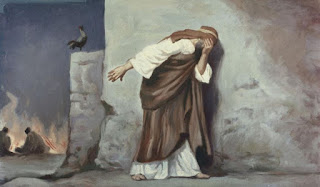
Peter and the Rooster: A Call to Watch and Pray

We are all familiar with the passage in the gospels where Peter denies Christ despite his emphatic declaration of loyalty and fidelity to Jesus.

"Peter declared, 'Even if all fall away, I will not.' 'Truly I tell you,' Jesus answered, 'today—yes, tonight—before the rooster crows twice you yourself will disown me three times.' But Peter insisted emphatically, 'Even if I have to die with you, I will never disown you.' And all the others said the same." (Mar 14:30 -31).

Peter and the Rooster
Let's compare and contrast the rooster with Peter, because in doing so we can learn a valuable spiritual lesson. In h
is article called Why Do Roosters Crow on the website Chicken Scratch, Joseph Hudson writes: 

“As with a vast majority of seemingly-strange animal behavior, one of the primary motivations for roosters to crow is to attract a mate. While our human ears struggle to detect any nuances between calls, scientists have analyzed the crows of distinct roosters and found that each rooster has a slightly different crow.

Thus, many researchers have concluded that the slight changes between each rooster are used as a method of impressing potential mates and out-gunning competing roosters.

The number of changes is extensive. Many roosters like to introduce a warbling effect into the calls as a sign of complexity and health. Further, the length of the song itself will vary between animals. While a rooster’s crow may seem arbitrary to many listeners, they are playing a distinct and repeatable song.

Depending on the rooster, this repetition may occur as often as every two minutes, or as infrequently as every ten. While the studies have not been wholly conclusive, it appears that hens tend to be more quickly attracted to roosters that exhibit longer and more complex songs.

Beyond the complexity of the call, there is also a much simpler variable: volume. One of the key differences in the crows of different roosters is how long they can become. While not always true, a larger rooster can typically produce a higher maximum volume compared to a smaller specimen. Thus, exhibiting a higher volume is a means by which roosters can brag about their size, strength, and health.

This effect is amplified when multiple roosters are within the hearing range of each other. When placed in the vicinity of another rooster, roosters tend to increase the volume of their crowing. This often results in a kind of competition between the males, resulting in a back-and-forth battle with increasing volume each round.

In extreme instances, agitated roosters have been known to damage their lungs or vocal cords in an attempt to out-shine another rooster. They are liable to become so engrossed in outperforming the other, and winning the affection of a mate, that they forget any self-preservation instincts and overwork themselves. While they typically recover from these episodes, the damage can sometimes be permanent.”

Hudson also states in his article:

“Unlike hens, which are primarily communal and docile animals, roosters are fiercely territorial. Thus, marking their territory is one of the primary reasons why a rooster may crow. In any given community, there will be much fewer roosters than hens. Hens often outnumber their male equivalents by over a hundred to one.

Therefore, roosters are allowed to rule a fairly large range of territory. A typical rooster will lay claim to an area of roughly an acre. It considers this range to be its property and will become disturbed if its land is intruded on by another male bird.

Crowing for territorial reasons takes on two forms. A rooster will often seek to remind other birds in the area that a certain portion of land is its territory. This is generally the function of the ‘alarm clock’ morning crowing that roosters are so well known for. When crowing for this reason, a rooster will attempt to find the highest perch possible.

Normally, this will be a tree or fence post. Then, the rooster will project out into its territory. This call normally resembles its mating song, but with even more embellishments added. In fact, territorial marking will often have the secondary effect of attracting a mate.” 

Now consider Peter in the courtyard warming himself among the soldiers with servant girls around. Peter and the soldiers are likened to the roosters and the females are likened to the hens. His protests and denials of being associated with Christ are like the rooster’s crows to mark out its territory. It’s as if Peter is saying, “This is my territory. I do not know Him. I’m not from Galilee.” Just as there is “a kind of competition between the male (roosters), resulting in a back-and-forth battle with increasing volume each round,” likewise, each one of Peter’s denials seemed to increase in intensity like a crescendo. 

Consider how “agitated roosters have been known to damage their lungs or vocal cords in an attempt to out-shine another rooster. They are liable to become so engrossed in outperforming the other, and winning the affection of a mate, that they forget any self-preservation instincts and overwork themselves. While they typically recover from these episodes, the damage can sometimes be permanent.” And consider how Peter became so agitated that he hurt himself spiritually in his attempts to prove he was not Christ’s disciple. 

In Mark's gospel it states:

"While Peter was below in the courtyard, one of the servant girls of the high priest came by. When she saw Peter warming himself, she looked closely at him. 

'You also were with that Nazarene, Jesus,' she said. 

But he denied it. 'I don't know or understand what you're talking about,' he said, and went out into the entryway. 

When the servant girl saw him there, she said again to those standing around, 

'This fellow is one of them.' Again he denied it. After a little while, those standing near said to Peter, 

'Surely you are one of them, for you are a Galilean.' 

He began to call down curses, and he swore to them, 'I don't know this man you're talking about.'

Immediately the rooster crowed the second time. Then Peter remembered the word Jesus had spoken to him: 'Before the rooster crows twice you will disown me three times.' And he broke down and wept."(Mar 14:66-72)

You can clearly see the crescendo of denial that reaches its climax when Peter even called down curses on himself and swore to them that he didn't know the Lord. Like a rooster, who becomes engrossed in outperforming the others, Peter was so caught up in not wanting to be seen before them as a follower of Christ, that he forgot any self-preservation instincts and overworked himself to the point of doing permanent damage to his spirit that could only be healed by the Lord.

Consider how the rooster that night had only crowed once by the time Peter had already denied the Lord three times. Roosters typically crow once every two minutes or as infrequently as every ten minutes. Therefore, the time between the rooster’s two crows that night would have been between two and ten minutes. During that short space of time, Peter had already denied the Lord three times, just as the Lord said he would do. As if Peter was in some sort of competition, he outgunned the crow and got out three vehement denials of Christ in that short space of time before the rooster even had a chance to get out a second crow.

In Matthew, Luke, and John’s gospels, they record the Lord saying, “Before the rooster crows today, you will disown Me three times.” That would have a different meaning than if He had said, "Before the rooster crows twice you will disown me three times." Roosters start to crow two hours before the onset of light. This is called anticipatory predawn crowing. Therefore if the Lord had said that Peter would disown him three times before the rooster crows today, that would indicate the imminence of Peter's denial of the Lord, which would even occur a couple of hours before dawn; whereas the statement that he would deny the Lord three times before the rooster crowed twice connotes the quickness with which he would deny the Lord three times in such a very short time span. 

But whether the Lord said the rooster would crow today or the rooster would crow twice, the analogy between Peter’s denials and the rooster’s crow is still valid. And besides, since Peter likely influenced the writing of Mark’s gospel, it is likely that Mark’s record of what Jesus said about the rooster crowing twice is more accurate than the others, since this was spoken directly by Jesus to Peter. He would probably have a better recollection of it than anyone else, since it involved him personally and had such a big impact on his life.

Either way you look at it, essentially the rooster’s crow is coming from its animal nature and not from anything spiritual. In the same way, Peter’s denials came from the baser instincts of his sinful human nature. It shows that no matter how emphatically Peter boasted about his loyalty and faithfulness to Christ, he was still capable of committing such a damnable sin as disowning the Lord whom he loved. If Peter, who loved the Lord so much and was such a passionate follower of Christ, could do this, how much more the rest of us who follow Jesus!

This was no small thing to disown the Lord. For Jesus had warned, “But whoever disowns me before others, I will disown before my Father in heaven.” (Mat 10:33). This indicates that one who disowns Christ after having known the Lord cannot be saved unless he repents and asks forgiveness before he dies. Peter certainly repented and was reinstated by Jesus after his resurrection from the dead.

Watch and Pray!
The one thing that could have kept Peter from denying Christ in the first place was prayer. The Lord had told him to watch and pray in the Garden of Gethsemane lest he fall into temptation. He said, "Watch and pray so that you will not fall into temptation. The spirit is willing, but the flesh is weak." (Mat 26:41). Peter’s spirit was willing to follow the Lord to prison and even to death, but his flesh was weak. Since he didn’t take the time to pray, his spirit remained weak, and when presented with a strong temptation, he fell into it.

The same goes for all of us who follow the Lord as His disciples. The spirit is willing but the flesh is weak. Because of the sinful nature, we are capable of committing damnable sins that can keep us from heaven. That’s why we must be careful to watch and pray so that we do not fall into temptation.

On the other hand, Jesus is our perfect example. He always took the time to pray every day, often very early while it was still dark, and even late at night, or throughout the night. And He did so especially on that fateful night, as the disciples slept, yet He prayed intensely all the way through to victory in the garden, surrendering His will to the will of the Father. And when He was confronted with all the temptations that night brought to Him, including His arrest and mock trial before the high priest, He didn't falter a bit. He remained faithful to the Heavenly Father all throughout that ordeal, even as Peter in contrast to Him was outside disowning Him. He was tempted in every way just as we are, yet was without sin (Heb 4:15). May we all follow in His steps (1 Pet 2:21) by imitating Him and obeying His command to watch and pray so that we do not fall into temptation.

Attribution: All Scripture taken from the Holy Bible NIV, copyright Zondervan, used by permission. Excerpts from Why Do Roosters Crow by Joseph Hudson taken from Chicken Scratch website, used for educational and commentary purposes only per the Fair Use Act. Image of Peter Denies Christ also used per the Fair Use Act.

Author's note: If you enjoyed this post, please also see the following: Sins That Will Keep You From HeavenSins of IgnoranceSins of OmissionAsk for the Ancient PathsThe False Gospel of Eternal Security, and Seeking Him in the Wee Hours of the Night. You may find the Main Directory for this blog at Home, and you may also access my complete blog directory at "Writing for the Master."

Do You Want to Know Him?
If you want to know Jesus personally, you can. It all begins when you repent and believe in Jesus.  Do you know what God's Word, the Bible says?

“Jesus came into Galilee, preaching the gospel of God, and saying, ‘The time is fulfilled, and the kingdom of God is at hand; repent and believe in the gospel.’” (Mar 1:14b-15).  He preached that we must repent and believe.

Please see my explanation of this in my post called "Do You Want to Know Jesus?"
_________________________________________________

Len Lacroix is the founder of Doulos Missions International.  He was based in Eastern Europe for four years, making disciples, as well as helping leaders to be more effective at making disciples who multiply, developing leaders who multiply, with the ultimate goal of planting churches that multiply. His ministry is now based in the United States with the same goal of helping fulfill the Great Commission. www.dmiworld.org.