
Showing posts with label deny. Show all posts

Monday, January 10, 2022

Peter and the Rooster: A Call to Watch and Pray

We are all familiar with the passage in the gospels where Peter denies Christ despite his emphatic declaration of loyalty and fidelity to Jesus.

"Peter declared, 'Even if all fall away, I will not.' 'Truly I tell you,' Jesus answered, 'today—yes, tonight—before the rooster crows twice you yourself will disown me three times.' But Peter insisted emphatically, 'Even if I have to die with you, I will never disown you.' And all the others said the same." (Mar 14:30 -31).

Peter and the Rooster
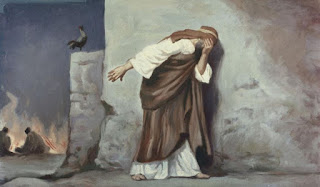
Let's compare and contrast the rooster with Peter, because in doing so we can learn a valuable spiritual lesson. In h
is article called Why Do Roosters Crow on the website Chicken Scratch, Joseph Hudson writes: 

“As with a vast majority of seemingly-strange animal behavior, one of the primary motivations for roosters to crow is to attract a mate. While our human ears struggle to detect any nuances between calls, scientists have analyzed the crows of distinct roosters and found that each rooster has a slightly different crow.

Thus, many researchers have concluded that the slight changes between each rooster are used as a method of impressing potential mates and out-gunning competing roosters.

The number of changes is extensive. Many roosters like to introduce a warbling effect into the calls as a sign of complexity and health. Further, the length of the song itself will vary between animals. While a rooster’s crow may seem arbitrary to many listeners, they are playing a distinct and repeatable song.

Depending on the rooster, this repetition may occur as often as every two minutes, or as infrequently as every ten. While the studies have not been wholly conclusive, it appears that hens tend to be more quickly attracted to roosters that exhibit longer and more complex songs.

Beyond the complexity of the call, there is also a much simpler variable: volume. One of the key differences in the crows of different roosters is how long they can become. While not always true, a larger rooster can typically produce a higher maximum volume compared to a smaller specimen. Thus, exhibiting a higher volume is a means by which roosters can brag about their size, strength, and health.

This effect is amplified when multiple roosters are within the hearing range of each other. When placed in the vicinity of another rooster, roosters tend to increase the volume of their crowing. This often results in a kind of competition between the males, resulting in a back-and-forth battle with increasing volume each round.

In extreme instances, agitated roosters have been known to damage their lungs or vocal cords in an attempt to out-shine another rooster. They are liable to become so engrossed in outperforming the other, and winning the affection of a mate, that they forget any self-preservation instincts and overwork themselves. While they typically recover from these episodes, the damage can sometimes be permanent.”

Hudson also states in his article:

“Unlike hens, which are primarily communal and docile animals, roosters are fiercely territorial. Thus, marking their territory is one of the primary reasons why a rooster may crow. In any given community, there will be much fewer roosters than hens. Hens often outnumber their male equivalents by over a hundred to one.

Therefore, roosters are allowed to rule a fairly large range of territory. A typical rooster will lay claim to an area of roughly an acre. It considers this range to be its property and will become disturbed if its land is intruded on by another male bird.

Crowing for territorial reasons takes on two forms. A rooster will often seek to remind other birds in the area that a certain portion of land is its territory. This is generally the function of the ‘alarm clock’ morning crowing that roosters are so well known for. When crowing for this reason, a rooster will attempt to find the highest perch possible.

Normally, this will be a tree or fence post. Then, the rooster will project out into its territory. This call normally resembles its mating song, but with even more embellishments added. In fact, territorial marking will often have the secondary effect of attracting a mate.” 

Now consider Peter in the courtyard warming himself among the soldiers with servant girls around. Peter and the soldiers are likened to the roosters and the females are likened to the hens. His protests and denials of being associated with Christ are like the rooster’s crows to mark out its territory. It’s as if Peter is saying, “This is my territory. I do not know Him. I’m not from Galilee.” Just as there is “a kind of competition between the male (roosters), resulting in a back-and-forth battle with increasing volume each round,” likewise, each one of Peter’s denials seemed to increase in intensity like a crescendo. 

Consider how “agitated roosters have been known to damage their lungs or vocal cords in an attempt to out-shine another rooster. They are liable to become so engrossed in outperforming the other, and winning the affection of a mate, that they forget any self-preservation instincts and overwork themselves. While they typically recover from these episodes, the damage can sometimes be permanent.” And consider how Peter became so agitated that he hurt himself spiritually in his attempts to prove he was not Christ’s disciple. 

In Mark's gospel it states:

"While Peter was below in the courtyard, one of the servant girls of the high priest came by. When she saw Peter warming himself, she looked closely at him. 

'You also were with that Nazarene, Jesus,' she said. 

But he denied it. 'I don't know or understand what you're talking about,' he said, and went out into the entryway. 

When the servant girl saw him there, she said again to those standing around, 

'This fellow is one of them.' Again he denied it. After a little while, those standing near said to Peter, 

'Surely you are one of them, for you are a Galilean.' 

He began to call down curses, and he swore to them, 'I don't know this man you're talking about.'

Immediately the rooster crowed the second time. Then Peter remembered the word Jesus had spoken to him: 'Before the rooster crows twice you will disown me three times.' And he broke down and wept."(Mar 14:66-72)

You can clearly see the crescendo of denial that reaches its climax when Peter even called down curses on himself and swore to them that he didn't know the Lord. Like a rooster, who becomes engrossed in outperforming the others, Peter was so caught up in not wanting to be seen before them as a follower of Christ, that he forgot any self-preservation instincts and overworked himself to the point of doing permanent damage to his spirit that could only be healed by the Lord.

Consider how the rooster that night had only crowed once by the time Peter had already denied the Lord three times. Roosters typically crow once every two minutes or as infrequently as every ten minutes. Therefore, the time between the rooster’s two crows that night would have been between two and ten minutes. During that short space of time, Peter had already denied the Lord three times, just as the Lord said he would do. As if Peter was in some sort of competition, he outgunned the crow and got out three vehement denials of Christ in that short space of time before the rooster even had a chance to get out a second crow.

In Matthew, Luke, and John’s gospels, they record the Lord saying, “Before the rooster crows today, you will disown Me three times.” That would have a different meaning than if He had said, "Before the rooster crows twice you will disown me three times." Roosters start to crow two hours before the onset of light. This is called anticipatory predawn crowing. Therefore if the Lord had said that Peter would disown him three times before the rooster crows today, that would indicate the imminence of Peter's denial of the Lord, which would even occur a couple of hours before dawn; whereas the statement that he would deny the Lord three times before the rooster crowed twice connotes the quickness with which he would deny the Lord three times in such a very short time span. 

But whether the Lord said the rooster would crow today or the rooster would crow twice, the analogy between Peter’s denials and the rooster’s crow is still valid. And besides, since Peter likely influenced the writing of Mark’s gospel, it is likely that Mark’s record of what Jesus said about the rooster crowing twice is more accurate than the others, since this was spoken directly by Jesus to Peter. He would probably have a better recollection of it than anyone else, since it involved him personally and had such a big impact on his life.

Either way you look at it, essentially the rooster’s crow is coming from its animal nature and not from anything spiritual. In the same way, Peter’s denials came from the baser instincts of his sinful human nature. It shows that no matter how emphatically Peter boasted about his loyalty and faithfulness to Christ, he was still capable of committing such a damnable sin as disowning the Lord whom he loved. If Peter, who loved the Lord so much and was such a passionate follower of Christ, could do this, how much more the rest of us who follow Jesus!

This was no small thing to disown the Lord. For Jesus had warned, “But whoever disowns me before others, I will disown before my Father in heaven.” (Mat 10:33). This indicates that one who disowns Christ after having known the Lord cannot be saved unless he repents and asks forgiveness before he dies. Peter certainly repented and was reinstated by Jesus after his resurrection from the dead.

Watch and Pray!
The one thing that could have kept Peter from denying Christ in the first place was prayer. The Lord had told him to watch and pray in the Garden of Gethsemane lest he fall into temptation. He said, "Watch and pray so that you will not fall into temptation. The spirit is willing, but the flesh is weak." (Mat 26:41). Peter’s spirit was willing to follow the Lord to prison and even to death, but his flesh was weak. Since he didn’t take the time to pray, his spirit remained weak, and when presented with a strong temptation, he fell into it.

The same goes for all of us who follow the Lord as His disciples. The spirit is willing but the flesh is weak. Because of the sinful nature, we are capable of committing damnable sins that can keep us from heaven. That’s why we must be careful to watch and pray so that we do not fall into temptation.

On the other hand, Jesus is our perfect example. He always took the time to pray every day, often very early while it was still dark, and even late at night, or throughout the night. And He did so especially on that fateful night, as the disciples slept, yet He prayed intensely all the way through to victory in the garden, surrendering His will to the will of the Father. And when He was confronted with all the temptations that night brought to Him, including His arrest and mock trial before the high priest, He didn't falter a bit. He remained faithful to the Heavenly Father all throughout that ordeal, even as Peter in contrast to Him was outside disowning Him. He was tempted in every way just as we are, yet was without sin (Heb 4:15). May we all follow in His steps (1 Pet 2:21) by imitating Him and obeying His command to watch and pray so that we do not fall into temptation.

Attribution: All Scripture taken from the Holy Bible NIV, copyright Zondervan, used by permission. Excerpts from Why Do Roosters Crow by Joseph Hudson taken from Chicken Scratch website, used for educational and commentary purposes only per the Fair Use Act. Image of Peter Denies Christ also used per the Fair Use Act.

Author's note: If you enjoyed this post, please also see the following: Sins That Will Keep You From HeavenSins of IgnoranceSins of OmissionAsk for the Ancient PathsThe False Gospel of Eternal Security, and Seeking Him in the Wee Hours of the Night. You may find the Main Directory for this blog at Home, and you may also access my complete blog directory at "Writing for the Master."

Do You Want to Know Him?
If you want to know Jesus personally, you can. It all begins when you repent and believe in Jesus.  Do you know what God's Word, the Bible says?

“Jesus came into Galilee, preaching the gospel of God, and saying, ‘The time is fulfilled, and the kingdom of God is at hand; repent and believe in the gospel.’” (Mar 1:14b-15).  He preached that we must repent and believe.

Please see my explanation of this in my post called "Do You Want to Know Jesus?"
_________________________________________________

Len Lacroix is the founder of Doulos Missions International.  He was based in Eastern Europe for four years, making disciples, as well as helping leaders to be more effective at making disciples who multiply, developing leaders who multiply, with the ultimate goal of planting churches that multiply. His ministry is now based in the United States with the same goal of helping fulfill the Great Commission. www.dmiworld.org.

Wednesday, May 16, 2018

Following in His Steps

In my article, What Jesus Did Not Do on the Cross, which I highly recommend reading, I highlighted twenty-one things the Lord did not do during His betrayal, passion, and crucifixion. One of those was that He did not sin. Today I would like to focus on that one in particular, since He did not sin at any point during His earthly life. Let's see what the Scriptures say:

He Did Not Sin
We know for certain that the Lord did not commit any sin, because the Bible tells us so. It says:

"For we do not have a high priest who cannot sympathize with our weaknesses, but One who has been tempted in all things as we are, yet without sin." (Heb 4:15)

I have highlighted in my article, The Temptation of Christ, how He overcame all the devil's temptations in the wilderness and committed no sin. What was true of that experience was true of His entire life. He never sinned.

The apostle Paul affirmed the sinlessness of Christ when he wrote: "He made Him who knew no sin to be sin on our behalf, so that we might become the righteousness of God in Him." (2Co 5:21)

The apostle Peter wrote: "For you have been called for this purpose, since Christ also suffered for you, leaving you an example for you to follow in His steps, who committed no sin, nor was any deceit found in his mouth." (1Pe 2:21-22)

We learn two important things from this passage. First, that Jesus committed no sin, and secondly that He left us an example that we should follow in His steps.

He Suffered for Righteousness
Another important point that Peter made in verse 21 was that we have been called to suffer. This is clearer when we read it in context with the verse before it:

"For what credit is there if, when you sin and are harshly treated, you endure it with patience? But if when you do what is right and suffer for it you patiently endure it, this finds favor with God. For you have been called for this purpose, since Christ also suffered for you, leaving you an example for you to follow in His steps..." (1Pe 2:20-21)

Later in that same epistle, he further emphasized this aspect of participating in Christ's sufferings, when he wrote: "But rejoice inasmuch as you participate in the sufferings of Christ, so that you may be overjoyed when his glory is revealed." (1 Pe 4:13, NIV)

The apostle Paul affirmed this in his epistle to the Philippians, when he wrote: "For it has been granted to you on behalf of Christ not only to believe in him, but also to suffer for him..." (Phil 1:29, NIV). For more on that topic, please see my article, The Fiery Sufferings of the Believer.

Follow Him
As I have just mentioned, Peter said that Jesus Christ is your example, and you must follow in his steps (1 Pe 2:21). Truly in all things, Jesus is our perfect example. The apostle John also said the same thing in his epistle: "Whoever claims to live in him must live as Jesus did." (1 Jn 2:6).

This is what Jesus Himself taught His disciples. He said: "Whoever wants to be my disciple must deny himself and take up his cross and follow Me." (Mt 16:24, NIV). When He said we must deny ourselves, take up our cross, and follow Him, He meant just what He said. We must follow in His steps in every aspect of life.

These are the requirements in order to be a disciple of Christ. He said, “If anyone comes to Me and does not hate his father and mother, his wife and children, his brothers and sisters—yes, even his own life—he cannot be My disciple. And anyone who does not carry his cross and follow Me cannot be My disciple." (Lk 14:26-27, NIV 1978).

This is a daily requirement: "Then he said to them all: 'Whoever wants to be my disciple must deny themselves and take up their cross daily and follow me.'" (Lk 9:23, NIV)

On another occasion He said, "Take my yoke upon you and learn from Me, for I am gentle and humble in heart, and you will find rest for your souls." (Mt 11:29, NIV). This also speaks of learning from Him the way to live and doing what He did.

I Have Decided to Follow Jesus
As that old hymn I Have Decided to Follow Jesus says, "The cross before me, the world behind me. No turning back, no turning back. Though none go with me, still I will follow." According to Wikipedia, "...the lyrics are based on the last words of Nokseng, a Garo man, a tribe from Meghalaya [India] which then was in Assam, who along with his family decided to follow Jesus Christ in the middle of the 19th century through the efforts of an American Baptist missionary. Called to renounce his faith by the village chief, the convert declared, 'I have decided to follow Jesus.' His two children were killed and in response to threats to his wife, he continued, 'Though none go with me, still I will follow.' His wife was killed, and he was executed while singing, 'The cross before me, the world behind me.' This display of faith is reported to have led to the conversion of the chief and others in the village."

The article goes on to say that "The formation of these words into a hymn is attributed to the Indian missionary Sadhu Sundar Singh. The melody is also Indian, and entitled 'Assam' after the region where the text originated. An American hymn editor, William Jensen Reynolds, composed an arrangement," which we now know as the wonderful old hymn I Have Decided to Follow Jesus. It aptly describes the point I am making in this article.

No Turning Back
As that hymn says, once we have decided to follow Jesus, we must never turn back, no matter what happens. As Jesus said, "No one who puts a hand to the plow and looks back is fit for service in the kingdom of God." (Lk 9:62, NIV). For more on this, please see No Turning Back and Remember Lot's Wife.

Putting it All Together
Since Jesus committed no sin, then we should follow in His steps and follow in His example, which means we should also commit no sin, as I explained in my article Aim for Perfection. Just as He denied Himself and took up His cross, we also must deny ourselves, take up our cross, and follow Him. And just as He suffered for righteousness, we must participate in His sufferings, too.

I hope this has helped to encourage you in your walk with God to seek Him with all your heart. Fight the good fight, keep the faith, deny yourself, take up your cross, and follow Jesus! The cross before you, the world behind you, no turning back, no turning back. Though none go with you, still you must follow Jesus without turning back.

Attribution notice: Most Scripture quotations taken from the NASB, unless otherwise noted. Other Scripture taken from The Holy Bible, New International Version® NIV®. Image from Christ Lutheran Church, which may be subject to copyright, used according to Fair Use Act for educational and commentary purposes only.

Author's note: If you enjoyed this post, you may also like Aim for Perfection, Called to Be Blameless, Christian PerfectionWalking in the Perfect Will of God, For the Glory of God Alone, Crucified with ChristWhat Jesus Did Not Do on the Cross, Sins That Will Keep You From HeavenThe Glory of Martyrdom for Christ, The Obedience of Faith, Restored Truth, Ask for the Ancient Paths, Pleasing the Lord, Clean Hands and a Pure Heart, Salvation with Fear and Trembling, Righteous Deeds and White Robes, The Ways of Life, The Forgotten Sin of Worldliness, Is Tithing Required for Christians?, Godly Attire and Adornment -- Seven Divine Revelations, Having a Servant's Heart, Alcohol and Cigarettes -- Ten Divine Revelations, Divorce -- Three Divine Revelations, A Warning for Married Christian Couples, Separation from the World, and Standing in the Gap. My daughter has also written a lovely poem called Cross Bearing. You can access my complete blog directory at "Writing for the Master." Now I'd like to ask a very important question.

Do You Want to Know Him?
If you want to know Jesus personally, you can. It all begins when you repent and believe in Jesus.  Do you know what God's Word, the Bible says?

“Jesus came into Galilee, preaching the gospel of God, and saying, ‘The time is fulfilled, and the kingdom of God is at hand; repent and believe in the gospel.’” (Mar 1:14b-15).  He preached that we must repent and believe.

Please see my explanation of this in my post called "Do You Want to Know Jesus?"
_________________________________________________

Len Lacroix is the founder of Doulos Missions International.  He was based in Eastern Europe for four years, making disciples, as well as helping leaders to be more effective at making disciples who multiply, developing leaders who multiply, with the ultimate goal of planting churches that multiply. His ministry is now based in the United States with the same goal of helping fulfill the Great Commission. www.dmiworld.org

Monday, July 30, 2012

Avoid Becoming a Corrupted Christian

Silver being refined
In a separate study, called Drifting Away, I wrote about the various words in the original Greek New Testament that refer to the possibility of apostasy for a Christian.  Today I would like to specifically discuss the apostle Paul’s personal walk with the Lord.  After all, he said to follow his example as he followed Christ.

Paul said: "Do you not know that those who run in a race all run, but only one receives the prize? Run in such a way that you may win. Everyone who competes in the games exercises self-control in all things. They then do it to receive a perishable wreath, but we an imperishable. Therefore I run in such a way, as not without aim; I box in such a way, as not beating the air; but I discipline my body and make it my slave, so that, after I have preached to others, I myself will not be disqualified." (1Co 9:24-27)

I want to focus on his final sentence in this passage.  He said he disciplined his body, which literally means to hit under the eye or subdue.  Paul knew what it meant to deny himself, mortify his flesh and take up his cross daily.  It was a way of life for him. 

So That I Myself May Not Become a Castaway
He did this so that after he had preached to others, he himself would not be disqualified.  I would like to draw your attention to the word “disqualified.”  It comes from the Greek word adokimos.  Here is a little word study on adokimos from Bruce Hurt on his Precept Austin website:

Worthless (96) (adokimos from a = without + dokimos = tested and thus reliable or acceptable) refers to that which is rejected after a trial or examination because it fails the test. It means to put to the test for the purpose of being approved, but failing to meet the requirements.

The basic meaning of adokimos is that of failing to meet the test or not standing the test. It describes that  which does not prove itself to be such as it ought and which is therefore disapproved and useless. For example, "sterile soil" (see Hebrews 6:8 below) is unfit for fulfilling its purpose.

In short adokimos describes that which is worthless, spurious, unqualified, disqualified, corrupted, not approved.  Adokimos was commonly used of metals that were rejected by refiners because of impurities. The impure metals were discarded, and adokimos therefore came to include the ideas of worthlessness and uselessness. -- from Bruce Hurt’s Precept-Austin commentary on Titus 1:16
Old Testament Use of Adokimos
In the Greek Old testament, known as the Septuagint (LXX), the word adokimos occurs twice in Pr 25:4 and Isa 1:22.

The Lord said to unfaithful Israel, “Your silver has become dross, Your drink diluted with water.”  (Isa 1:22)

Solomon wrote, “Take away the dross from the silver, And there comes out a vessel for the smith;” (Pro 25:4)

In both of these passages, the word adokimos is translated “dross,” literally meaning refuse or scoria (rejected matter, that which is thrown off), or worthless.

Other New Testament Uses of Adokimos 
The word adokimos is used elsewhere in the New Testament as well, in the following passages (see underlined words):

And just as they did not see fit to acknowledge God any longer, God gave them over to a depraved mind, to do those things which are not proper,  (Rom 1:28)

Test yourselves to see if you are in the faith; examine yourselves! Or do you not recognize this about yourselves, that Jesus Christ is in you--unless indeed you fail the test? (2Co 13:5)

But I trust that you will realize that we ourselves do not fail the test. (2Co 13:6)

Now we pray to God that you do no wrong; not that we ourselves may appear approved, but that you may do what is right, even though we may appear unapproved. (2Co 13:7)

Just as Jannes and Jambres opposed Moses, so these men also oppose the truth, men of depraved mind, rejected in regard to the faith. (2Ti 3:8)

They profess to know God, but by their deeds they deny Him, being detestable and disobedient and worthless for any good deed. (Tit 1:16)

For ground that drinks the rain which often falls on it and brings forth vegetation useful to those for whose sake it is also tilled, receives a blessing from God; but if it yields thorns and thistles, it is worthless and close to being cursed, and it ends up being burned. (Heb 6:7-8)

but I discipline my body and make it my slave, so that, after I have preached to others, I myself will not be disqualified. (1Co 9:27)

Losing His Reward or Missing Heaven?
Now let’s look at the context of our main text in 1 Corinthians 9.  We need to determine whether Paul was talking about losing his reward for his labor in the Lord, or missing heaven.  We know that he had written earlier in this letter about a man's reward being burned up, if he builds incorrectly, but he himself will be saved as through a fire (1 Cor 3:18). 

But in this passage, Paul is speaking about the need to run the race of a disciple in such a way as to win the prize.  This requires strict discipline in much the same way that an Olympic athlete requires strict training.  Then Paul goes on to talk about the Israelites who were laid low in the wilderness, because God was not well-pleased with them.  He warns the Corinthian Church against immoral living, and craving evil, for which the Israelites were destroyed (1 Cor 10:9).  He also warns about grumbling, for which the Israelites were also destroyed (1 Cor 10:10).

We know that Paul is talking about the possibility of Christians missing heaven here, because he clearly stated in chapter six that those who live such lives will not inherit the kingdom of God.  He said, "Or do you not know that the unrighteous will not inherit the kingdom of God? Do not be deceived; neither fornicators, nor idolaters, nor adulterers, nor effeminate, nor homosexuals, nor thieves, nor the covetous, nor drunkards, nor revilers, nor swindlers, will inherit the kingdom of God." (1Co 6:9-10)

He goes on to say, “Now these things happened to them as an example, and they were written for our instruction, upon whom the ends of the ages have come. Therefore let him who thinks he stands take heed that he does not fall.” (1Co 10:11-12)

There are two important points here in 1 Cor 10:11-12 that are directly relevant to what he said in 1 Cor 9:27.  He said that the destruction of the Israelites in the desert for their sin is an example meant to warn us, so that we do not likewise fall.  Then he says that if any disciple of Christ thinks he stands, he should take heed that he does not fall.   This word “fall” means to fall down or fail.  So if you are a Christian, be careful you don’t fall.  This would be a completely useless and unnecessary warning in Scripture, if it were impossible for a Christian to fall.

Refiner's Fire
The Lord says that before He comes, He will send His messenger to prepare His people.  We know that He did this through John the Baptist before His first coming, and He is doing it again now right before His second coming.  "He will sit as a smelter and purifier of silver, and He will purify the sons of Levi and refine them like gold and silver, so that they may present to the LORD offerings in righteousness." (Mal 3:3)

I for one desire the refiner's fire to burn up all the worthless dross within me.  I hope you do also. Please read my other blog called Holy Fire Baptism for more on this.

Putting it All Together

If even the apostle Paul disciplined his body and made it his slave, so that he would not become corrupted, depraved, unapproved, disqualified or worthless, then we know this applies to every believer -- no matter if they are a pastor, elder, deacon, teacher, or simply a disciple of the Lord.

Let's receive this warning for what it is and examine ourselves to make sure we are living in such a way that is consistent with Jesus Christ living in us.  Let's be sure we are not living in such a way that is corrupted, depraved, unapproved, disqualified or worthless.  We don't want to be corrupted Christians and fail to receive the prize.  Don't receive God's grace in vain! (2 Cor 6:1)

This requires taking up your cross daily, denying yourself, mortifying your flesh, and following Jesus.  Paul called it beating his body and making it his slave.  You need to ask the Holy Spirit every day to apply the cross to your flesh to hold it in a place of death.  Ask the Lord to send His holy fire to refine you and remove all the dross from your heart, everything that will not pass through the fire as purely from Him.  Ask Him to do whatever it takes to prepare you for His soon coming.  And He who began a good work in you will be faithful to perfect it until the day of Christ Jesus.

Author's note A related song I'd like to share here is "I Don't Wanna Fall Away from You" by Keith Green.  Here are some related articles you should check out:
Taken to Hell
Angelica Zambrano Heaven and Hell
Obedience by the Spirit
Salvation with Fear and Trembling
Costly Grace
Is Obedience Optional
The Apostasy Parables 

Attribution notice: Most Scripture quotations taken from the NASB. Silver refining from Malachi 3:3 puzzle on Rock4Jesus.

You can access my complete blog directory at "Writing for the Master." Now I'd like to ask a very important question.

Do You Want to Know Him?
If you want to know Jesus personally, you can. It all begins when you repent and believe in Jesus.  Do you know what God's Word, the Bible says?

“Jesus came into Galilee, preaching the gospel of God, and saying, ‘The time is fulfilled, and the kingdom of God is at hand; repent and believe in the gospel.’” (Mar 1:14b-15).  He preached that we must repent and believe.

Please see my explanation of this in my post called "Do You Want to Know Jesus?"
_________________________________________________

Len Lacroix is the founder of Doulos Missions International.  He was based in Eastern Europe for four years, making disciples, as well as helping leaders to be more effective at making disciples who multiply, developing leaders who multiply, with the ultimate goal of planting churches that multiply. His ministry is now based in the United States with the same goal of helping fulfill the Great Commission. www.dmiworld.org.

Tuesday, March 6, 2012

The Cost of Discipleship

Deitrich Bonhoeffer
Most preachers today are preaching cheap grace.  But this is not the true gospel.  True grace is costly.

Years ago, when my friend, Mike, was discipling me, we read a book together, called The Cost of Discipleship, by Dietrich Bonhoeffer.  It challenged and enriched my understanding of grace and what it means to be a disciple of Christ.  Let's look at some quotes from Bonhoeffer.


 “When Christ calls a man, he bids him come and die.”
― Dietrich Bonhoeffer, The Cost of Discipleship 

“Grace at a low cost, is in the last resort simply a new law, which brings neither help nor freedom.”
― Dietrich Bonhoeffer, The Cost of Discipleship 

"Cheap grace means grace sold on the market like cheapjacks' wares. The sacraments, the forgiveness of sin, and the consolations of religion are thrown away at cut prices. Grace is represented as the Church's inexhaustible treasury, from which she showers blessings with generous hands, without asking questions or fixing limits. Grace without price; grace without cost! The essence of grace, we suppose, is that the account has been paid in advance; and, because it has been paid, everything can be had for nothing. Since the cost was infinite, the possibilities of using and spending it are infinite. What would grace be if it were not cheap?...

Cheap grace is the preaching of forgiveness without requiring repentance, baptism without church discipline, Communion without confession, absolution without personal confession. Cheap grace is grace without discipleship, grace without the cross, grace without Jesus Christ, living and incarnate.


The Cost of Discipleship by Dietrich Bonhoeffer is available at Amazon.


Costly grace is the treasure hidden in the field; for the sake of it a man will go and sell all that he has. It is the pearl of great price to buy which the merchant will sell all his goods. It is the kingly rule of Christ, for whose sake a man will pluck out the eye which causes him to stumble; it is the call of Jesus Christ at which the disciple leaves his nets and follows him.

Costly grace is the gospel which must be sought again and again, the gift which must be asked for, the door at which a man must knock.

Such grace is costly because it calls us to follow, and it is grace because it calls us to follow Jesus Christ. It is costly because it costs a man his life, and it is grace because it gives a man the only true life. It is costly because it condemns sin, and grace because it justifies the sinner. Above all, it is costly because it cost God the life of his Son: 'Ye were bought at a price', and what has cost God much cannot be cheap for us. Above all, it is grace because God did not reckon his Son too dear a price to pay for our life, but delivered him up for us. Costly grace is the Incarnation of God.” 
― Dietrich Bonhoeffer, The Cost of Discipleship 

But the disciple had the advantage over the Pharisee in that his doing of the law is in fact perfect. How is such a thing possible? Because between the disciples and the law stands one who has perfectly fulfilled it, on with whom they live in communion...Jesus not only possesses this righteousness, but is himself the personal embodiment of it. He is the righteousness of the disciples...This is where the righteousness of the disciple exceeds that of the Pharisees; it is grounded solely upon the call to fellowship with him who alone fulfills the law.
― Dietrich Bonhoeffer, The Cost of Discipleship    

Willingly He Died
I think the way a man dies says a lot about his character.   According to the Wikipedia article about him, "Bonhoeffer was condemned to death on April 8, 1945...without witnesses, records of proceedings or a defence...He was executed there by hanging at dawn on April 9, 1945...the execution was particularly brutal. Bonhoeffer was stripped of his clothing and led naked into the execution yard, where he was hanged with thin wire for death by strangulation."

The article goes on to state that. "The camp doctor who witnessed the execution wrote: 'I saw Pastor Bonhoeffer ... kneeling on the floor praying fervently to God. I was most deeply moved by the way this lovable man prayed, so devout and so certain that God heard his prayer. At the place of execution, he again said a short prayer and then climbed the few steps to the gallows, brave and composed. His death ensued after a few seconds. In the almost fifty years that I worked as a doctor, I have hardly ever seen a man die so entirely submissive to the will of God.'”

In Bonhoeffer's death, we see a lovable man who was entirely submissive to the will of God, as the doctor who witnessed it said.  He was able to die this way, because he had died to self long beforehand.  He lived what he believed, and he possessed the costly grace of Christ.  Within him lived the Lamb of God, Who said, "I gave My back to those who strike Me, And My cheeks to those who pluck out the beard; I did not cover My face from humiliation and spitting. For the Lord GOD helps Me, Therefore, I am not disgraced; Therefore, I have set My face like flint, And I know that I will not be ashamed." (Isa 50:6-7).

When Jesus was crucified, it was not as though He was dragged away against His will.  He could have easily prevented His own arrest.  But He came to die for our sins, and He did not shrink back.  He did not resist the brutality directed against Him.  No, He offered Himself willingly.  And He expects us to do the same, as Bonhoeffer did in his life and in his death.

I want to make an appeal to you, my friend.  If you are a preacher, please seek the Lord for a true understanding of this costly grace, before you preach another message.  Then speak as a voice for God about it.  Please do not simply be an echo of all the other voices in the world, preaching cheap grace.

To those who are not preachers, if you are a Christian, and you never realized the grace of God was so costly, I ask you to get with the Lord.  Cry out in repentance for all known sin in your life.  Ask the Lord for this costly grace that will cost you everything.  Come and die, so that you may follow Jesus.  This is true grace.  This is the true gospel.


Attribution notice: Most Scripture quotations taken from the NASB.

Author's note: This post is a follow up on the following articles I've written recently:

The Law of Love in the New Testament
The Law Established Through Faith
Is Obedience Optional?
The Law Fulfilled in Us
Keeping Sundays Holy
Resting from Work
Is Tithing Required for Christians?
Salvation with Fear and Trembling
Is Practical Righteousness a Lost Truth?
The New Covenant
Obedience by the Spirit
The Highest Form of Slavery
Called to be Blameless 

I invite you to read my daughter's poem, called "The Cost." You can also find my complete collection of blogs at Writing for the Master.

Do You Want to Know Him?
If you want to know Jesus personally, you can. It all begins when you repent and believe in Jesus.  Do you know what God's Word, the Bible says?

“Jesus came into Galilee, preaching the gospel of God, and saying, ‘The time is fulfilled, and the kingdom of God is at hand; repent and believe in the gospel.’” (Mar 1:14b-15).  He preached that we must repent and believe.

Please see my explanation of this in my post called "Do You Want to Know Jesus?"
_________________________________________________

Len Lacroix is the founder of Doulos Missions International.  He was based in Eastern Europe for four years, making disciples, as well as helping leaders to be more effective at making disciples who multiply, developing leaders who multiply, with the ultimate goal of planting churches that multiply. His ministry is now based in the United States with the same goal of helping fulfill the Great Commission. www.dmiworld.org.

Tuesday, January 10, 2012

Salvation with Fear and Trembling

Abraham offers his son Isaac, Rembrandt
The Lord spoke to me today through these verses in the apostle Paul's letter to the Philippians: “Have this attitude in yourselves which was also in Christ Jesus, who, although He existed in the form of God, did not regard equality with God a thing to be grasped, but emptied Himself, taking the form of a bond-servant, and being made in the likeness of men.” (Phi 2:5-7)

I need to empty myself as Jesus emptied Himself, because the Word tells me to have the same attitude in myself that was also in Christ Jesus.  Self needs to be crucified and put to death as Jesus commanded.

Paul went on to write: “So then, my beloved, just as you have always obeyed, not as in my presence only, but now much more in my absence, work out your salvation with fear and trembling;” (Phi 2:12)

My salvation is not a foregone conclusion.  Just because I have given my life to Jesus does not mean I can sit back and relax now until I die, knowing I have a guarantee of eternity in heaven.  I must work out my salvation with fear and trembling. 

Fear
Why should I fear?  Because God is holy and He requires His people to live nothing less than holy lives.  He says, “Without holiness, no one shall see God.” I should fear God with a holy reverence, as I wrote about previously.  I fear Him who has the power to destroy both my body and soul in hell, as Jesus warned, "Do not fear those who kill the body but are unable to kill the soul; but rather fear Him who is able to destroy both soul and body in hell.” (Mat 10:28).  As Luke recorded it, Jesus said, "But I will warn you whom to fear: fear the One who, after He has killed, has authority to cast into hell; yes, I tell you, fear Him!” (Luk 12:5)


Trembling
Why should I tremble?  Because few people will be saved, and many people who call Jesus Lord are going to hell.  Jesus said, "Not everyone who says to Me, 'Lord, Lord,' will enter the kingdom of heaven, but he who does the will of My Father who is in heaven will enter.” (Mat 7:21). Many Christians merely hear the Word, but do not do what it says.  At the judgment, Jesus will tell them, “Depart from me, you who practice lawlessness.” I should tremble, because hell is a terrible place of unimaginable torment.  Because people are there right now experiencing its horrors that will never end.  It’s eternal and there is no way out.  Once I die, there will be no further opportunity to repent or ask the Lord for mercy.  It’s final.  So right now while I am still alive on the earth, I need to live my life with trembling.  I need to consider the realities of hell.  I need to repent daily with trembling for even the smallest sins I commit. As brother Yong-Doo Kim wrote in his book, Baptize by Blazing Fire, “A daily repentant life is the fastest and shortest route to God’s mercy and compassion.”

Working out My Salvation
Why should I work out my salvation? I should work it out, because I was saved to do good works that were created long ago for me to do.  These good works were created before the foundation of the world.  This is why I am on earth at this time.  It’s my purpose.  I must no longer live for myself to please myself, but for Him who died for me and was raised again (2 Cor 5:15).  I must work out my salvation, because faith without good deeds is useless and dead (Jas 2:14-26).  I must work for the Lord while it is yet day, for the night comes when no man can work (Jn 9:4).

Putting it All Together
My friend, let me encourage you to do the same.  Have the same attitude that was in Christ Jesus, and Empty yourself to the best of your ability.  Your salvation is not a foregone conclusion.  Just because you have confessed Jesus as your Savior does not mean you can go on living like the world or living life for yourself.

We need to fear the Lord, who can destroy both body and soul in hell.  Taking the words of Jesus, "I tell you, fear Him!"  He is holy.  Tremble before Him at the thought of what you really deserve.  We all deserve eternity in hell, a place of unimaginable and eternal torment. And once we are saved, we must be very careful to live the holy life He requires.  Without holiness, no one will see God.

When Abraham had obeyed God's command to sacrifice his only son, Isaac, just as he took the knife in his hand to kill the boy, God provided a ram that was caught in the thicket (see Rembrandt painting above).  And the Lord said through the angel, "Now I know that you fear God." (Gen 22:12). When the Lord looks at your life, can He say the same thing?

Work out your salvation, and do what the Lord has commanded you to do.  Whatever He requires of you, do it.  Be like Abraham, the man of faith, who worked out his faith with fear and trembling.  When the Lord told Abraham to sacrifice his only son, Isaac, he obeyed, as depicted in the painting by Rembrandt above. 

If you want to experience God's compassion and mercy, then live a daily life of repentance.

Attribution notice: Most Scripture quotations taken from the NASB.

Author's note: If you enjoyed this post, you may also enjoy The Apostasy Parables and Should You Fear the Lord? You may also access my complete blog directory at "Writing for the Master."  

Do You Want to Know Him?
If you want to know Jesus personally, you can. It all begins when you repent and believe in Jesus.  Do you know what God's Word, the Bible says?

“Jesus came into Galilee, preaching the gospel of God, and saying, ‘The time is fulfilled, and the kingdom of God is at hand; repent and believe in the gospel.’” (Mar 1:14b-15).  He preached that we must repent and believe.

Please see my explanation of this in my post called "Do You Want to Know Jesus?"
_________________________________________________

Len Lacroix is the founder of Doulos Missions International.  He was based in Eastern Europe for four years, making disciples, as well as helping leaders to be more effective at making disciples who multiply, developing leaders who multiply, with the ultimate goal of planting churches that multiply. His ministry is now based in the United States with the same goal of helping fulfill the Great Commission. www.dmiworld.org.

Sunday, July 24, 2011

Drifting Away

Apostasy (a-POS’-te-see) means an abandonment of what one has professed; a total desertion, or departure from one's faith or religion. It’s a turning away or going away from the truth. Can a true Christian become apostate?

Let’s see what the Scriptures have to say on this matter. There are many Scriptures about apostasy, especially in the book of Hebrews. In the following passages, I’ve marked the key words with bold letters. I've also provided footnotes (in parentheses) to all biblical words pertaining to apostasy, so that you can refer to the definitions of the original Greek words used, which I've listed at the bottom in the section called Greek word definition footnotes.

Drifting Away
The writer of Hebrews wrote: “For this reason we must pay much closer attention to what we have heard, so that we do not drift away(c) from it.” (Heb 2:1). It is possible to drift or slip away from the Lord like a boat gradually drifts from shore, when it’s not anchored. That’s why we must pay much closer attention to the message of Christ that we have heard than the Jews paid to the Law and the Prophets.

Salvation can be Neglected
“How will we escape if we neglect(j) so great a salvation? After it was at the first spoken through the Lord, it was confirmed to us by those who heard.” (Heb 2:3). It is possible to neglect your salvation, which means to reject, deny, or refuse it. And since the Jews were punished for their disobedience, how shall we escape if we do so?
  
Conditional promise based on holding fast our confidence

These promises are conditional ones, based on our holding fast our confidence. Notice the word “if” in these passages:

“but Christ was faithful as a Son over His house--whose house we are, if we hold fast our confidence and the boast of our hope firm until the end.” (Heb 3:6)

For we have become partakers of Christ, if we hold fast the beginning of our assurance firm until the end, (Heb 3:14)

Our confidence, our assurance, and our hope are all connected with the trust we had in Jesus at the beginning of our walk with Him. We must maintain these until the very end.

Falling, Straying or Turning Away from the Living God
It is possible to fall away or turn away from the living God.

“Take care, brethren, that there not be in any one of you an evil, unbelieving heart that falls away(b) from the living God.” (Heb 3:12)

“For in the case of those who have once been enlightened and have tasted of the heavenly gift and have been made partakers of the Holy Spirit, and have tasted the good word of God and the powers of the age to come, and then have fallen away(a), it is impossible to renew them again to repentance, since they again crucify to themselves the Son of God and put Him to open shame.” (Heb 6:4-6)

“See to it that you do not refuse Him who is speaking. For if those did not escape when they refused him who warned them on earth, much less will we escape who turn away(d) from Him who warns from heaven.” (Heb 12:25)

“But, beloved, we are convinced of better things concerning you, and things that accompany salvation, though we are speaking in this way.” (Heb 6:9)

“Some (younger widows) have in fact turned away(e) to follow Satan.” (1 Tim 5:15)

“But the Spirit explicitly says that in later times some will fall away(b) from the faith, paying attention to deceitful spirits and doctrines of demons, by means of the hypocrisy of liars seared in their own conscience as with a branding iron, men who forbid marriage and advocate abstaining from foods which God has created to be gratefully shared in by those who believe and know the truth.” (1Tim 4:1-3)

“Among them are Hymenaeus and Philetus, men who have gone astray(f) from the truth saying that the resurrection has already taken place, and they upset the faith of some.” (2Tim 2:17-18)

“O Timothy, guard what has been entrusted to you, avoiding worldly and empty chatter and the opposing arguments of what is falsely called "knowledge"-- which some have professed and thus gone astray(f) from the faith. Grace be with you.” (1Tim 6:20-21)

“For the love of money is a root of all sorts of evil, and some by longing for it have wandered away(h) from the faith and pierced themselves with many griefs.” (1Tim 6:10)

“But the goal of our instruction is love from a pure heart and a good conscience and a sincere faith. For some men, straying from these things, have turned aside(e) to fruitless discussion,” (1Tim 1:5-6)

My brethren, if any among you strays(o) from the truth and one turns him back, let him know that he who turns a sinner from the error of his way will save his soul from death and will cover a multitude of sins.  (Jam 5:19-20)

In these last two verses of James, he is writing to believers, whom he calls “brothers.” And he indicates that it is possible for his fellow brethren in Christ to stray or wander from the truth into error. He then indicates that such a person’s soul is in danger of death, even using the term "sinner."  When this happens, the only way such a sinner’s soul can be saved is if he turns from the error of his way.  That’s why James indicates that the brothers should seek to turn such a person back, in other words “convert” him. 

Some may say that no true believer would ever fall away. However, the Scripture indicates it is indeed possible.  The only way a person can fall away, turn aside, wander away, or go astray, is if they were once in a personal relationship with the Lord.  You cannot wander away from someone you were never following or turn aside from a path you were never on.

Falling Away 
Our Lord Jesus Christ Himself said, regarding these last days, "At that time many will fall away (s) and will betray one another and hate one another." (Mat 24:10). We are now living in the days He once spoke about, when it has become common for people to "fall away."  Just as the Lord predicted, such people betray one another and hate one another.  Do you suppose that a person who calls himself a Christian and lives like that will inherit the kingdom of heaven?  Certainly not! "The one who says he is in the Light and yet hates his brother is in the darkness until now. The one who loves his brother abides in the Light and there is no cause for stumbling in him. But the one who hates his brother is in the darkness and walks in the darkness, and does not know where he is going because the darkness has blinded his eyes." (1Jn 2:9-11)

The Lord used this expression "fall away" many times, and He made it clear that those who "fall away" without repentance before they die will be thrown into hell.

He said, "If your hand or your foot causes you to stumble (s), cut it off and throw it from you; it is better for you to enter life crippled or lame, than to have two hands or two feet and be cast into the eternal fire. "If your eye causes you to stumble (s), pluck it out and throw it from you. It is better for you to enter life with one eye, than to have two eyes and be cast into the fiery hell." (Mat 18:8-9; cf., 5:29-30; Mk 9:43,45,47)

He also said that when people hear and receive the Word in their hearts, one possible outcome that does happen to some of them is that they "fall away" in time of temptation, such as when affliction and persecution arises because of the Word.

He said, "The one on whom seed was sown on the rocky places, this is the man who hears the word and immediately receives it with joy; yet he has no firm root in himself, but is only temporary, and when affliction or persecution arises because of the word, immediately he falls away (s)." (Mat 13:20-21)

These words of Jesus were recorded a bit differently by Luke, yet with the same meaning: "Those on the rocky soil are those who, when they hear, receive the word with joy; and these have no firm root; they believe for a while, and in time of temptation fall away(b).” (Luk 8:13).  In fact, Luke used a different and even stronger Greek word for "fall away" (see footnote b) than the one Matthew and Mark used (see footnote s).  Since these inspired gospel writers used these two different words (footnotes b and s) in quoting the same sentence spoken by our Lord about "falling away", we know that they are essentially synonymous terms.

Furthermore, it is important to note that Jesus said this about the man who hears the word and receives it with joy; yet he has no firm root in himself. In other words, he was speaking about those who initially receive the gospel with joy.  As I have already mentioned, it is certainly impossible to fall away from something you have never experienced.  Many people, after having been born again, have lost value.  According to our Lord, if during their lifetime on earth they do not repent for doing so, they will perish in hell.

Falling through disobedience or pride
Many scholars believe that the devil and one-third of the angels fell through disobedience. Whether one-third or some other number of angels fells with him, we know they were holy at one time and fell through disobedience.

“For if God did not spare angels when they sinned, but cast them into hell and committed them to pits of darkness, reserved for judgment;” (2Pe 2:4)

“Then another sign appeared in heaven: and behold, a great red dragon having seven heads and ten horns, and on his heads were seven diadems. And his tail *swept away a third of the stars of heaven and threw them to the earth. And the dragon stood before the woman who was about to give birth, so that when she gave birth he might devour her child.” (Rev 12:3-4)

“And there was war in heaven, Michael and his angels waging war with the dragon. The dragon and his angels waged war, and they were not strong enough, and there was no longer a place found for them in heaven. And the great dragon was thrown down, the serpent of old who is called the devil and Satan, who deceives the whole world; he was thrown down to the earth, and his angels were thrown down with him.” (Rev 12:7-9)

Likewise, an overseer or elder can become conceited and fall under the same judgment as the devil.

Paul warned Timothy about recent converts who may otherwise qualify to be elders. “He must not be a recent convert, or he may become conceited and fall under the same judgment as the devil.” (1 Tim 3:6)

The Jews who fell through disobedience are an example for us. They did not enter the rest that God promised. “Therefore let us be diligent to enter that rest, so that no one will fall(g), through following the same example of disobedience.” (Heb 4:11)

Becoming hardened by sin's deceitfulness
It’s possible for your tender heart to become hardened by sin, which is so deceitful. A person who is deceived does not know he is deceived or he would not remain that way. This is a very real danger. That’s why we need to encourage one another. “But encourage one another day after day, as long as it is still called ‘Today,’ so that none of you will be hardened(n) by the deceitfulness of sin.” (Heb 3:13)

Unbelief
The reason so many Jews were not able to enter the Promised Land was because of their unbelief. They did not combine the message they heard with faith. “So we see that they were not able to enter because of unbelief.” (Heb 3:19). Likewise, Jesus said we must be doers and not only hearers of His Word.

Coming short of entering His rest
It is possible to come short of entering His rest. The writer of Hebrews was addressing true believers in Christ. He wrote, “Therefore, let us fear if, while a promise remains of entering His rest, any one of you may seem to have come short (l) of it.” (Heb 4:1). He indicated that even though there remains for us a promise of entering His rest, we should fear the possibility that any one of us may fall short of it.

Coming short of the grace of God
Just as we can come short of entering His rest, we can come short of God’s grace. “See to it that no one comes short( l) of the grace of God; that no root of bitterness springing up causes trouble, and by it many be defiled; that there be no immoral or godless person like Esau, who sold his own birthright for a single meal. For you know that even afterwards, when he desired to inherit the blessing, he was rejected, for he found no place for repentance, though he sought for it with tears.” (Heb 12:15-17)

As I mentioned earlier, the danger is that when you come short of God’s grace by abusing it, you may not be able to find a place for repentance ever again. This is what happened to Esau. Therefore, see to it that no one comes short of God’s grace.

Going on sinning willfully
It is possible to go on sinning willfully after receiving the knowledge of the Truth. “For if we go on sinning willfully after receiving the knowledge of the truth, there no longer remains a sacrifice for sins, but a terrifying expectation of judgment and THE FURY OF A FIRE WHICH WILL CONSUME THE ADVERSARIES.” (Heb 10:26-27).

Sadly, many people do this. They receive the knowledge of the Truth. But afterward, they continue in a lifestyle of willful sin, in which they choose to remain.

Before I knew Christ, one of my favorite songs was Carry on My Wayward Son, by Kansas. In this song, a son is encouraged to continue in his wayward lifestyle. He is assured that there will be peace when he is done, at the end of his life. That’s a recipe for sure disaster. There’s only one acceptable sacrifice for sins, and if a wayward son carries on in sin, after receiving the Truth, no other sacrifice remains. The only thing remaining is not peace, but a terrifying expectation of judgment and fiery fury from God.

Regarding the blood of Jesus as unclean
Anyone who set aside the Law of Moses died without mercy under the Old Covenant, as long as there were two or three witnesses. Under the New Covenant, it is possible to regard as unclean the blood by which you are sanctified. “How much severer punishment do you think he will deserve who has trampled under foot the Son of God, and has regarded as unclean the blood of the covenant by which he was sanctified, and has insulted the Spirit of grace?” (Heb 10:29).

In order to do this, you first have to be sanctified, which means to be made holy. The only way to be sanctified is through the blood of Jesus. Yet some people trample the Son of God under foot after they’ve been sanctified, and this insults the Holy Spirit. According to the Scripture, such people deserve a more severe punishment that those who died without mercy in the Old Covenant.

Shrinking back to destruction
It is possible to withdraw from your faith in Jesus Christ. But the Lord will have no pleasure in the one who does this. “For yet in a very little while, He who is coming will come, and will not delay. But my righteous one shall live by faith; and if he shrinks back(m), my soul has no pleasure in him. But we are not of those who shrink back(m) to destruction, but of those who have faith to the preserving of the soul. (Heb 10:37-39).

The Lord’s righteous one must live by faith. However, if he cowers, pulls back, or shuns the Lord, he will ultimately be destroyed. I hope that everyone reading this is of those who has the kind of enduring faith that preserves the soul.

Being cut off and thrown into the fire
As long as you remain in Christ, you’re safe. But for those who do not, they cannot bear any good fruit, and they will be cut off.

"If anyone does not abide in Me, he is thrown away as a branch and dries up; and they gather them, and cast them into the fire and they are burned. (Joh 15:6)

"Indeed the axe is already laid at the root of the trees; so every tree that does not bear good fruit is cut down and thrown into the fire." (Luk 3:9; Mat 3:10)

"Every tree that does not bear good fruit is cut down and thrown into the fire. (Mat 7:19)

The Lord’s remedy for such people is to cut them off and throw them into the fire. It’s impossible to be cut off from Christ the Vine, unless you were at one time connected to Him. The key to avoid this terrible fate is to continue to abide in Him, bearing good fruit.

Being cut off, if we do not continue in His kindness
Paul wrote to the Romans about the Jews, who were a natural part of God’s original tree. Those who fell were cut off, demonstrating the severity of God. And we who believe in Christ were like wild branches grafted into God’s tree, demonstrating the kindness of God.

“Behold then the kindness and severity of God; to those who fell(g), severity, but to you, God's kindness, IF you continue in His kindness; otherwise you also will be cut off.” (Rom 11:22). God’s kindness remains toward us as long as we continue in His kindness. Those who fall will be cut off, according to God’s Word. If He did so to the natural branches, why should He spare the wild branches that were grafted in?

Denying or rejecting the faith
It’s possible to deny the faith. Paul wrote to Timothy, “If anyone does not provide for his relatives, and especially for his immediate family, he has denied(i) the faith and is worse than an unbeliever.” (1 Tim 5:8)

Paul warned Timothy about the need to struggle against sin, keep the faith and a good conscience. He wrote, “This command I entrust to you, Timothy, my son, in accordance with the prophecies previously made concerning you, that by them you fight the good fight, keeping faith and a good conscience, which some have rejected(k) and suffered shipwreck in regard to their faith. Among these are Hymenaeus and Alexander, whom I have handed over to Satan, so that they will be taught not to blaspheme.” (1Tim 1:18-20) These people, like Hymenaeus and Alexander, once had faith and a good conscience. But they have rejected these, rather than keeping them. In doing so they blaspheme and will be handed over to Satan.

Leaving the straight way and wandering off
Peter wrote about people who were walking on the straight way of Jesus, but then wandered off of that way. “They have left(t) the straight way and wandered off(o) to follow the way of Balaam son of Beor, who loved the wages of wickedness.” (2 Pet 2:15) You cannot leave the straight way unless you were once on it. They left the straight way and wandered off for one purpose, which was to follow the wicked way of Balaam. They forsook the straight and narrow path and went astray.  These are the people Peter is writing about throughout the entire chapter of 2 Peter 2. Read verse 15 first. Then go back and read the entire chapter with the understanding that this is whom he is referring to beginning in verse 1. He gives many examples of how God did not spare others and will not spare them, even though they once knew the way of righteousness. This passage teaches us that it is possible to be on the straight way following Jesus Christ, and then leave the straight way.

“The Lord knows how to…hold the unrighteous for the day of judgment, while continuing their punishment.” (2 Pet 2:9). What is the fate of such people? Peter declares, “Like beasts, they too will perish.” (2 Pet 2:12).

Being entangled in the world and overcome by it
Just like a bird can become entangled in a net and be trapped in it, it is possible for a sincere believer to become entangled in the world and overcome by it.

Peter wrote, “If they have escaped the corruption of the world by knowing our Lord and Savior Jesus Christ and are again entangled(p) in it and overcome(q), they are worse off at the end than they were at the beginning.” (2 Pet 2:20). These people once escaped the corruption of the world by knowing our Lord and Savior Jesus Christ! When you know Jesus Christ, you are saved. Yet they again became entangled in corruption and overcome by the world.

As I already mentioned, these are the people Peter is writing about throughout the entire chapter 2 Peter 2. Read verse 20 first. Then go back and read the entire chapter with the understanding that this is who he is referring to beginning in verse 1. He gives many examples of how God did not spare others and will not spare them, even though they once knew the way of righteousness. He said they are "Bringing swift destruction upon themselves" (2 Pet 2:1b) and “Their destruction has not been sleeping.” (2 Pet 2:3)

Being carried away by the error of unprincipled men
The apostle Peter forewarned us to be on our guard, so that we would not be carried away by the error of unprincipled men and fall from our secure position. He wrote:

"You therefore, beloved, knowing this beforehand, be on your guard so that you are not carried away(u) by the error of unprincipled men and fall from(v) your own steadfastness..." (2Pe 3:17)

Therefore, although you may be steadfast in your faith now, it is possible to passively yield to the error of unprincipled men, or be carried away by their error, and thus fall from your steadfastness. He had just spoken about these unprincipled men in the previous verse as ignorant and unstable men who distort the Scriptures to their own destruction (2 Pet 3;16). Since they will be destroyed, so will those who are carried away together with them.

Turning your back on the sacred commandment
It is possible to turn your back on the sacred commandment. And that is what the people whom Peter wrote about did. “It would have been better for them not to have known the way of righteousness, than to have known it and then to turn their backs(r) on the sacred commandment passed on to them.” (2 Pet 2:21).

These people knew the way of righteousness and later turned their backs on the sacred commandment. These are the people Peter is writing about in 2 Peter 2 throughout the entire chapter. Read this verse first and then go back and read the entire chapter with the understanding that this is who he is referring to beginning in verse 1. He gives many examples of how God did not spare others and will not spare them, even though they once knew the way of righteousness.

Of them the proverbs are true: “A dog returns to its vomit,” and “A sow that is washed goes back to her wallowing in the mud.” (2 Pet 2:22). It is possible for a person who has been washed to go back to wallowing in the mud, and their end is clearly described in verses 3-10, and verse 13, as well as verse 17. “They will be paid back with harm for the harm they have done.” (2 Pet 2:13) Finally, “Blackest darkness is reserved for them.” (2 Pet 2:17).

My friend, these are harsh words, but they serve as a warning for us. I’m not writing to you self-righteously, as one who has never fallen, but as one who has fallen away before and returned to the Lord.

The prodigal son
Twenty-nine years ago, I was serving in the US Army, and had recently committed my life to Christ (Read my testimony here). As a young, nineteen year-old infantryman, I had been delivered from alcohol and substance abuse, as well as the sinful lifestyle that goes with all of that.

He radically saved me. I was on fire for Jesus in the beginning, sharing the Lord with the people in my life. I had a genuine personal relationship with the Lord. Day and night, I read the Word of God, prayed, had fellowship with other believers, and shared the gospel.

But about three months later, I was transferred for temporary duty overseas. I soon found myself serving in Berlin, Germany. I had brought my Bible and my Christian music, sincerely intending to stay close to the Lord.

However, when I went to the military chapel, I did not like the way they conducted the services. Since I knew of no other place where I could worship with fellow believers, I decided that I would just follow the Lord on my own, without being connected with the Body of Christ. It’s not that I didn’t want fellowship. I prayed for God to provide Christian friends, and I tried to be a witness to those around me. I really thought I could do it alone, but this was a foolish mistake.

I was lonely and wanted to find a wife. So I began going to places where single women could be found, such as the nightclub on post. At first, I just drank cola. It seemed innocent. I knew the Lord was with me, even in that place. But then I began to allow myself one beer or hard drink. Soon it was two, then three, and eventually six in one evening. I slowly slipped right back into my old lifestyle and found myself one night at 2:00 AM, laying in a gutter along the side of the street.

This pattern of falling away from the Lord continued for about six months. But on New Years Eve, I went back to the Protestant military chapel that I had rejected when I first arrived in Germany. They were having a “watch night service,” bringing in the New Year with prayer, worship, and fellowship. I felt so unworthy to be there, so dirty and ashamed of the way I had been living. I sat in the back, away from others.

They happened to be showing a video of a Vietnam veteran named David Roevers, who was awarded the Purple Heart. He gave a testimony about how the Lord saved him from an accidental explosion of a phosphorus grenade. About eighty five percent of his body had been severely burned, but he continued to serve the Lord. At the end of the video, the chaplain gave an invitation for anyone who wanted to commit his or her life to Jesus. I went forward, responding to his invitation with repentance, asking God to forgive me. The Lord’s mercy was so great. He forgave me completely and took me back.

It was like the story of the prodigal son. Like him, I had squandered what the Lord gave me. I spent everything on my own selfish desires until I hit rock bottom. But I came to my senses just like him.

He said, “I will get up and go to my father, and will say to him, ‘Father, I have sinned against heaven, and in your sight; I am no longer worthy to be called your son; make me as one of your hired men.'” So he got up and came to his father. But while he was still a long way off, his father saw him and felt compassion for him, and ran and embraced him and kissed him. And the son said to him, “Father, I have sinned against heaven and in your sight; I am no longer worthy to be called your son.” But the father said to his slaves, “Quickly bring out the best robe and put it on him, and put a ring on his hand and sandals on his feet; and bring the fattened calf, kill it, and let us eat and celebrate; for this son of mine was dead and has come to life again; he was lost and has been found.” And they began to celebrate. (Luk 15:18-24)

If you have fallen away from the Lord, or are beginning to do so, then return to Him with all your heart. Just as the father ran to meet his prodigal son, our Heavenly Father will run to you as soon as you repent and set your heart to return to Him.

Safeguards to keep you
Not everyone who falls away returns to the Lord. The saying is true that sin will take you farther than you want to go, keep you longer than you want to stay, and cost you more than you want to pay. It’s very dangerous to play with sin. Once you harden your heart to the conviction of the Holy Spirit, it will become very difficult to sense it at all again. So you will no longer hear the warning indicator inside of you.

There are some safeguards that you should implement in your life to ensure you don’t fall away like that.

First of all, seek the Lord. The prophet Isaiah wrote: “Seek the LORD while He may be found; Call upon Him while He is near. Let the wicked forsake his way And the unrighteous man his thoughts; And let him return to the LORD, And He will have compassion on him, And to our God, For He will abundantly pardon.” (Isa 55:6-7)

Aim to love with a pure heart, a good conscience, and a sincere faith (1 Tim 1:4).

And just as many of the Scriptures about falling away come from the book of Hebrews, many of the safeguards are also found in the same book. Keep on loving each other (Heb 13:1). Do not forsake the assembling of yourself with other true believers (Heb 10:25). In other words, stay in fellowship with the Body of Christ, where you can worship, pray, serve, and be accountable. Encourage one another daily (Heb 3:13). Hold firmly to the faith we profess (Heb 4:14). Draw near to God with a sincere heart in full assurance of faith (Heb 10:22). Hold fast our confidence (Heb 10:35). Throw off everything that hinders and the sin that so easily entangles (Heb 12:1). Run the race with perseverance (Heb 12:1). Fix our eyes on Jesus (Heb 12:2). Keep striving against sin (Heb 12:4). Strive to enter the kingdom (Luk 13:24). Do not make light of the Lord’s discipline or grow weary from it (Heb 12:5). Make every effort to live in peace with all men and to be holy (Heb 12:14). Avoid sexual immorality (Heb 12:16). Let your hearts be strengthened by grace (Heb 13:9). Continually offer to God a sacrifice of praise through Jesus (Heb 13:15). Obey your leaders and submit to their authority (Heb 13:17).

Lastly, you should bear good fruit for the Lord’s glory (John 15:6; Luke 3:9; Mat 7:19), and continue in God’s kindness (Rom 11:22)

Greek word definition footnotes
As you review all of these Greek words used in the New Testament for the various aspects of apostasy, please bear in mind that the Holy Spirit inspired the authors to use these words. This is not an isolated topic, but one that is thoroughly treated in Scripture. Those who deny that it is possible for a true believer to fall away must reckon with all of these words. And those who falsely teach on this topic must one day give an account to God.

a. parapito – to fall aside, that is, (figuratively) to apostatize: - fall away.

b. aphistemi - to desist, desert, etc.: - depart, draw (fall) away, refrain, withdraw self.

c. pararrhueo - to flow by, that is, (figuratively) carelessly pass (miss): - let slip; to flow beside; to glide aside from; to fall off from profession, decline from steadfastness, make forfeit of faith.

d. apostrepho - to turn away or back (lit. or fig.): - bring again, pervert, turn away (from).

e. ektrepo – to deflect, that is, turn away (lit. or fig.): - avoid, turn (aside, out of the way).

f. astocheo - to miss the mark, that is, (figuratively) deviate from truth: - err, swerve.

g. pipto, peto - to fall (literally of figuratively): - fail, fall (down)

h. apoplanao - to lead astray (figuratively); passively to stray (from truth): - err, seduce.

i. arneomai - to contradict, that is, disavow, reject, abnegate: - deny, refuse.

j. ameleo - to be careless of: - make light of, neglect, be negligent, not regard.

k. apotheomai, apothomai - (to shove); to push off, (fig.) to reject: - cast away, put away (from), thrust way (from)

l. hustereo - to be later, to be inferior; to fall short; be destitute, fall, lack, suffer need

m. hupostello - to withhold under, to cower or shrink, to draw back, shun, withdraw.

n. skleruno - to indurate, that is, (figuratively) render stubborn: - harden.

o. planao - to (properly cause to) roam (from safety, truth, or virtue): - go astray, deceive, err, seduce, wander, be out of the way.

p. empleko - to entwine, that is, (figuratively) involve with: - entangle (in, self with).

q. hettao - to make worse, that is, vanquish (literally or figuratively); be inferior, overcome.

r. hupostrepho - to turn under (behind), come again, return (again, back again), turn back (again).

s. skandalizo - to "scandalize"; from the word skandalon, which means to entrap, that is, trip up (figuratively stumble [transitively] or entice to sin, apostasy or displeasure): - (make to) offend.

t. kataleipo - to leave down, that is, behind; by implication to abandon, have remaining: - forsake, leave, reserve.

u. sunapagō - to take off together, that is, transport with (seduce, passively yield): - carry (lead) away with, condescend.  

v. ekpiptō - to drop away; specifically be driven out of one’s course; figuratively to lose, become inefficient: - be cast, fail, fall (away, off, from), to fall from, to fall to the ground, be fruitless, ineffectual, forfeit, take none effect, come to an end.

Putting it All Together
It’s clear from God’s Word that there is such a thing as abandoning one’s faith, drifting away, turning aside from the truth, forsaking the straight way, straying, wandering, and falling away from the Lord. It doesn't happen overnight. You don't go from being "on fire" for Jesus one day, and then wake up the next morning as an apostate. It happens gradually and almost imperceptibly, like a boat drifting out to sea. Knowing that this is in fact possible serves as a warning to every true believer.

When a brother or sister strays from the truth, they once again become a sinner.  Such a person's soul is in danger of death, and the only way to be saved is to turn back (i.e., convert) to Christ once again.

If you have fallen away from the Lord, or are beginning to do so, you need to hear the Lord's voice calling out to you tenderly, "Come on home." Then return to Him with all your heart. Just as the father ran to meet his prodigal son, our Heavenly Father will run to you as soon as you repent and set your heart to return to Him.

If you have not fallen away from the Lord, I’d like to admonish you from Scripture to stay close to the Lord Jesus. There are some safeguards you need to put in place in your life to ensure that you don’t fall away from the Lord. Be sure those are in place in your own life, and encourage others to do the same.

Whether your life comes to an end or the Lord returns, you’ve got to be prepared to meet Him. I pray the Lord will enable you to stand before Him in that day.

Attribution notice: Most Scripture quotations taken from the NASB copyright Lockman Foundation, all rights reserved, used by permission.

Author's note I realize this post is a very severe word. I am simply saying what Scripture says. In fact, the The Apostasy Parables also carry the same message.  Don't miss my other related articles:  If -- A Picture Paints a Thousand WordsAvoid Becoming a Corrupted Christian, No Turning Back, Eternal Security, and Holding Fast the Faithful Word. I also recommend The Origin of Sin, Satan, and Secular Music and The Rise and Fall of Lucifer the Musician. Let me encourage you to read my blogs about Election and Predestination and the Keeping Power of God. You can access the Main Directory for Seeking the Lord, or my complete blog directory at "Writing for the Master."

I also encourage you to read the articles I have written on the need for obedience:

Is Obedience Optional?
The Law of Christ 
Faith Works!
The Law Fulfilled in Us
The Law Established Through Faith
The Cost of Discipleship
The New Covenant
Costly Grace
Deleted Scriptures in the Bible?
Did Jesus Nail the Law to the Cross?
      
The Obedience of Faith
Striving to Enter the Kingdom of God
Aim for Perfection
Righteous Deeds and White Robes
Doing What is Right
Your Rewards Are Based on Your Practice
Partaking of the Divine Nature
Walking in the Perfect Will of God
Pressing on Toward the Goal
Obedience by the Spirit
                        

Now I'd like to ask a very important question.

Do You Want to Know Him?
If you want to know Jesus personally, you can. It all begins when you repent and believe in Jesus.  Do you know what God's Word, the Bible says?

“Jesus came into Galilee, preaching the gospel of God, and saying, ‘The time is fulfilled, and the kingdom of God is at hand; repent and believe in the gospel.’” (Mar 1:14b-15).  He preached that we must repent and believe.

Please see my explanation of this in my post called "Do You Want to Know Jesus?"
_________________________________________________

Len Lacroix is the founder of Doulos Missions International.  He was based in Eastern Europe for four years, making disciples, as well as helping leaders to be more effective at making disciples who multiply, developing leaders who multiply, with the ultimate goal of planting churches that multiply. His ministry is now based in the United States with the same goal of helping fulfill the Great Commission. www.dmiworld.org.